Portuguese
  Spanish


Solar energy already moves more than R$ 300 billion in Brazil, with millions of jobs, strong revenue, and participation that already places the source in the second position of the energy matrix.
Solar energy in Brazil has already surpassed the mark of R$ 300 billion in investments since the beginning of the source’s expansion in the country, including distributed generation and large plants. The survey by ABSOLAR, released by Canal Solar, shows that the advancement of technology was not limited to cheaper electricity bills for some consumers: it also started to impact employment, revenue, and the very structure of the Brazilian electric sector.
The numbers help explain why solar energy stopped being a niche bet and became a central piece of the matrix. Today, the source already accounts for 25.3% of the country’s installed capacity, with 68.8 GW, second only to hydroelectric plants. And the growth rate remains strong, although it is more pressured by operational and regulatory bottlenecks than in previous years.
According to the entity, the sector also created more than two million jobs and collected almost R$ 96 billion in taxes. Additionally, it avoided the emission of more than 114 million tons of CO₂, a volume compared to the sequestration of more than 1 billion trees over 20 years.
-
Giant Batteries Take Center Stage in Chile Auction as Company Offers 960 GWh of Solar Energy for Nighttime Use, Aiming to Stabilize Solar Power Supply

-
World’s Largest Engie Solar Plant in Brazil Highlights Billion-Dollar Energy Waste Issue: Company Considers Batteries and Bitcoin Mining to Avoid Wasting Production

-
Over 60 Tractors Take to the Streets in Lopera as Solar Parks Compete with Olive Groves, Affecting 13,000 to 100,000 Trees According to Conflicting Reports
-
Brazil’s Vitória Airport to Launch Solar Plant Covering Area of 10 Soccer Fields, Boosting Clean Energy and Cutting Costs


Source already occupies the second position in the energy matrix
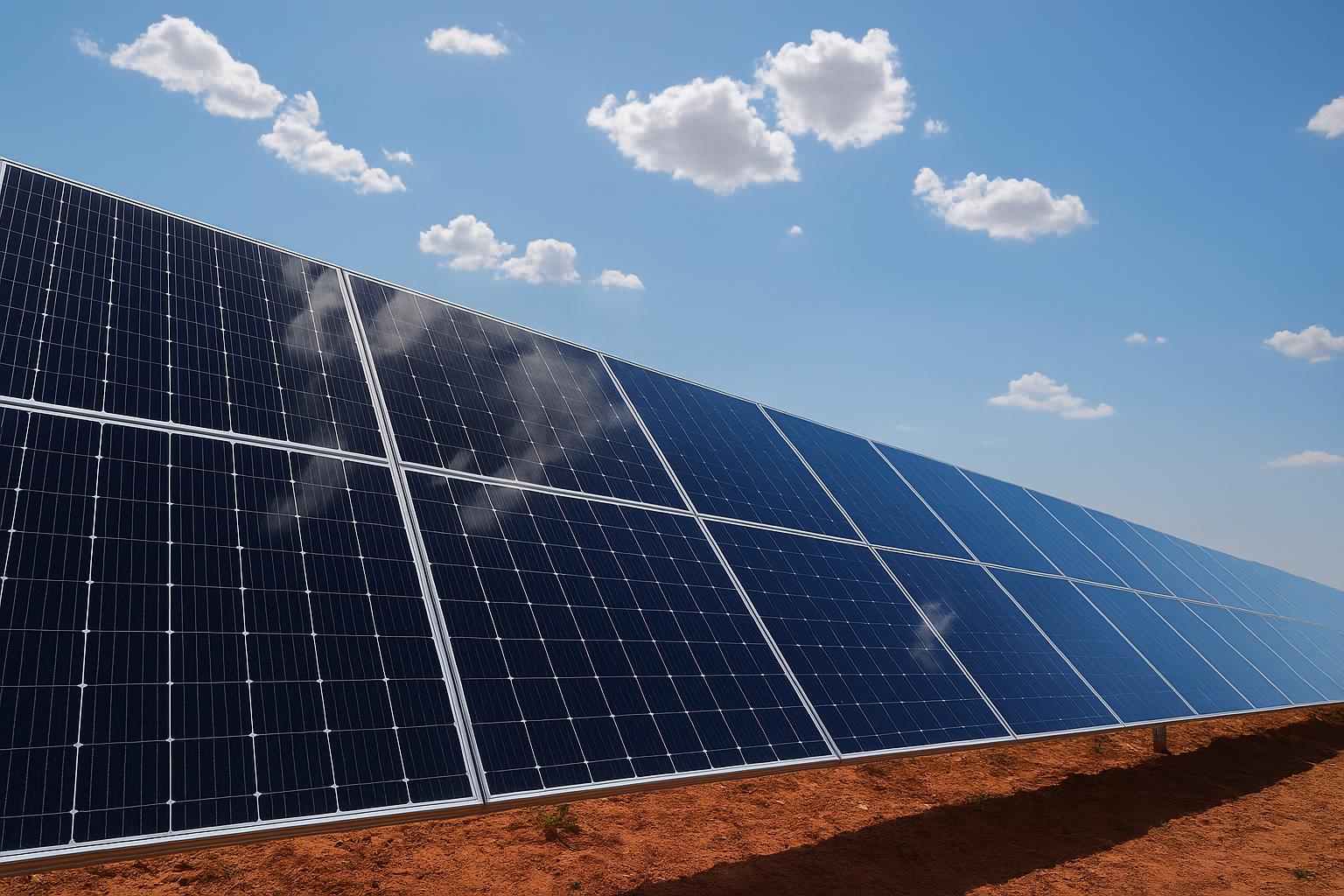
The expansion of solar energy has changed the picture of Brazilian electricity in a short time. With 68.8 GW of installed power, the source already occupies the second position in the matrix, behind only hydroelectric generation, which still leads with 41.6% participation.
In practice, this means that solar has ceased to be just a complement and has come to support a significant portion of national supply. And, according to ABSOLAR, it remains the fastest-growing source in the country, even amid obstacles that began to weigh more in 2025.
Sector created jobs and filled public coffers
The impact of solar energy is not only seen in the installed megawatts. The sector has opened more than two million jobs since the beginning of the expansion, a number that helps to measure the presence of the chain in activities such as installation, operation, maintenance, and equipment supply.
At the same time, the collection of almost R$ 96 billion in taxes shows that the source also gained fiscal weight. In other words: the advancement of solar is no longer just an environmental agenda and has started to have a direct influence on income, employment, and public revenue.
Bottlenecks slow progress and reduce pace in 2025
Despite the billion-dollar mark, the sector is already feeling the effects of operational and regulatory limitations. In 2025, the power added by solar energy fell by more than 25%, according to the survey cited by ABSOLAR.
Among the main obstacles are the reverse flow in distributed generation and the generation cuts in large power plants determined by the ONS, a phenomenon known as curtailment. These problems arise when, at certain times, the generation capacity exceeds the available transmission infrastructure.
ABSOLAR projects a 7% decrease in expansion in 2026
For 2026, the association forecasts a 7% contraction in the sector’s expansion. The projection is for 10.6 GW to be added in the year, below the 11.4 GW recorded in 2025.
The executive president of ABSOLAR, Rodrigo Sauaia, stated that the Brazilian green economy could be at an even higher level if it weren’t for the challenges faced by the sector. The entity’s interpretation is clear: solar energy has already transformed the electricity matrix, but it can still grow more if the bottlenecks are addressed.
The billion-dollar advancement of the source shows a change that is already underway in the country, but the next steps will depend less on market interest and more on the system’s ability to keep up with this expansion. If you follow energy, investment, and employment, it’s worth keeping an eye on this debate — and sharing this report with those who follow the sector.