






 Portuguese
  Spanish


Starting from components taken from old appliances, a handcrafted assembly reveals the hidden potential in equipment that would normally be discarded, using repurposed transformers to create a simple and functional welding solution.
On the workbench, two old microwaves no longer seemed like just devices doomed to the scrapyard. Inside them was the piece that would change the story: the transformer, a heavy component that once powered the internal workings of the appliance and is now used as the base for a potential homemade welding machine.
The project started from a simple idea, but one that is not common for those who see a broken microwave as just electronic waste. In a demonstration published by the LetraJota channel, Leandro, the creator responsible for the project, dismantles two old microwaves already out of use, removes the transformers from the devices, and shows, in bench tests, a homemade welding machine assembly aimed at small metal repairs.
The number that marked the result was 102 amperes. This was the current measured in the assembly with two transformers, sufficient to produce small weld points and show that the adaptation did not remain just in theory.
-
Canada Sinks Six Giant Balloons in Lake Ontario to Test Underwater Battery That Stores Compressed Air 60 Meters Deep

-
Astronauts Returning from Space Develop Early Cataracts Due to Eye Lens Radiation, Highlighting Risks for Future Mars Missions

-
Brastemp Unveils New Dishwasher with Smart Sensor, 14 Place Settings, Acquaspray Jet, 70°C Rinse, Water Efficiency, and Intelligent Drying
-
Antarctic Sea Creature Yields Promising Compound Against Melanoma, Captivating U.S. Researchers



The old microwave turned into a small dismantled workshop
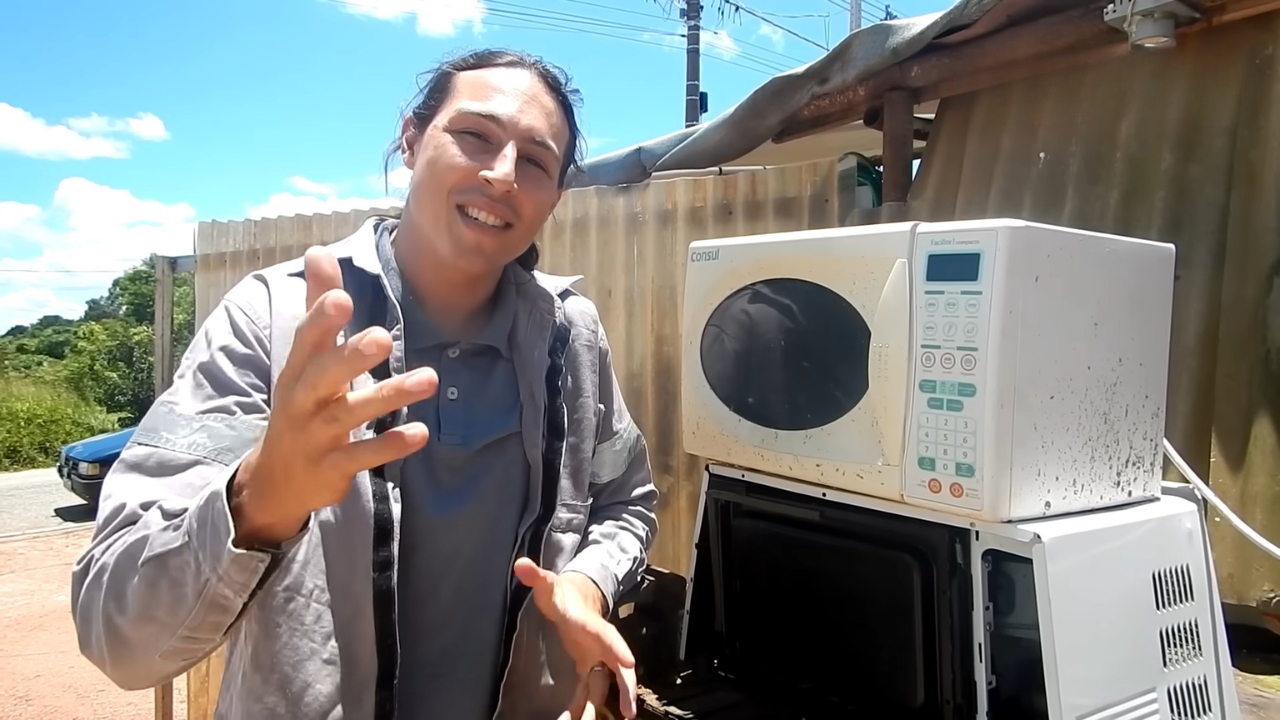
Upon opening the devices, the metallic casing revealed a set of reusable parts. There was a fan, turntable motor, panel, switches, wires, and the transformer, which quickly became the center of the assembly.
Cost also played a role in the story. A used transformer, taken from a microwave, can be found in a scrapyard for about R$ 10, according to the creator himself. A new one, in the comparison made by him, could be around R$ 60.
This difference helps explain why repurposing attracts so many people to the workbench. The raw material doesn’t come from a specialized store but from an appliance that has already lost its original function. From there, each piece gains another role.
The fan, for example, could help with cooling. The panel, which previously controlled the microwave’s time, also appears as an item with potential to activate other systems. But the welding machine really depended on the transformers.
The piece created to increase voltage had to work in reverse
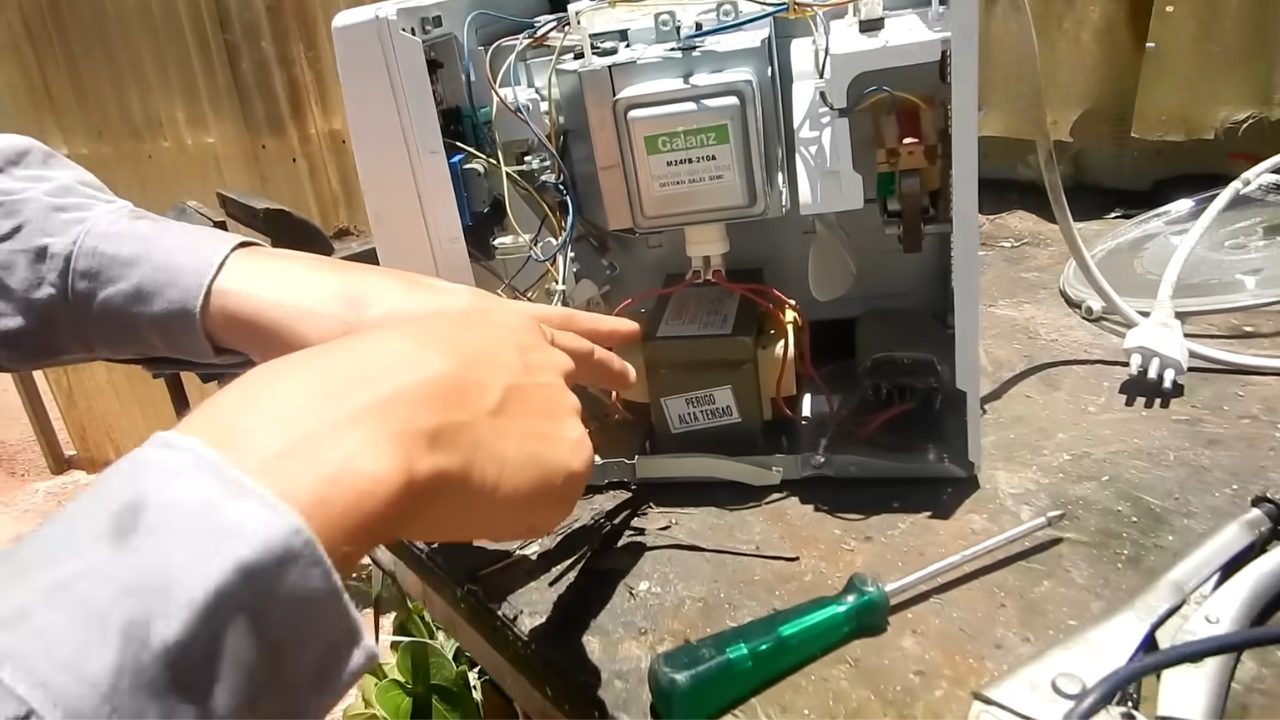
In the original operation of the microwave, the transformer receives power from the outlet, at 110 or 127 volts in the example cited, and raises this voltage to something between 2,000 and 2,500 volts. This behavior serves the appliance, but not homemade welding.
For welding, the sought logic was different. The setup needed less voltage and more current. In simple terms, the experiment aimed to exchange thousands of volts for a lower output, with enough strength to heat and join small metal parts.
The mentioned goal was around 40 to 50 volts. It was in this range that the machine would have a better chance of opening an arc with stability. Before that, the first test showed an important limitation.
With only one adapted transformer, the output was about 23 volts. There was strength, but still lacked voltage to easily initiate the welding arc. The spark appeared with difficulty, and the workbench showed that the first version still did not deliver the desired result.
The second transformer changed the machine’s performance
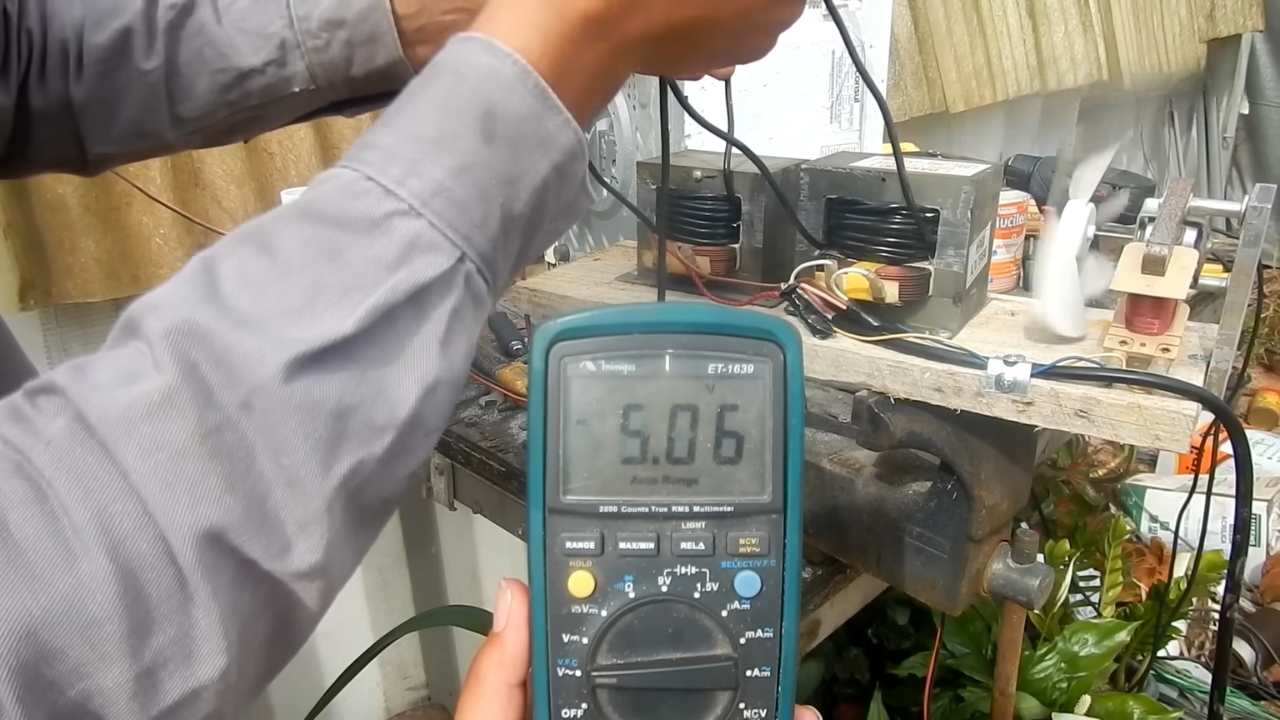
The assembly advanced when another transformer was added to the project. With two repurposed pieces, the machine gained more momentum and started working in a condition closer to the initial goal.
The strongest test came in the current measurement. The improvised equipment reached 102 amperes, a number that showed the adaptation’s capability for small repairs. In practice, the welded sheet resisted the test and confirmed that the union point had worked.
The scene changes the perception of the broken microwave. What once seemed like a worthless appliance became a source of components for a workbench tool. Not a professional machine, nor equipment for heavy work, but an improvised solution for simple repairs.
The creator himself limits the use to small services, such as a chair, a gate, a household item, or some punctual repair. The machine heats up, requires breaks, and was not designed for long welding sessions.
The welding worked, but with clear usage limits
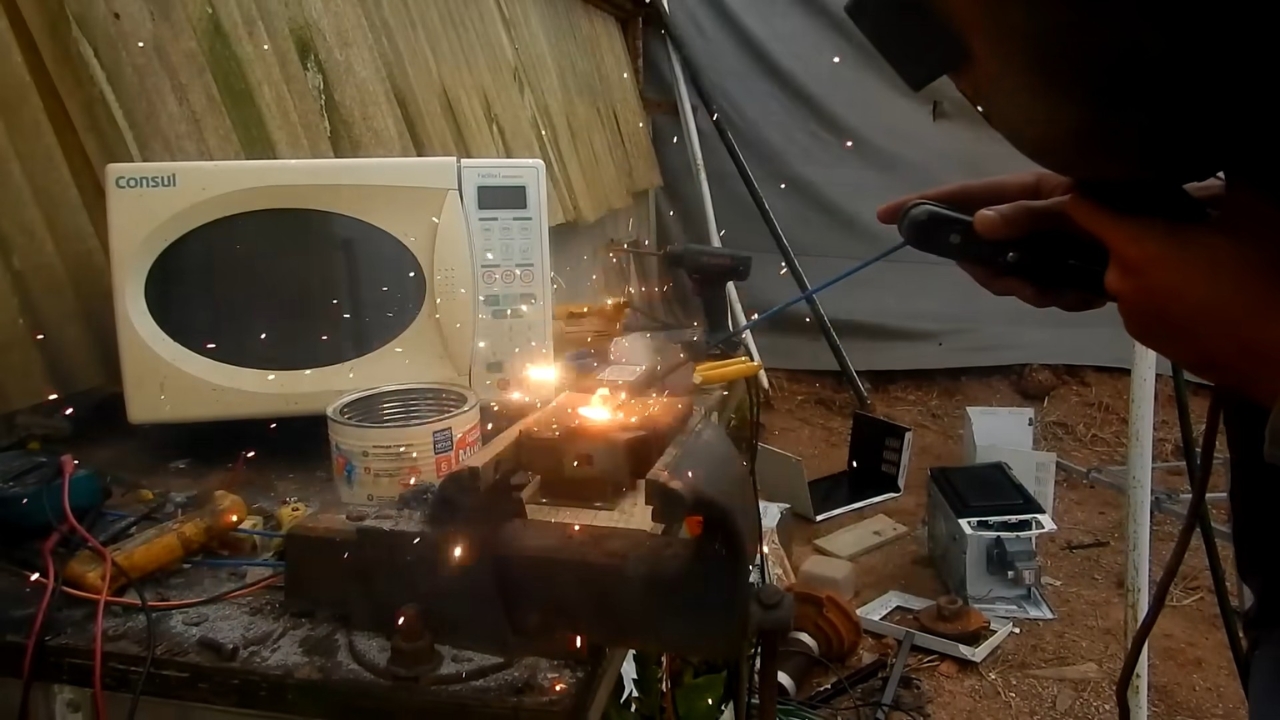
The experience shows an important difference between functioning and replacing a ready-made purchased equipment. The homemade machine managed to weld, but the performance depends on control, cooling, and short use.
Heating appears as one of the central points. Since the components were repurposed and adapted outside their original function, the set does not deliver the same work cycle as a commercial machine. The fan taken from the microwave itself proves useful to improve cooling and make the assembly more stable for a few moments.
There is also care with electrical energy. Microwave transformers and capacitors work with high voltages before adaptation, and this type of experience requires technical knowledge. The improvised manufacturing can be ingenious, but it should not be treated as a domestic plaything.
Even with this caveat, the result of the bench remains impressive. Two discarded devices, simple pieces, and successive tests created a tool capable of producing real welding.
The scrap revealed a hidden second life


The story of the welding machine made with microwaves is not just about improvisation. It shows how old equipment hides components that can still have utility outside their original function.
The transformer stopped serving food heating and started to power a welding experiment. The fan gained new importance in cooling. The broken device ceased to be just waste and became a source of parts for repair.
For those looking from the outside, the final image is strong: a simple bench, two repurposed transformers, sparks on the metal, and a weld that holds. The old microwave, once forgotten, ended the experience as part of a homemade machine capable of working again.
This type of project explains why the culture of repurposing still attracts so much curiosity. It’s not just about saving money. It’s the transformation of something idle into a useful tool, with enough strength to prove that, within a lot of scrap, there is still a machine waiting for another chance.


