Portuguese
  Spanish


Technology developed in Norway inspects cables, pipelines, and underwater structures, returns alone to the base on the ocean floor, recharges by induction, and transfers data without an onboard team during operations
An autonomous underwater robot developed by researchers at the Norwegian University of Science and Technology was tested in a real environment to inspect structures on the seabed, return alone to an underwater base, recharge by induction, and transfer data. In four cumulative weeks of operation, the system achieved 90% success in automatic docking.
Autonomous underwater robot was created to monitor critical structures
The system was developed to act as a kind of guardian for underwater installations, especially in deep, remote, and difficult-to-monitor areas.
The proposal targets structures such as intercontinental communication cables, oil pipelines, gas pipelines, and other assets installed on the seabed. These pieces of equipment are essential for global energy and digital systems.
-
Robots Clean Solar Panels in Desert Power Plants Without Water, Preventing Energy Losses

-
AI Radar Built with Old Camera and $20 Gains Attention After Alleged $317,000 Sale to Chinese Government, But Lack of Documentation and Official Confirmation Raises Questions

-
Amateur Detectorist Discovers 3,400-Year-Old Bronze Age Gold Treasure with 121 Pieces in Transylvania, Including a Unique Ring

-
Italian Designer Develops Solar-Powered Terracotta Water Purifier Producing Up to 5 Liters of Drinking Water Daily Without Electricity


Today, this type of inspection usually requires support vessels, divers, or remotely operated vehicles from the surface. According to the researchers, this model is costly and limits the frequency of monitoring.
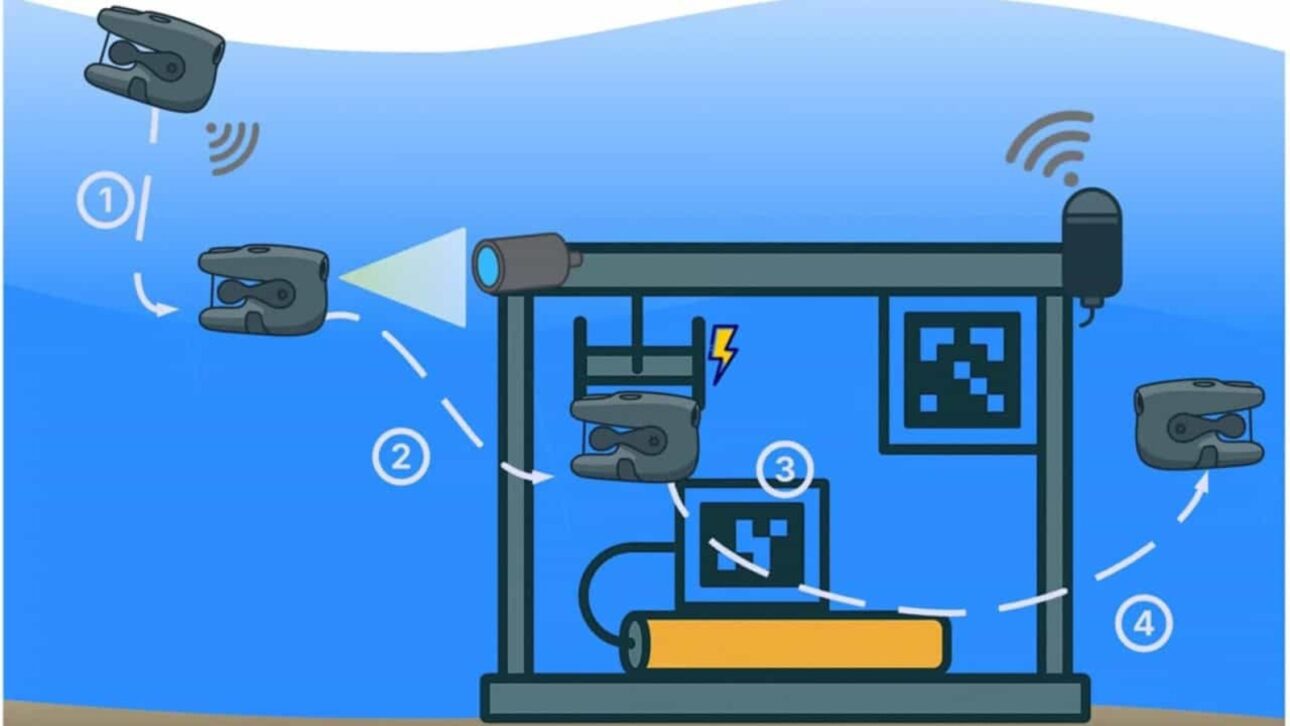
The Norwegian technology seeks to reduce this dependency. The vehicle remains based on the ocean floor itself, goes out on scheduled missions, and returns to a fixed station installed on the seabed.
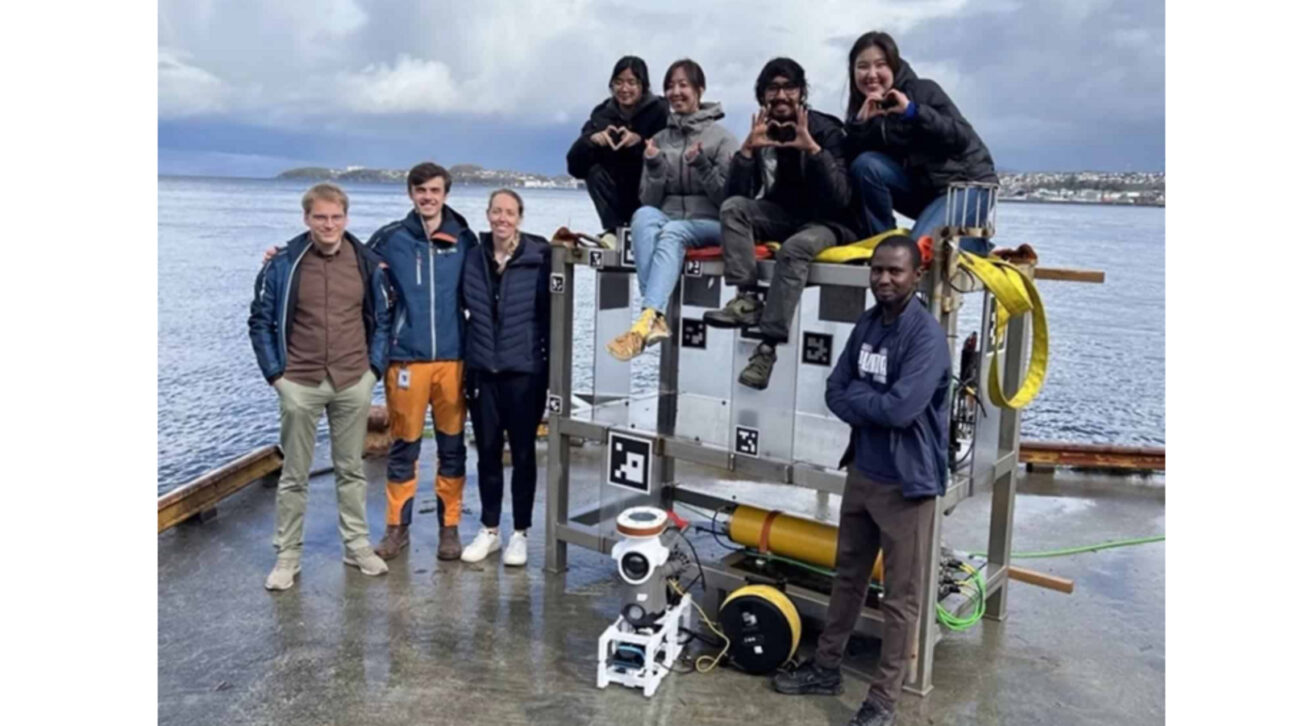
Underwater robot: System returns to base, recharges energy, and sends data
During the operation, the vehicle performs inspections on underwater installations and returns alone to the docking station. At the base, it transfers the collected information and recharges the battery.
The recharge occurs by induction, without connectors exposed to water. This detail is important because the marine environment poses technical challenges for electrical and communication systems.
After coupling, the data is sent via high-frequency communication. The station is also connected to structures on land, responsible for providing power and external communication.
With this configuration, the system can remain active for long periods without requiring the constant presence of teams at sea.
Navigation must work without GPS signal
One of the main challenges of the technology is navigation. In underwater environments, there is no satellite signal, which prevents the use of GPS as it occurs in surface vehicles.
To solve this, the autonomous underwater robot combines different orientation methods. It uses acoustic signals for medium-distance positioning and visual analysis to recognize references near the base.
In the final approach, the system relies on optical recognition. This stage allows the vehicle to correctly align with the docking station installed on the seabed.
The precision of this phase is crucial. If the vehicle fails to connect to the base, it may run out of charge and be unable to transmit the data collected during the mission.
Tests had four weeks of accumulated operation
The tests took place in a real environment, over two missions, with four weeks of accumulated operation. During this period, the vehicle completed inspection tasks and autonomously returned in most attempts.
The automatic coupling rate reached 90%. The result was considered promising within the project, but it still does not represent total reliability for use without any direct supervision.
Researchers are still seeking to increase the operational safety of the system. A failure to return to the base can compromise the entire mission, as the station is essential for recharging and sending information.
Another point observed in the tests involves image reading in the marine environment. The presence of fish and other elements can interfere with the visual recognition used during navigation.
Next step is to operate for longer with less supervision
The project integrates marine technology research initiatives funded by Norwegian institutions and partners in the energy sector.
The goal is to evolve the system until it can operate for long periods with minimal or no direct supervision. For this, automatic coupling needs to reach a higher level of reliability.
The practical application can make the surveillance of underwater structures more frequent and less dependent on vessels, onboard teams, and field operations.
For sectors that rely on cables, pipelines, and installations on the seabed, the technology aims to offer a continuous form of monitoring in regions where human access is expensive, limited, and technically difficult.
This article was prepared based on information from the Norwegian University of Science and Technology and the pre-publication of the research, with data, numbers, and statements preserved as per the consulted material.