Portuguese
  Spanish


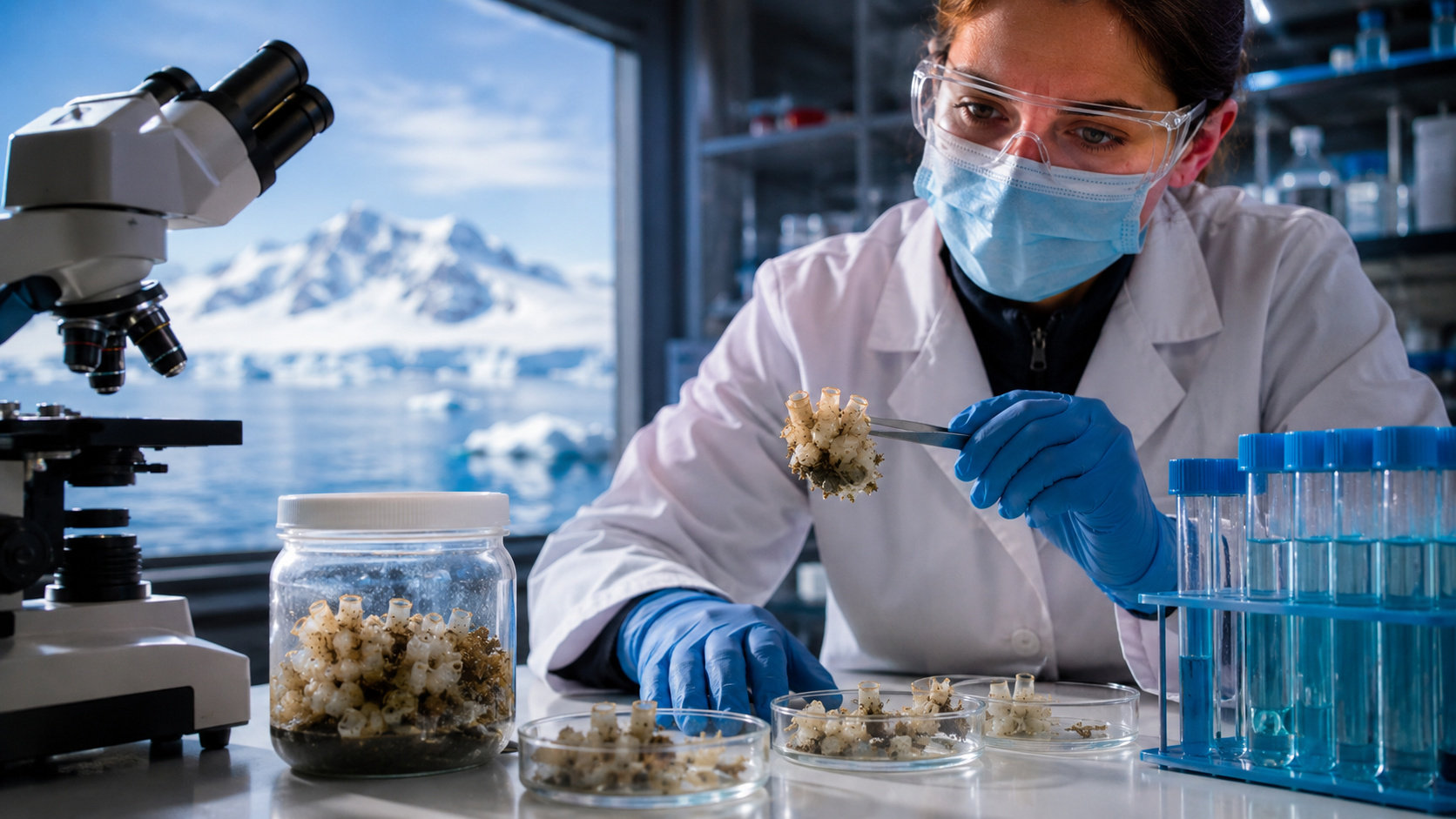

Substance associated with bacteria from ascidians eliminated melanoma cells in initial tests, but there is still no approved treatment for humans
A marine creature from Antarctica is attracting the attention of science for carrying bacteria capable of producing a compound with action against melanoma, the most aggressive type of skin cancer.
The discovery involves small ascidians, also known as sea squirts, collected during a six-week scientific expedition. The work was conducted by researchers from the University of South Florida, in the United States.
Antarctic compound showed promising results against melanoma
First, the researchers identified a substance produced by bacteria present in Antarctic ascidians.
-
Underwater Guardian: The Autonomous Robot Monitoring Submarine Cables, Self-Returning, Wirelessly Charging, and Transmitting Data Without Onboard Crew

-
Robots Clean Solar Panels in Desert Power Plants Without Water, Preventing Energy Losses

-
AI Radar Built with Old Camera and $20 Gains Attention After Alleged $317,000 Sale to Chinese Government, But Lack of Documentation and Official Confirmation Raises Questions

-
Amateur Detectorist Discovers 3,400-Year-Old Bronze Age Gold Treasure with 121 Pieces in Transylvania, Including a Unique Ring


In tests with mice, the compound was able to eliminate melanoma cells without causing apparent toxic effects in the animals.
According to chemistry professor Bill Baker, from the University of South Florida, the compound destroyed the cancer in tests but did not harm the mice.
This selectivity is considered important because a potential drug needs to attack diseased cells and preserve healthy tissues.


How was the discovery made?
The research gained momentum after an expedition carried out in 2026 in the icy waters of Antarctica.
During the mission, scientists collected samples of ascidians, small invertebrates that live attached to the ocean floor.
These organisms harbor bacteria that produce natural toxins. Moreover, these substances function as a defense against predators and diseases.
It was precisely one of these toxins that caught the scientists’ attention for its potential against cancer cells.

Research still needs to go through new stages
Despite the encouraging result, the researchers themselves emphasize that the study is still in its initial phase.
Now, the team needs to produce larger quantities of the compound. After that, new animal tests should evaluate safety, efficacy, and possible risks.
Only after these stages can the first human clinical trials be considered by regulatory bodies.
Therefore, the discovery does not yet represent an available cure or an approved treatment for patients.
Previous studies have already investigated the substance
The pharmaceutical potential of these ascidians had already been analyzed before the recent expedition.
In 2021, researchers from the Desert Research Institute, the University of South Florida, and other institutions linked the compound palmerolide A to microbes of the species Synoicum adareanum.
Currently, scientists are investigating the genetic, chemical, and biological composition of these organisms.
In this way, they seek to understand how the substance is produced and how it acts against melanoma cells.
Melanoma causes thousands of deaths every year
The interest in the discovery is also linked to the severity of melanoma.
This type of skin cancer is considered the most dangerous because it can spread to other parts of the body.
International estimates cited by the researchers point to about 57,000 deaths per year from the disease.
Furthermore, this number could reach 96,000 annual deaths by 2040 if the growth trend continues.
The highest rates are recorded among fair-skinned people, especially in Australia, New Zealand, and countries in Western Europe.
Antarctica may hold important natural compounds
Finally, the research reinforces the scientific interest in Antarctica’s biodiversity.
Even in an extreme environment, marine organisms can produce molecules with potential pharmaceutical applications.
Even so, researchers highlight that new study phases will be necessary before any clinical use.
Could Antarctica’s biodiversity still reveal new compounds capable of transforming skin cancer research?