






 Portuguese
  Spanish


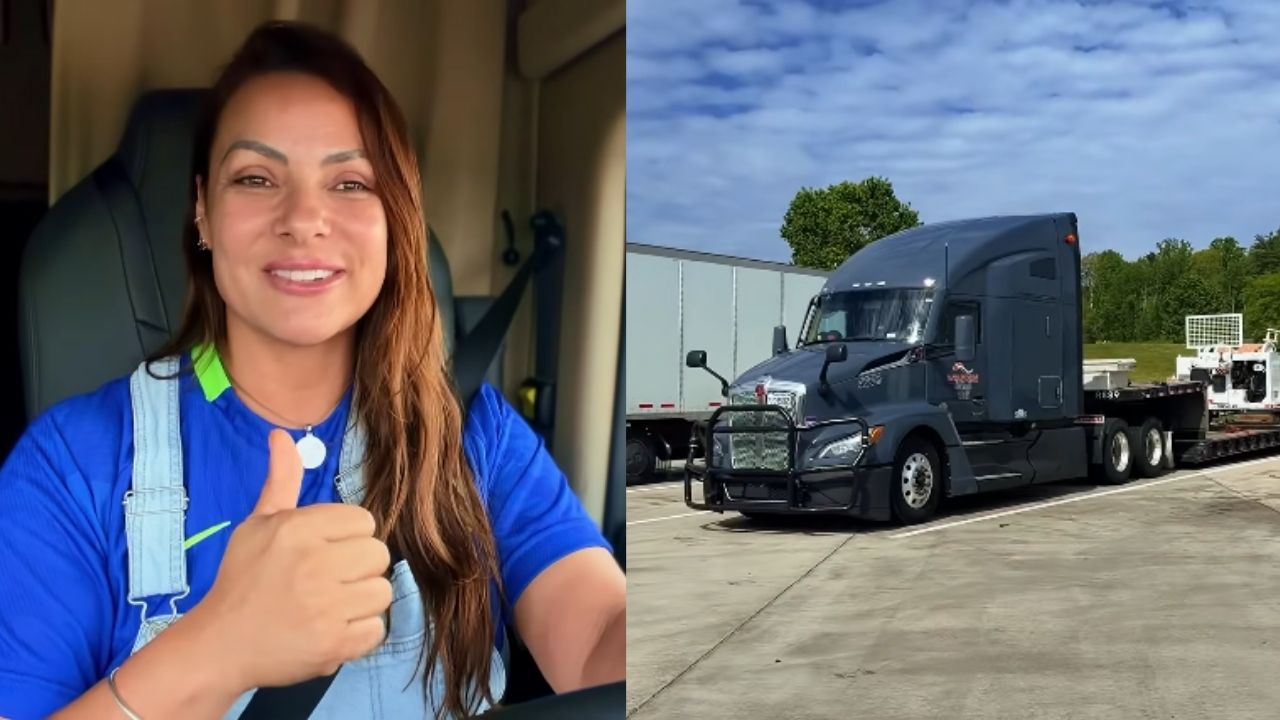

In a video published on the Julia Prado channel, a Brazilian truck driver in the USA showed $11.2k in commission, detailed weeks on the lowboy, and explained why she refused to load an excavator without preparation. The routine exposes high income, long miles, heavy loads, and choices that do not allow improvisation on American roads without error.
The Brazilian truck driver Julia Prado revealed how much she earned in a series of loads on the lowboy in the United States, showing an approximate commission of $11.2k after weeks of work on American roads. In the account, she also explained why she refused to operate an excavator without qualification, even in the face of a well-paid load.
According to a video published on the YouTube channel Julia Prado on June 21, 2026, the driver detailed trips, miles driven, types of loads, and decisions made during her professional routine. The account took place while she showed behind-the-scenes of the road, stops at truck stops, heavy loads, and the challenges of working with large equipment in the USA.
High earnings on the lowboy came with miles, heavy load, and commission
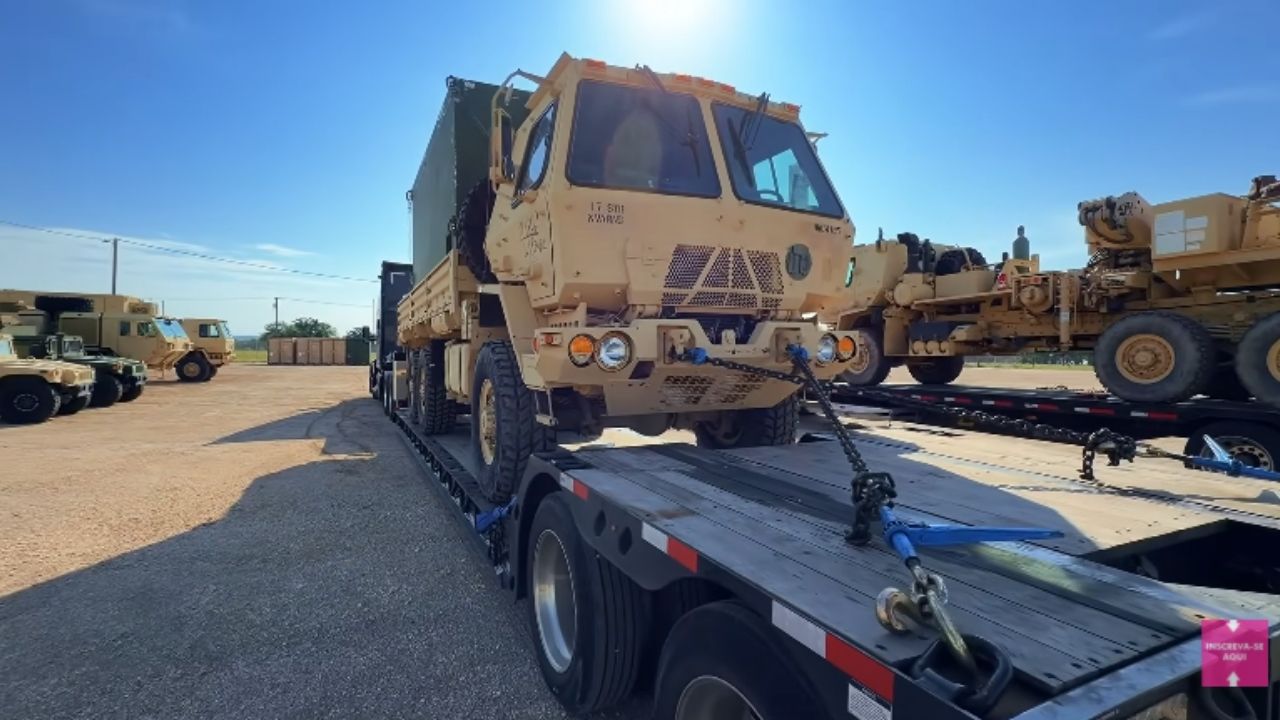
Julia Prado shared that she had different weeks of work, starting with a smaller load and moving on to stronger periods on the lowboy. In one of the weeks mentioned, she said she did three loads, drove 3,380 miles, and reached $5,160 in commission.
-
Teen without prom date invites pet cat to dance, goes viral with tuxedo and pink dress photoshoot

-
Boy Uses Mother’s Sewing Machine to Make Teddy Bears for Hospitalized Children in Tasmania Over 365 Days

-
Restaurants Combat Frying Odors Before Cooking Begins: Here’s Why This Routine Matters
-
8-Year-Old Girl in Brazil Creates Care Kits for Over 5,000 Homeless People After Learning to Sew with Her Grandmother




Adding up the weeks presented, the Brazilian truck driver stated she closed around $11.2k in commission. The amount drew attention, but she made it clear that it’s not just about driving: the lowboy requires knowledge, responsibility, emotional control, and mastery of heavy loads.
Lowboy pays better, but it doesn’t work for those who want to skip steps
In the video, the driver explained that she works in a specialized transport category, related to the loading of large machines and equipment. She highlighted that there are loads paying high rates per mile, but access to this type of freight also depends on the company’s history, operational score, and trust in the driver.
The statement goes against the idea that you just need to arrive in the United States and start earning high. According to the Brazilian truck driver, experience weighs heavily on the road, especially when the load involves expensive equipment, a new trailer, transportation rules, and the risk of loss if something is done incorrectly.
The refused excavator showed the limit between courage and imprudence
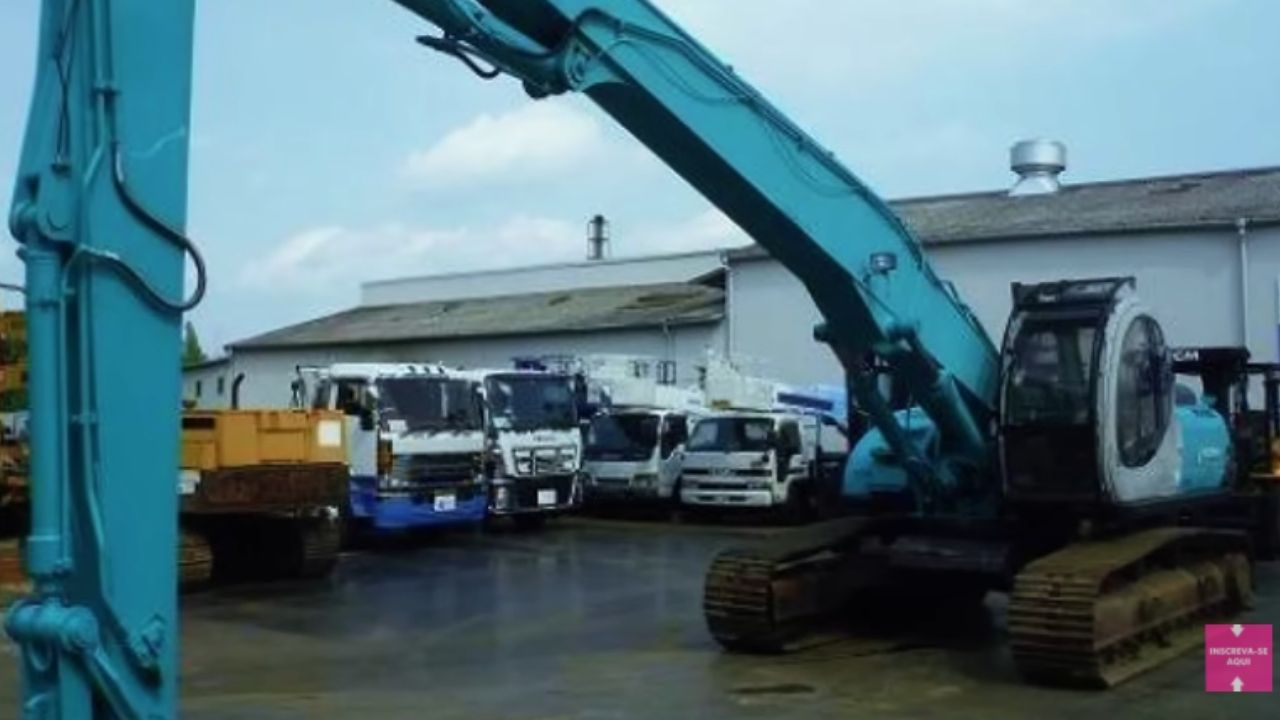
One of the strongest moments of the account occurred when Julia said she refused a load involving a large excavator with an iron track. She explained that she had already informed the company, since the interview, that she did not carry this specific type of machine alone because she did not feel qualified to operate it.
The decision was made even with the load paying well. For her, accepting without preparation would mean risking a high-value machine, a new trailer, and her own safety. The case exposes an important difference between professional confidence and dangerous improvisation in a profession that demands immediate consequences.
Loading heavy machinery is not just getting on the trailer
According to the account, the problem was not transporting the excavator after it was loaded, but placing it correctly on the trailer. This process requires an understanding of weight, space, inclination, support point, stability, and machine control, especially when the load occupies practically all available equipment.
The Brazilian truck driver also commented that she had already sought a heavy machinery operator course, but mentioned the high cost of basic training. This detail helps explain why some companies try to transfer to the driver a task that, in practice, requires specific preparation.
American road also has competition for qualified drivers

During the video, Julia commented that the United States is facing a reduction in the number of drivers on the road for various reasons. She mentioned restrictions involving documentation, work authorization, language, irregular licenses, and retirement of older professionals.
This scenario helps to contextualize why experienced drivers can find good opportunities. Still, high income does not appear in isolation: it comes with pressure, responsibility, and the ability to solve problems without relying on someone at every moment.
High commission does not mean an easy routine
The driver made it clear that part of the amount received is linked to the level of demand of the role. She cited long distances, oversize loads, specific driving schedules, care with permits, and limitation of movement in certain periods, especially when the transport involves large equipment.
In practice, the Brazilian truck driver showed that the road can pay well, but it demands constant preparation. There is no room for haste when the load is heavy, the trailer does not belong to the driver, and any mistake can become a big loss for the company and a risk to other people.
Professionalism became the central point of the account


Julia also spoke about self-confidence and accumulated experience. She said that today she knows how to solve problems, talk to companies, get in and out of difficult situations, and understand when a load is within or beyond her professional limit.
This point makes the story less about ostentation and more about maturity in the profession. The difference between accepting everything for money and knowing how to say “no” may be precisely what separates an experienced driver from someone willing to take risks without measuring the consequences.
The money appears, but the responsibility weighs along
The account of the Brazilian truck driver shows a rarely seen side of heavy cargo transportation in the United States: the income can be high, but it comes from a combination of miles, specialized category, company with good loads, discipline, and tough decisions on the road.
The question that remains is straightforward: faced with a well-paid load that requires operating a machine without qualification, would you take the risk for the money or refuse as she did?


