






 Portuguese
  Spanish


Robots for cleaning solar panels remove dust at night, avoid the use of water, and help large plants in dry regions keep the modules clear to receive light. Solar energy generation depends on the sun, but also on the maintenance that occurs when it disappears.
Robots cross fields of solar panels while everyone sleeps, clean the dust without a drop of water, and help desert plants avoid losses in energy generation. The activity occurs outside the sun period, when the modules do not produce electricity, and protects the passage of light over the panels.
Ecoppia, a company specialized in autonomous robots for solar plants, develops equipment aimed at large fields of panels installed in dry regions. Waterless cleaning becomes important where rain is rare and the use of this resource is limited.
The dust that reduces solar energy
A solar panel transforms the received light into electricity. When dust, sand, and other particles cover its surface, part of the brightness fails to reach the interior of the equipment.
-
AI Radar Built with Old Camera and $20 Gains Attention After Alleged $317,000 Sale to Chinese Government, But Lack of Documentation and Official Confirmation Raises Questions

-
Amateur Detectorist Discovers 3,400-Year-Old Bronze Age Gold Treasure with 121 Pieces in Transylvania, Including a Unique Ring

-
Italian Designer Develops Solar-Powered Terracotta Water Purifier Producing Up to 5 Liters of Drinking Water Daily Without Electricity

-
New Hydrogel Made from Algae and Shrimp Shells Absorbs 60 Times Its Weight in Water to Combat Drought in Spanish Agriculture


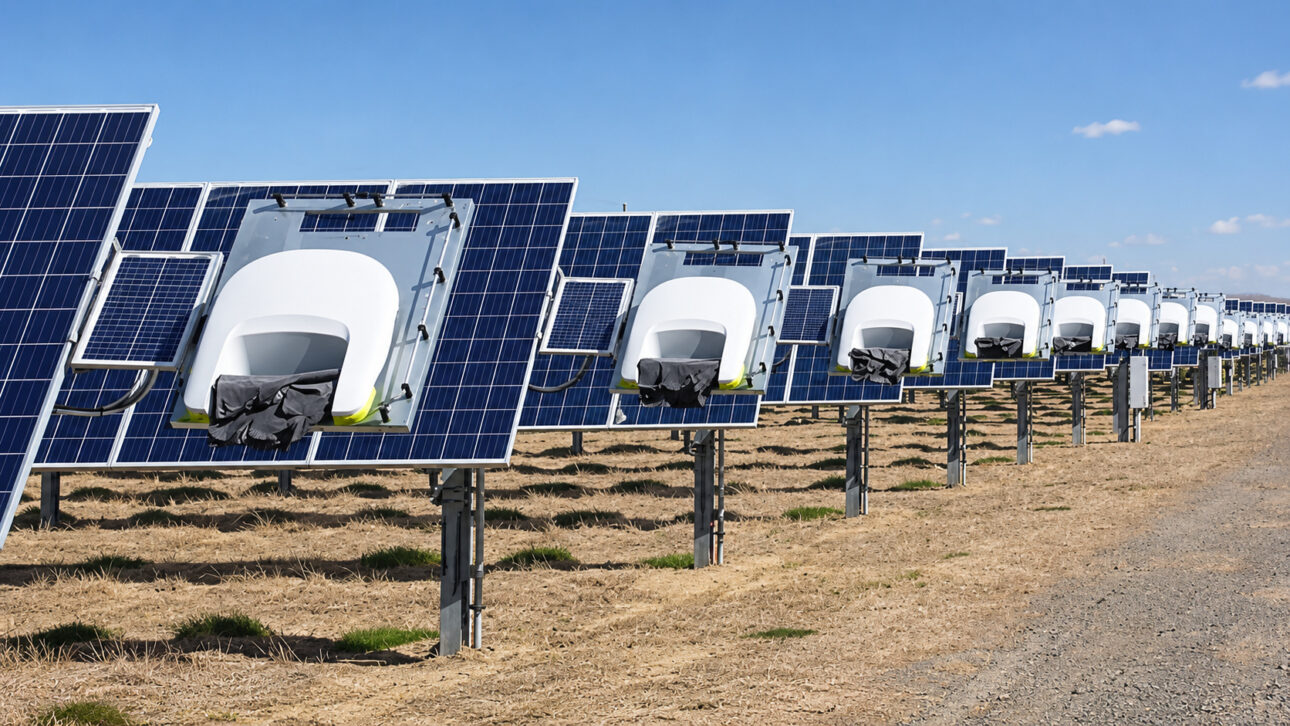
This layer may seem small to those observing from afar, but it interferes with solar energy generation. The more dirt remains on the panels, the less light may be available for electricity production.
In desert areas, the problem requires constant attention. The wind spreads sand across the solar field, while the little rain reduces the chance of a natural cleaning of the modules.
Why the robots work at night
Night cleaning takes advantage of the moment when the panels do not receive sun. In this way, the robots travel the rows without interfering with the period when the plant needs to capture light and produce energy.
Ecoppia, a company specialized in autonomous robots for solar plants, maintains systems that move along the panel lines and can be monitored remotely. Automation reduces the need for teams to circulate daily among the modules.
Working during the night allows the panels to be clean at dawn to receive daylight. The routine transforms the cleaning of solar panels into part of the continuous operation of the plant.
How to clean panels without wasting water
Waterless cleaning prevents large solar fields from relying on frequent washing in regions where this resource is scarce. Instead of hoses, the equipment uses soft materials and airflow to remove accumulated dust.
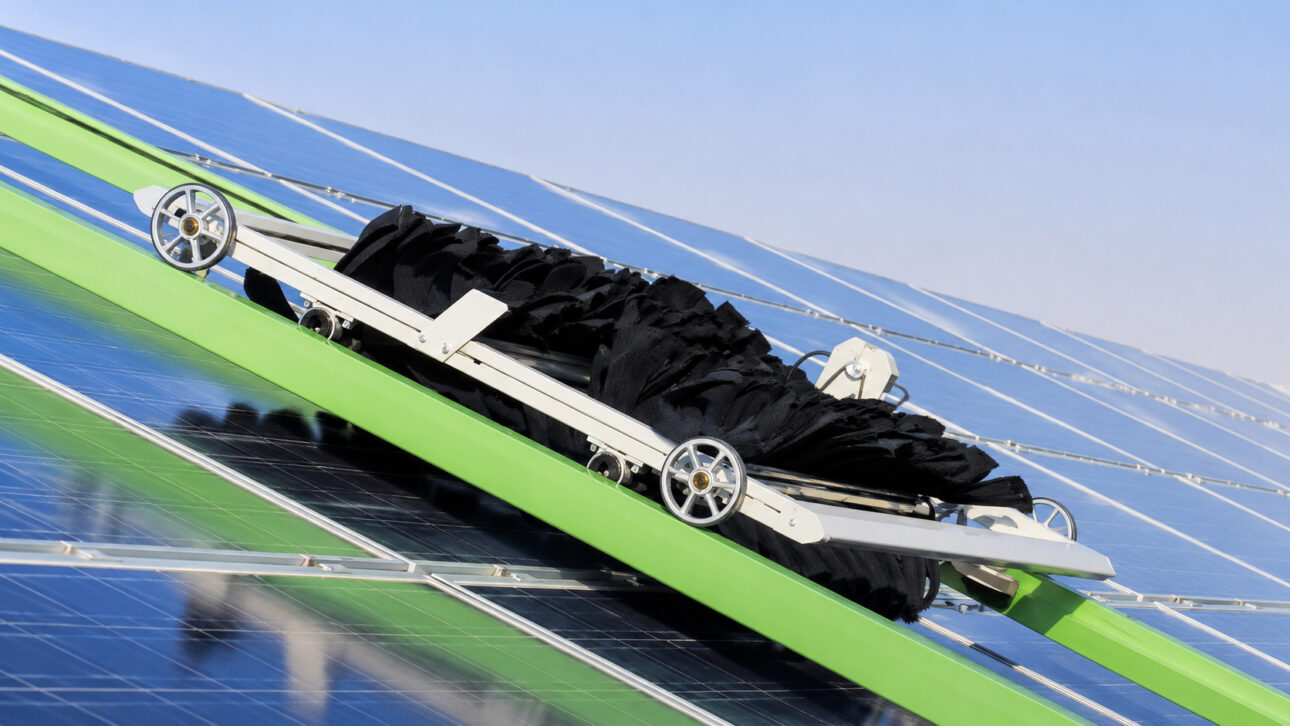
Microfiber is a fabric with very fine threads, capable of reaching small particles without requiring a common wash. The goal is to remove dirt without pressing on the surface of the panels.
This process helps reduce water consumption in maintenance. For plants installed in hot and dry areas, the savings become not just a matter of cost but part of the technological choice.
Robots for cleaning solar panels are not suitable for every roof
The technology was designed for large solar plants, where there are long rows of modules on the ground and space for the robots to move from one panel to another. This structure is different from that found in houses, stores, and buildings.
Residential roofs have inclinations, obstacles, and varied access. Therefore, the presence of these robots in plants does not mean they can be installed in the same way in any domestic solar system.
Each installation requires a maintenance method compatible with its size and structure. Proper cleaning helps preserve the panels and maintain light entry.
Solar energy also depends on daily care
Installing panels is just one part of the operation of a plant. Dust, sand, and lack of maintenance can affect the amount of light that reaches the modules during the day.
The robots that work in the dark show that solar energy in the desert depends on planning beyond installation. Cleaning the panels without water helps preserve electricity generation and reduces the use of a scarce resource.
The scene of machines traversing rows of panels during the early hours reveals a little visible but essential work for plants in very dusty areas. Keeping the surface clean helps sunlight do its job when the day begins.
Do you believe that water conservation should weigh more in the choice of technologies for large solar plants installed in dry regions? Leave your opinion in the comments and share this post.


