Portuguese
  Spanish


Why CKD and SKD Became the Center of the Dispute
The electric cars have returned to the center of an economic dispute in Brazil after the Lula Government approved, on June 23, 2026, a new import quota of US$ 463 million with exemption from import tax for dismantled and semi-dismantled electrified vehicles. The decision was made within the scope of the Foreign Trade Chamber, Camex, and applies to CKD and SKD kits, not to fully assembled cars.
The measure, reported by Exame and confirmed in official information released by Agência Brasil, reignited the clash between BYD, traditional automakers gathered in Anfavea, unions, and entities in the auto parts sector. The rule is valid for six months starting in July and creates a practical doubt for the consumer: can the exemption help hold prices or just intensify the pressure on the national industry?
What the Government Approved for Electric Cars
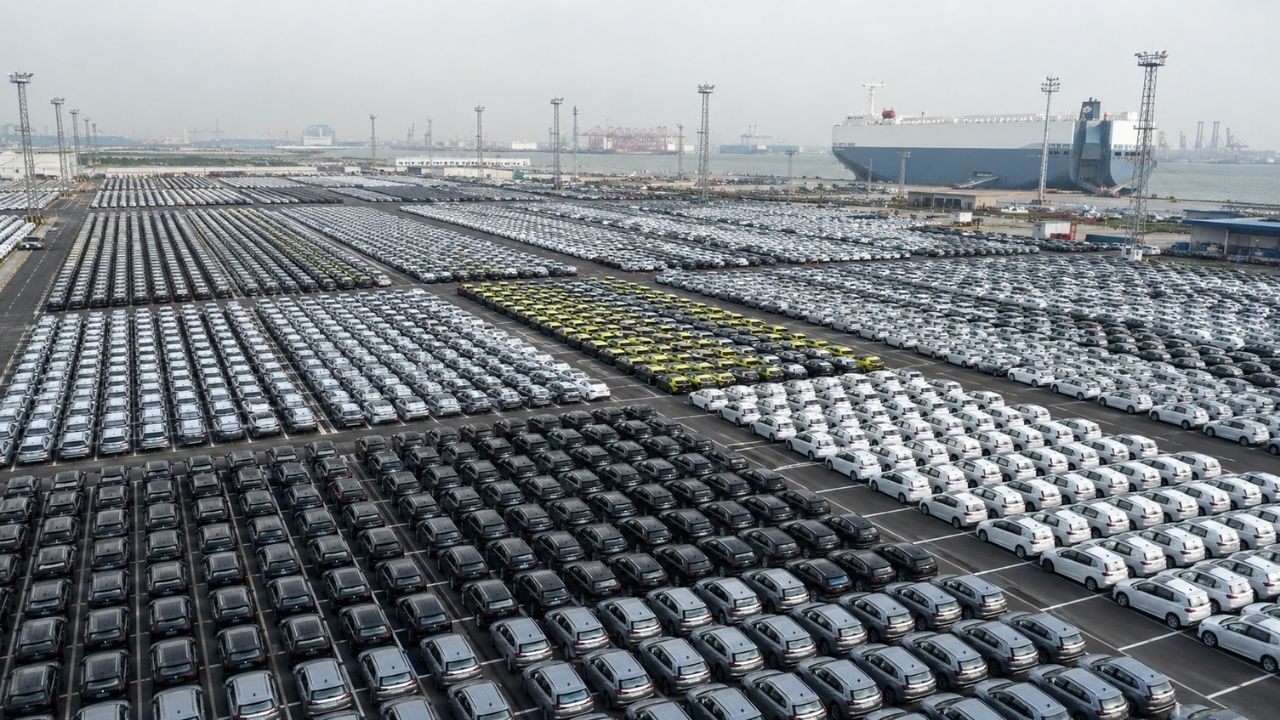
The new quota allows the entry of electrified vehicles dismantled and semi-dismantled with zero import tax up to the limit of US$ 463 million. In practice, this affects models that arrive in the country in CKD kits, completely dismantled, and SKD, semi-dismantled, for final assembly in Brazil.
-
Clarification and Right of Reply Notice

-
Elon Musk Becomes World’s First Trillionaire with $1.1 Trillion Fortune; Could This End Global Hunger?

-
Brazilian Executive Takes Helm of Heineken Amid Decline in Sales: 51-Year-Old Has Led Operations Across Four Continents and Managed a $7 Billion Empire
-
Brazilian Actress Turns Waxing Clinic into 400-Unit Chain with $50 Million Revenue, Sells Stake After 13 Years




The decision does not include fully assembled vehicles, known by the acronym CBU. These remain subject to the tax recomposition schedule. Therefore, the measure does not mean a general release of imported electric cars without tax, but a specific quota for formats that undergo some type of national assembly.
Why CKD and SKD Became the Center of the Dispute
The acronyms CKD and SKD may seem technical, but they are at the heart of the dispute. In CKD, the vehicle arrives disassembled in more complete parts, requiring a greater stage of local assembly. In SKD, the car arrives semi-disassembled, with less industrial complexity compared to full production.
For the government, this type of import can be seen as a transition between bringing the ready vehicle and encouraging assembly in national territory. For automakers and unions, however, the risk is that the quota reduces the incentive for full manufacturing in Brazil. The discussion is not just about tax, but about which model of industrialization the country wants to adopt.
BYD Appears as the Main Interested Party
Behind the scenes, the measure was interpreted by sources heard by Exame as a nod to BYD, a Chinese manufacturer with a plant in Camaçari, Bahia. The company is one of the protagonists of the expansion of electric cars in Brazil and has been accelerating its presence in the national market.
BYD was not the only one mentioned in the debate, but ended up at the center of the controversy because its strategy involves local assembly and the use of imported kits. The government of Bahia also appears in the political context of the decision, as the state received investment from the Chinese manufacturer. This intersection between industrial policy, foreign investment, and automotive competition made the quota especially sensitive.
Traditional Automakers and Unions Reacted Against
Anfavea, the entity representing vehicle manufacturers installed in Brazil, criticized the resumption of the quota with zero tax. The central argument is that the sector had already organized around a tariff recomposition schedule and that sudden changes reduce predictability for industrial investments.
Unions and entities linked to the automotive sector also spoke out against the measure. The concern is that importation with tax benefits pressures local suppliers, industrial jobs, and national production plans. For this group, electric cars should not advance only as an imported or partially assembled product, but as a production chain installed in the country.
The Tax Did Not Disappear for Everyone
An important point is that the import tax recomposition schedule was maintained. According to Agência Brasil, semi-disassembled SKD vehicles will collect a 35% tariff starting in July when they are outside the quota. Meanwhile, CKD remains with a 14% rate until the end of 2026 and rises to 35% in January 2027.
This means that the exemption works within a financial limit and for a determined period. When the quota ends or when the company imports above the authorized ceiling, the expected tariffs return. The rule, therefore, creates a temporary relief, not a permanent change in the tax on electric and hybrid cars.
Can the measure make electric cars cheaper?
This is the question that most interests the consumer. In theory, lower taxes on kits can reduce import and assembly costs, which would allow for more competitive prices. However, this does not guarantee an automatic drop in dealerships, because the final price depends on exchange rates, company margins, stock, logistics, demand, and each brand’s commercial strategy.
Furthermore, automakers argue that there is enough stock of imported vehicles to meet the market for a few months, which could limit the immediate impact on price. The quota may help avoid increases in some models, but it is not enough to claim that electric cars will generally become cheaper.
Government advocates transition and industry demands predictability
The official justification revolves around energy transition, fleet renewal, innovation, and emission reduction in the automotive sector. Electrified vehicles are seen as part of the decarbonization strategy, especially in a market that tries to expand hybrid and electric options.
On the other hand, the industry demands predictability. For already established manufacturers and national suppliers, changes in direction can affect investment, hiring, and component nationalization decisions. The conflict shows that the transition to electric cars is not just environmental: it is also industrial, tax-related, and labor-related.
The dispute may reach the courts
Anfavea has already indicated that it is considering legal measures against the new quota. The entity complained about the lack of transparency and the absence of prior discussion with the automotive sector before the decision. The point raised is that a rule with broad economic impact should have more open debate between the government, companies, and workers.
Even if the legal action does not advance, the signal shows the level of tension. The dispute involves large investments, Chinese imports, national production, unions, and consumers. When a public policy simultaneously affects price, employment, and competition, the debate tends to move from the technical area to become a political dispute.
The consumer is caught in the middle of the fight
For those thinking of buying an electric car, the news may seem positive at first glance. A quota with zero tax suggests the possibility of more affordable models or less pressure from increases. But the real effect can vary greatly depending on the brand, model, type of import, and speed of passing on to the final price.
The consumer also needs to observe what will happen with technical assistance, parts, warranty, and service network. A policy focused only on the entry of vehicles may not solve all the market bottlenecks. Cheaper electric cars only make a difference if they come with infrastructure, viable maintenance, and safety for the buyer.
Zero tax became a dispute over the future of the industry
The quota of US$ 463 million approved by the Lula government deals with a bigger issue than the taxation of electric cars. It puts face to face the rush for electrification, BYD’s strategy, the reaction of traditional automakers, the defense of industrial jobs, and the consumer’s expectation for lower prices.
In the end, the measure can be seen as a temporary relief for the assembly of electrified vehicles or as additional pressure on the national industry. The response will depend on how companies will use the quota, whether there will be a pass-through to the consumer, and whether Brazil will be able to transform importation into consistent local production. Do you think zeroing tax for disassembled kits helps to lower the cost of electric cars or weakens the Brazilian industry? Leave your opinion in the comments.