Portuguese
  Spanish


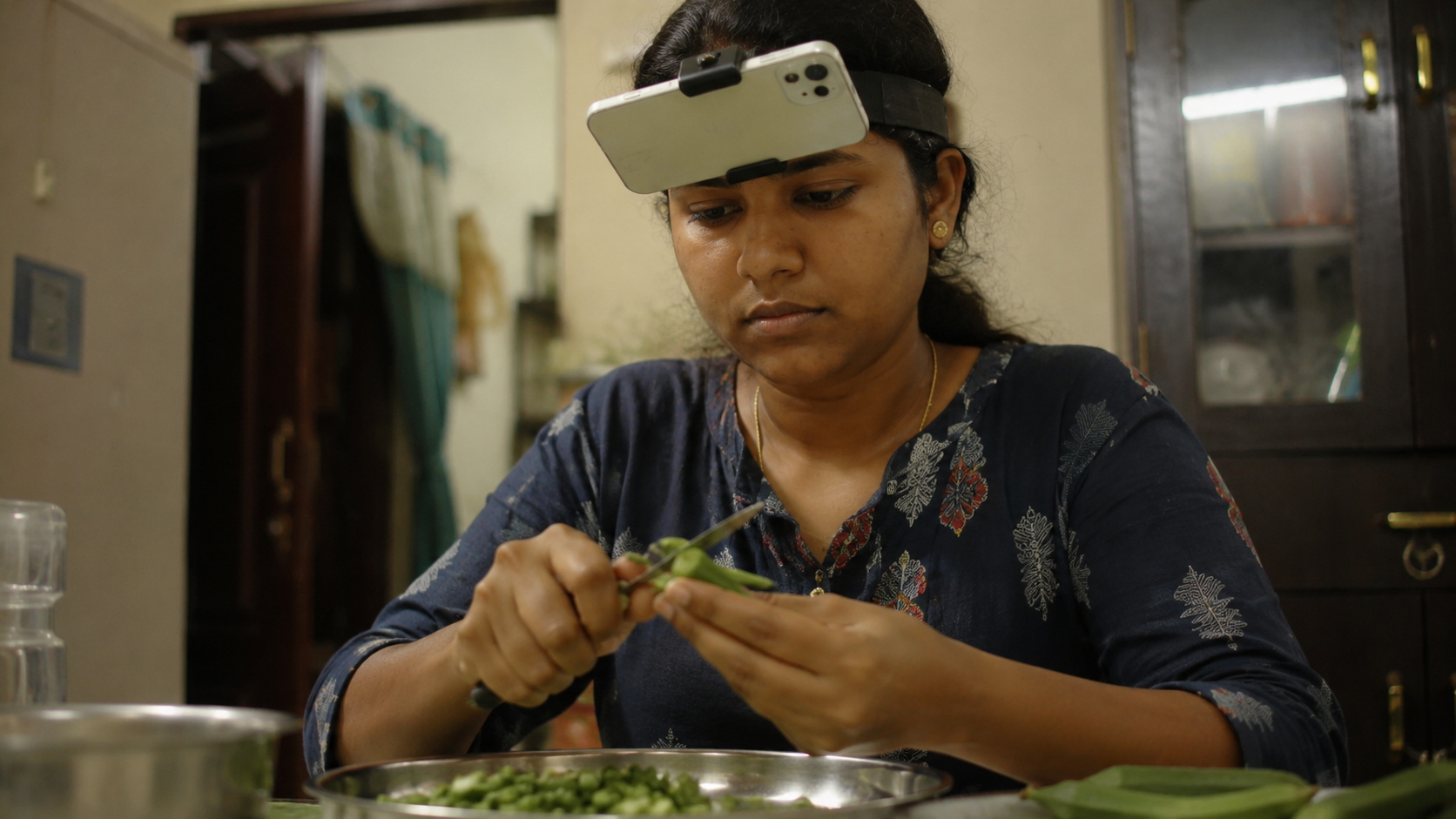

In India, workers film household tasks to train AI robots in a billion-dollar market that reignites the fear of replacement.
In 2026, the routine of Indian Nagireddy Sriramyachandra, in Chennai, in the state of Tamil Nadu, became a symbol of a new stage of artificial intelligence. In a report by AFP, published by Al Jazeera, she appears recording household tasks with a smartphone attached to her head to help train robots capable of reproducing human gestures in the physical world.
The case helps explain an important shift in the global AI race. After advancing with text, image, and video, the sector is now trying to teach machines to act in kitchens, factories, hospitals, and homes, and this has opened up space for a new type of digital work based on first-person videos, sensors, and the repetition of everyday tasks.
Digital work in India becomes raw material for robots with artificial intelligence
Nagireddy Sriramyachandra earns 250 rupees per hour of video, about US$ 2.6, to record common activities like cutting mangoes in her kitchen. AFP reports that she is part of a growing contingent of Indian workers involved in collecting human data for AI and robotics systems.
-
Nuclear Fusion Study Proposes Transforming Mercury into Gold Using Tokamak Neutrons, but Real-World Application Remains Uncertain

-
Brazilian Researchers Develop Floor Tiles That Convert Student Footsteps into Electricity to Reduce University Energy Costs

-
Cambridge Scientists Achieve Solar-Powered Plastic Recycling, Converting Waste into Valuable Chemicals Without Fossil Fuels, Paving the Way for a Low-Carbon Circular Economy

-
In Ghana, Makafui Awuku Turns 250-300 Water Sachets Into Each 30-Year-Lasting School Desk, Lifting Children Off Classroom Floors




This work is not restricted to the domestic environment. AFP reports that some of these professionals work at home, while others work in factories and specialized studios using camera glasses, head-mounted equipment, and motion sensors to capture human actions more accurately.
The economic logic behind this market is straightforward. Instead of relying solely on simulations or expensive robots training among themselves, companies have started paying people to generate real data, in real context, with real objects, accelerating the learning of machines that need to operate outside screens and within the physical world.
Egocentric data explain why cooking and sweeping have become valuable assets
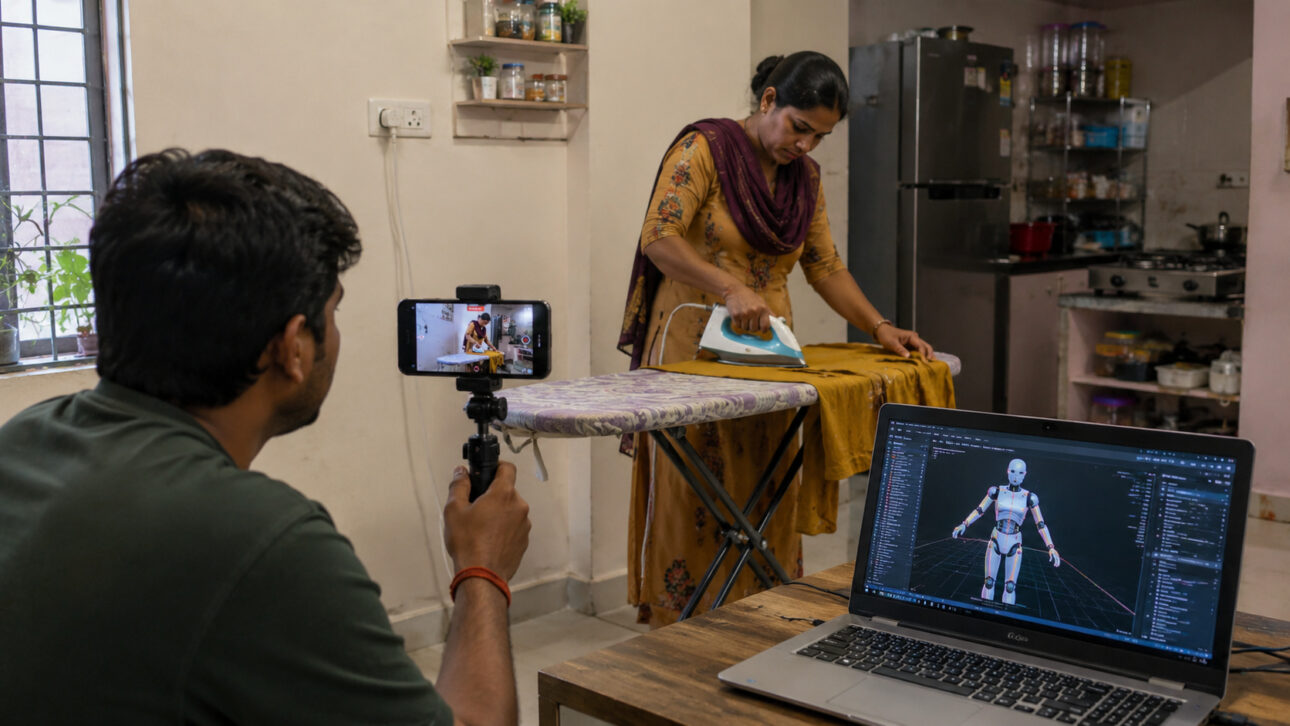
CNN Brasil describes this material as egocentric data or human data, that is, first-person footage that shows exactly how someone holds an object, changes direction, measures force, deals with friction, and reacts to the environment. It is this type of nuance that many robotics systems still lack.
According to the report, the company Micro1 already gathers around 4,000 “robotics generalists” in 71 countries, who send more than 160,000 hours of video per month. Even so, the volume is considered insufficient given the sector’s ambition to develop general-purpose robots for multiple environments and functions.
CNN itself points out that the race gained momentum when recent AI advancements began to connect visual perception and physical action.
In another relevant data point cited by the report, a Nvidia report indicated that incorporating more than 20,000 hours of first-person videos increased the success rate by more than 50% in tasks such as folding shirts, sorting letters, and opening bottle caps.
India becomes a hub for data collection for robotics and physical automation
India’s position in this market is not accidental. Objectways, cited by CNN and shown in AFP’s photographic coverage, shifted part of its operation to human data collection and found that only about half of the submitted footage is actually usable, highlighting the technical demands of this material.

The geography of data also matters. CNN reports that, with 90% of Objectways’ clients in the United States, companies are willing to pay more for videos recorded in American homes because kitchens, utensils, brooms, and routines vary from one country to another, and the robot needs to learn in the context where it will operate.
This helps to understand why India has become a strategic link in this chain. AFP describes the country as a global intermediary in the creation, processing, and annotation of data for AI, repeating a role that has already been observed in earlier stages of the digital economy.
Humanoid robot market expands race for human videos
Behind this seemingly simple work lies a market of large proportions. Morgan Stanley projects that the humanoid robot sector could surpass US$ 5 trillion by 2050, with more than 1 billion units in use, mostly in industrial and commercial applications.
The same analysis highlights that adoption is expected to accelerate from the end of the 2030s onwards, as hardware, software, regulation, and social acceptance advance.
To reach this stage, however, developers still need to feed the models with enormous amounts of human behavior captured on video.
This connection between cheap labor today and a trillion-dollar market tomorrow helps explain the urgency of the sector.
The videos recorded now are not just auxiliary material, but a strategic input for the future performance of machines that promise to operate in production lines, logistics centers, commerce, healthcare, and, later on, inside homes.
The central question is whether today’s training accelerates tomorrow’s replacement
This is where the story becomes more sensitive. AFP shows that the advancement of automation is accompanied by unease among workers who today earn income with this “digital gig”, but may be helping to train systems aimed precisely at tasks similar to those they perform.
The report also notes that the official debate in India has already reached the topic of employment. The government think tank NITI Aayog, cited by AFP, warned that much of the discussions on AI and work foresee job losses among white-collar professionals, while little is discussed about how technology can serve the country’s 490 million informal workers.
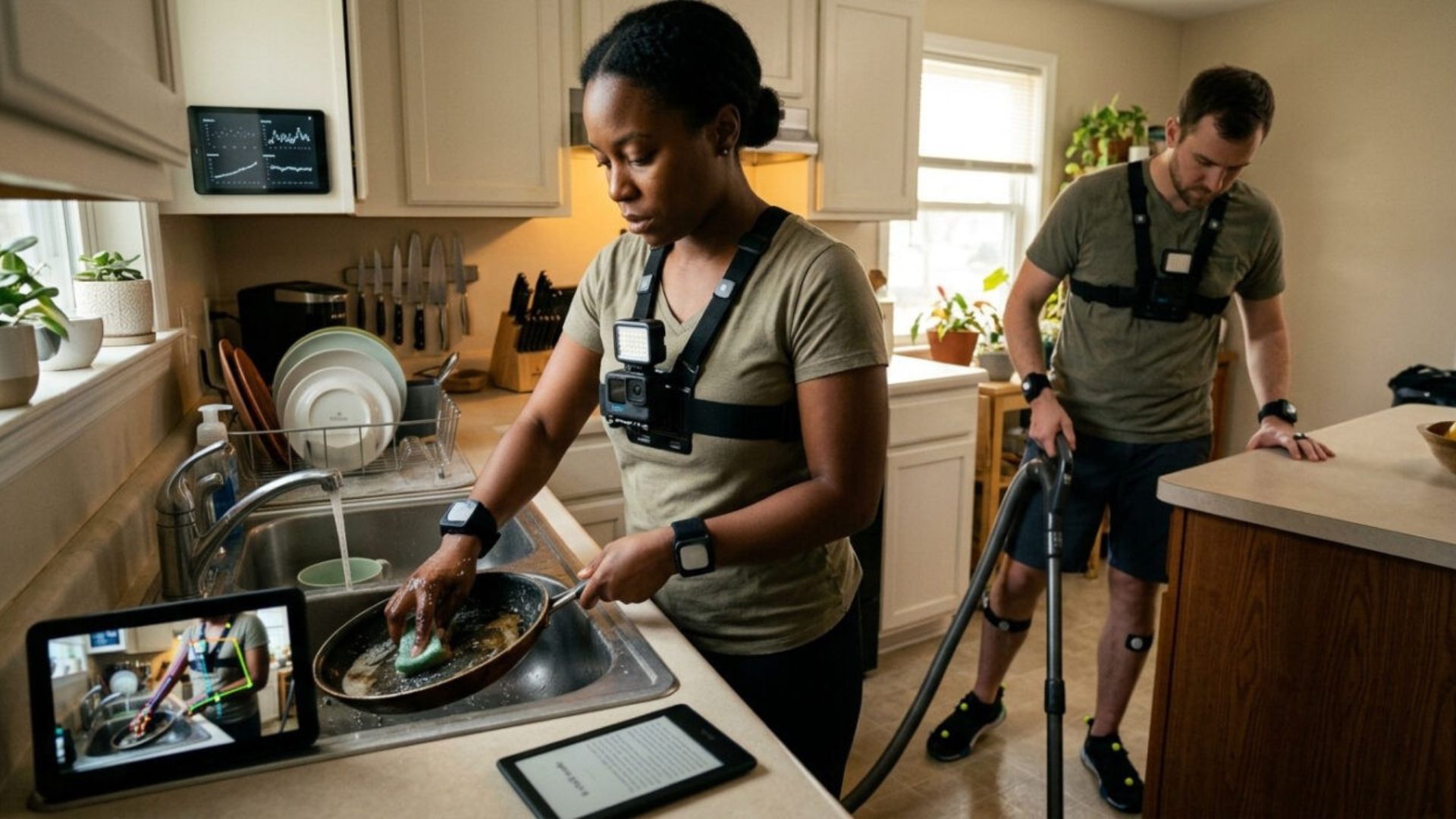
In the short term, the collection of human data can expand income opportunities. In the long term, it exposes a contradiction that is hard to ignore: while thousands of people cook, clean, and organize objects to teach machines to act like humans, the very economic utility of this knowledge can be used to reduce the need for human labor in these same functions.