Portuguese
  Spanish


Study by Marathon Fusion proposes using nuclear fusion in tokamak to convert mercury into stable gold-197, utilizing high-energy neutrons. The idea suggests tons of gold as a byproduct, but depends on pre-publication, complex engineering, isotopic enrichment, radiological safety, and commercial plants that do not yet exist on a real industrial scale.
Nuclear fusion has once again fueled an ancient alchemical dream: transforming mercury into gold. In July 2025, the proposal gained attention after Marathon Fusion released a pre-publication study on using neutrons from tokamak reactors to convert mercury-198 into gold-197, the only stable isotope of the precious metal.
According to the Refractor, what is under discussion is not a ready-made gold factory, but a theoretical path to utilize fusion reactors in future plants. The idea was presented in the United States by Marathon Fusion, a company focused on fusion energy technologies, and attracted attention because it mixes nuclear physics, billion-dollar economics, and an uncomfortable question: is the promise a real advancement or a new technological version of the old alchemical fantasy?
The alchemy dream returned with laboratory language
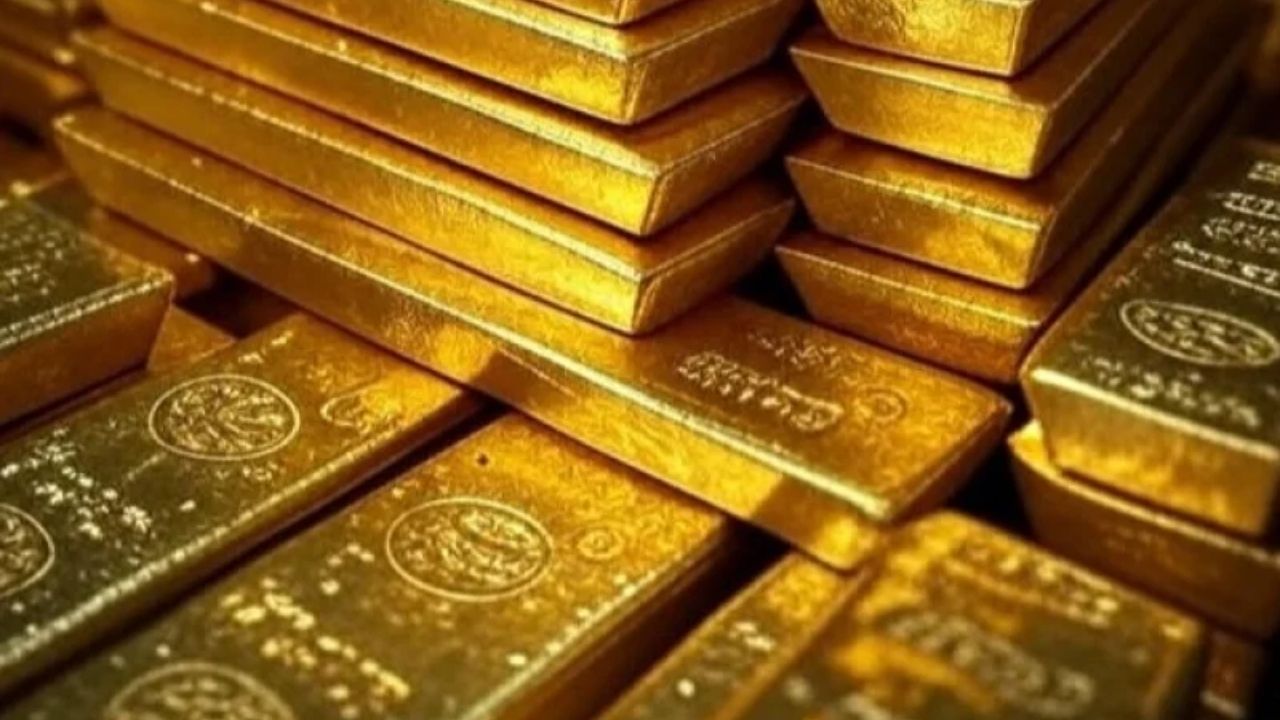
For centuries, alchemists tried to find a way to transform common metals into gold. The quest seemed to mix early science, philosophy, mysticism, and the desire for quick enrichment. Today, the story reappears with a different guise: there is no philosopher’s stone, but there are atomic nuclei, fast neutrons, and engineering calculations.
-
Brazilian Researchers Develop Floor Tiles That Convert Student Footsteps into Electricity to Reduce University Energy Costs

-
Cambridge Scientists Achieve Solar-Powered Plastic Recycling, Converting Waste into Valuable Chemicals Without Fossil Fuels, Paving the Way for a Low-Carbon Circular Economy

-
In Ghana, Makafui Awuku Turns 250-300 Water Sachets Into Each 30-Year-Lasting School Desk, Lifting Children Off Classroom Floors
-
In September 2035, Mars to Shine Brightest Since 2003, Aligning with NASA and China’s Planned Human Mission to the Red Planet



The difference is that nuclear transmutation is not fantasy. Physicists have already demonstrated that elements can be transformed into others when their nuclei are altered. The problem has always been economic and practical: producing gold in a laboratory used to yield minuscule amounts, with costs far exceeding the value of the metal obtained. The novelty of the proposal is to try to fit this transmutation as a byproduct of a future nuclear fusion plant.
How nuclear fusion would enter this transformation
The idea stems from a specific type of reactor known as a tokamak, designed to confine extremely hot plasma in magnetic fields. In deuterium and tritium reactions, this plasma releases high-energy neutrons. These neutrons, in turn, could be used to alter the nuclei of certain materials around the reactor chamber.
In the proposed model, mercury-198 would be in a layer associated with the reactor’s so-called “blanket,” a region that can also participate in tritium production. When hit by fast neutrons, mercury-198 could convert into unstable mercury-197, which then decays into gold-197. It is this gold-197 that makes the proposal so appealing because it is stable and corresponds to the natural gold used commercially.
Gold-197 is the central point of the promise
The most important technical detail is the final isotope. Not all gold produced in nuclear reactions would automatically be useful, safe, or stable. The study targets gold-197 precisely because it is the stable isotope of gold. This differentiates the proposal from scenarios where the obtained material would have persistent radioactivity or limited application.
Even so, the path is not simple. The process would require mercury enriched in the desired isotope, precise control of neutron exposure, and subsequent chemical separation of the formed gold. Since gold is not very reactive, the separation step can be described as relatively straightforward compared to other challenges. But this does not eliminate the weight of the nuclear engineering involved.
The billion-dollar promise comes from the projected tons
The part that caught the most attention was the economic estimate. According to the disclosed proposal, a nuclear fusion system could produce tons of gold per year as a byproduct of energy generation. New Atlas cited the calculation of five tons of gold for each gigawatt of electricity generated, with a potential value in the hundreds of millions of dollars annually, depending on the price of gold.
This number is strong for a headline, but it needs to be read with caution. The price of gold changes, the market would react to a new supply, and large-scale production would depend on facilities that are not yet commercially operating. The billion-dollar account would only make sense if the plant existed, if the process worked as expected, and if the costs of operation, separation, safety, and enrichment did not consume the economic advantage.
The study does not yet close the door to uncertainties
The cited work is in pre-publication format, meaning it still needs to undergo peer review to gain more robust scientific validation. This does not mean the idea is wrong, but it means it should not yet be treated as proven technology. In science, especially when there is a promise of significant economic impact, this caution is essential.
Moreover, simulations and models are not equivalent to industrial operation. A commercial nuclear fusion plant is already a huge challenge in itself. Adding gold production to the system increases the level of complexity because it involves materials, radioactive activation, maintenance, chemical processing, and potential regulatory requirements. The path from a promising study to a real plant can take years or decades.
Mercury also creates a delicate environmental layer
The proposal uses mercury, an element known for its environmental and toxicological risk. This can be presented in two ways: as an opportunity to transform a problematic material into something valuable, or as a new safety challenge within an extremely complex facility. Both perspectives need to be part of the debate.
If the process truly removed mercury from contaminant chains and converted it into stable gold, there would be a relevant environmental argument. But operating mercury on a large scale within nuclear systems would require strict containment, traceability, and safety protocols. Turning a chemical liability into an economic asset seems attractive, but it depends on technological control far above the norm.
Nuclear fusion is still seeking its own commercial breakthrough
Nuclear fusion itself remains a promise under construction. The ultimate goal of the field is to generate clean energy with high energy density, without the direct carbon emissions associated with fossil fuels and without the same type of chain reaction used in nuclear fission. But turning experiments and laboratory advances into reliable commercial plants is still one of the great frontiers of modern engineering.
Therefore, gold appears as a possible extra economic incentive. If a fusion plant could sell electricity and, at the same time, produce high-value materials, its financial balance could improve. This logic explains Marathon Fusion’s interest in transmutation. But it also increases the risk of exaggeration in public communication because the promise of “making gold” is too powerful not to generate inflated expectations.
Between scientific advancement and catchy headlines
The story works so well because it seems impossible: mercury turning into gold inside a nuclear fusion machine. But the core of the news is not magic; it’s neutron physics applied to an engineering proposal. The fascination comes precisely from the combination of an old idea and a frontier technology.
Even so, the tone needs to be balanced. The study suggests a path, it doesn’t deliver a ready-made plant. The company points to a possibility, not a new gold rush already in operation. The difference between “it might happen” and “it has already happened” is the point that separates journalism from technological propaganda.
Tokamak gold is still between calculation and reality
The proposal to transform mercury into gold through nuclear fusion is one of the most curious ideas to emerge at the intersection of energy, physics, and economics. It starts from a plausible nuclear mechanism, targets stable gold-197, and suggests an additional source of revenue for future plants. But it still depends on scientific validation, commercial reactors, and technical answers that cannot be ignored.
In the end, the question is not just whether science can repeat the dream of alchemists with neutrons and tokamaks. The bigger doubt is whether this can be done safely, cheaply, and on a scalable basis. Do you think nuclear fusion will still become a real source of gold or is this promise too far from practice? Leave your opinion in the comments.