Portuguese
  Spanish


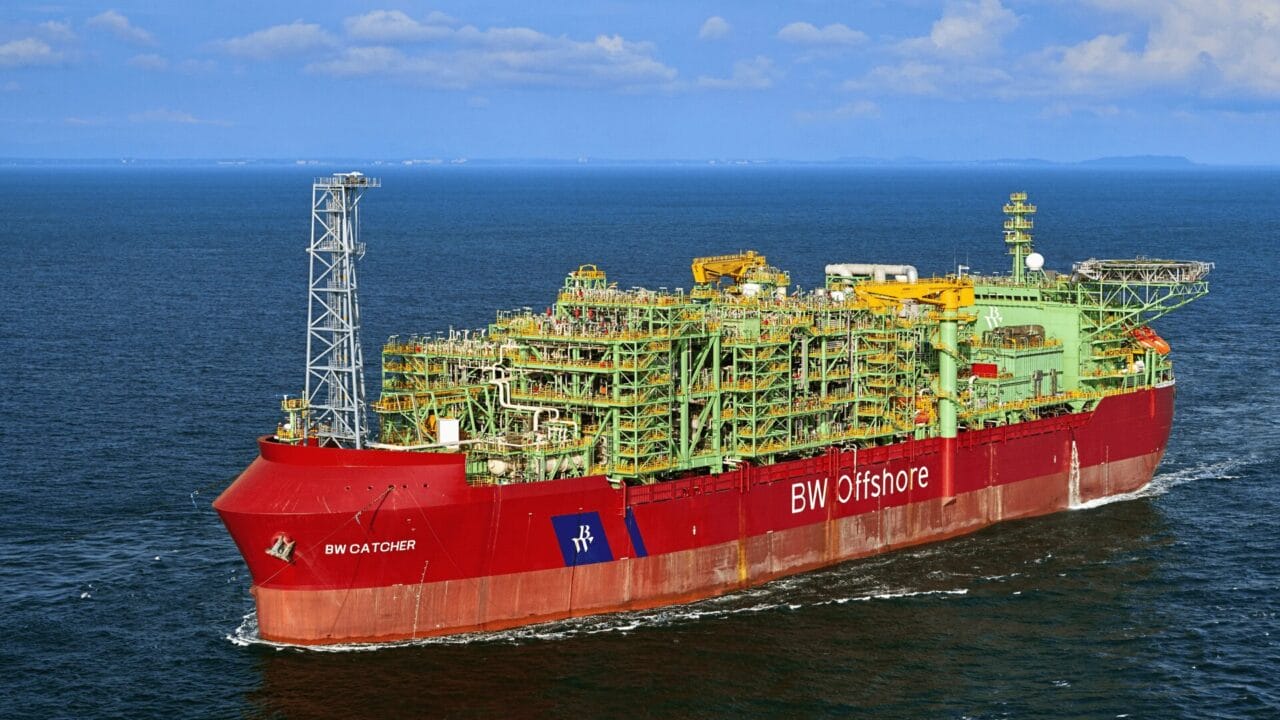


Norwegian FPSO Operator BW Offshore Is Approaching The End Of The Construction Phase Of A Floating Production, Storage, And Offloading Vessel (FPSO) That Will Operate In A Gas Field Off The Coast Of Australia In 2025.
Recently, BW Offshore confirmed that its team was working on the completion of the topside modules of the BW Opal FPSO at Dyna-Mac and the tower modules at Profab, while integration and commissioning activities were beginning at the Seatrium Tuas Boulevard Yard. The first offshore tower module was integrated with the hull on February 4, 2024, using the floating crane Asian Hercules III.
With the hull, topsides, and tower and mooring system 98%, 94%, and 96% completed, respectively, the Norwegian player emphasizes that the BW Opal FPSO is progressing according to the existing schedule for first gas in the first half of 2025.
Company Aims For Natural Gas Production In 2025
The company highlights that integration work is underway in Singapore, with 11 of the 16 topside modules successfully installed, while the current focus is on maintaining the schedule and mitigating project risks. According to BW Offshore, the long-term economics of the project remain intact.
-
Qantas and Airbus Invest in Company Aiming to Convert Unsorted Household Trash into Jet Fuel

-
Brazil’s ANP Opens 86 New Oil Blocks in the Equatorial Margin, Expanding the Amazon River Mouth Frontier

-
OPEC+ Boosts Oil Supply by 188,000 Barrels per Day in July 2026, Leading to Price Drop from $112 to $89 per Barrel in Under Two Months

-
TotalEnergies Signs 20-Year Deal to Purchase 2 Million Tons of LNG from Alaska, Boosting Project Viability




Once fully completed, the BW Opal FPSO will produce natural gas from the Barossa field, thanks to a fixed 15-year FPSO contract valued at US$ 4.6 billion, which includes additional ten-year extension options. The FPSO will have a processing capacity of up to 900 million standard cubic feet per day (mmscfd) of gas and a designed capacity of 11,000 barrels per day of stabilized condensate.
The Barossa field development involves an FPSO, subsea production wells, supporting subsea infrastructure, and a gas export pipeline connected to the existing Bayu-Undan to Darwin LNG pipeline. The project is owned by a joint venture between Santos (operator, 50%), SK E&S (32.5%), and JERA (12.5%).
Recall The Project
The project’s FID, located 300 km off the coast of Darwin, Australia, was made in 2021 just days after BW Offshore secured the contract for the construction, connection, and operation of the FPSO intended for the Barossa field. The company is convinced that the high and continuous price of Brent supports the demand for new FPSOs, extensions, and redeployments.
BW Offshore is interested in capturing energy transition opportunities with low-carbon offshore energy production through carbon capture and storage (CCS) technology installed on newly built FPSOs and gas-to-energy with CCS FLNG.