






 Portuguese
  Spanish
  7 min of reading
  0 comments


Launched in China, the Great Tang debuts with new generation Blade battery, 1,000-volt architecture, and sports car performance in a family SUV over 5 meters
BYD has officially launched the new Great Tang in China, a large electric SUV that arrives to occupy the top of the Dynasty line and strengthen the brand’s offensive in the premium segment. The model combines seven seats, a range of up to 950 km in the Chinese CLTC cycle, ultra-fast charging, and acceleration from 0 to 100 km/h in 3.9 seconds in the most powerful versions.
According to information from Motor1 and CnEVPost, the SUV starts at 239,900 yuan and goes up to 309,900 yuan, equivalent to approximately R$ 182,8 thousand to R$ 236,2 thousand in the conversion used by the original publication. The number draws attention because it places a luxury electric utility vehicle, over 5.2 meters in size, in a price range that in Brazil approaches much less sophisticated medium SUVs.
The launch took place on June 17, 2026, marking a new stage in BYD’s strategy to attract consumers seeking more than just an efficient electric car. The Chinese manufacturer now tries to advance in a territory where comfort, embedded technology, performance, status, and profit margin matter.
-
Nissan X-Trail e-Power debuts as a hybrid SUV that runs like an electric vehicle, uses a 1.5 turbo engine only as a generator, promises up to 1,039 km per tank, and arrives in the Philippines with 204 hp, a 482-liter trunk, and a competitive price.

-
Cheaper than Civic and Corolla, this Korean sedan offers a giant 520-liter trunk, 2.0 flex engine, and 6-speed automatic transmission; the Kia Cerato EX 2.0 2022 stands out as an ideal option for those who prioritize interior space and comfort.
-
An old Nissan Bluebird received the motor, inverter, and battery from the Leaf, became electric, and kept the body intact in a conversion done in the United Kingdom.

-
The car that most Brazilians buy today may cease to exist by 2030, and automakers already know that the 1.0 aspirated engine with manual transmission is numbered in the country.


The Great Tang also arrives at a time of intense competition in the Chinese electrified vehicle market. Brands like Li Auto, Aito, Nio, Xpeng, and Xiaomi have been pressuring the sector with increasingly technological SUVs, while BYD tries to prove that it can compete not only in volume but also in sophistication.
The range number is impressive, but needs to be read carefully
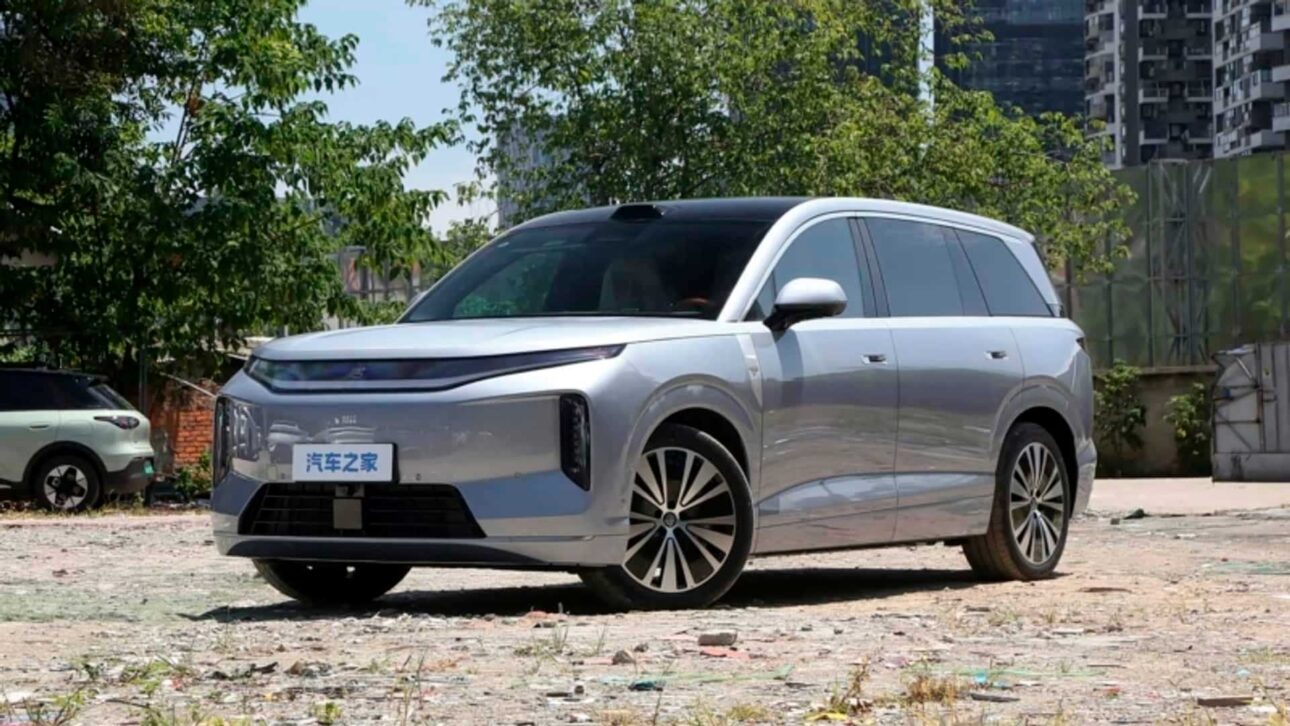
The most striking data of the new Great Tang is the range of up to 950 km. This range, however, was measured by the CLTC cycle, a standard used in China and generally more optimistic than measurements like WLTP, adopted in Europe, and EPA, used in the United States.
This means that the number should not be interpreted as a guarantee that the SUV will cover 950 km in any real use situation. Speed, temperature, weight carried, use of air conditioning, topography, and driving style can reduce the range in practice.
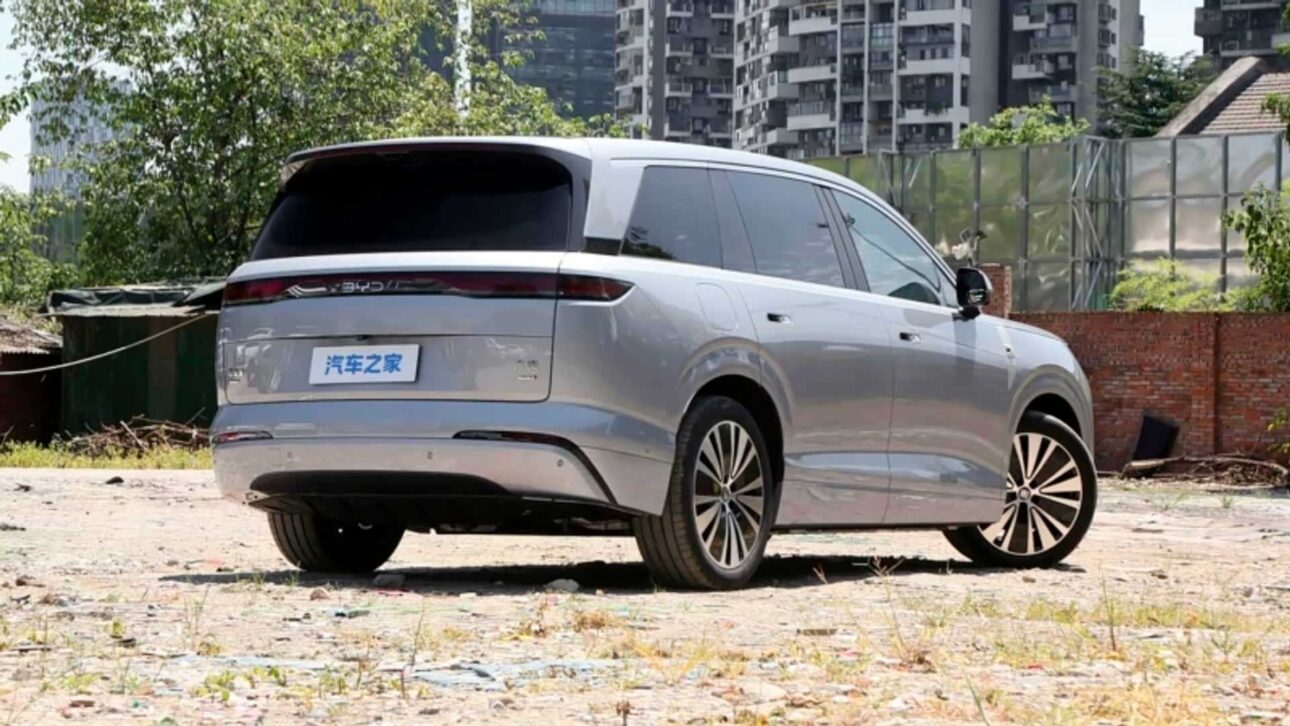
Still, the technical advancement is significant. According to CnEVPost, the long-range version uses a 130.1 kWh battery and a 370 kW rear motor, delivering the announced 950 km in the Chinese cycle. The entry-level version uses a 105.7 kWh battery, a 300 kW motor, and promises 800 km of range under the same standard.
In configurations with all-wheel drive, the Great Tang combines two electric motors and reaches a total power of 585 kW, equivalent to about 795 hp. In this configuration, the declared range is 850 km, but the performance rises to a level typical of sports cars.
Ultra-fast charging is BYD’s bet to reduce electric car anxiety
BYD equipped the Great Tang with a 1,000-volt electrical architecture, a solution that allows for much higher charging power than conventional systems. According to information released about the model, the battery can go from 10% to 97% in up to 9 minutes under ideal conditions.
This point is central to understanding the brand’s strategy. The long range helps reduce concerns about frequent stops, but ultra-fast charging tries to solve another problem of electric cars: the time needed to recover energy on trips.
The technology is linked to the second generation of the Blade battery, one of BYD’s main industrial assets. This battery uses LFP chemistry, lithium iron phosphate, known for prioritizing safety, durability, and lower cost compared to more expensive compositions used by some competitors.
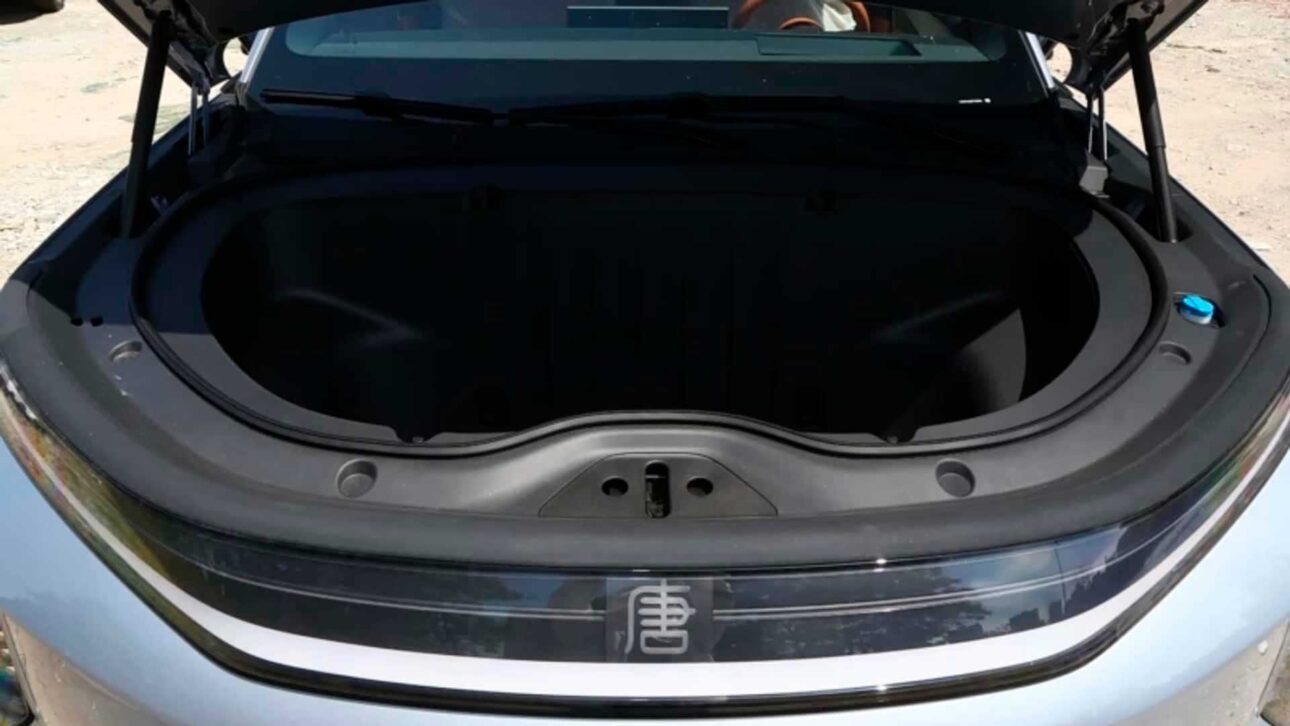
According to Reuters, BYD presented a major update to the Blade battery in 2026 and began using the advancement as a key piece to regain momentum in an increasingly competitive Chinese market. The company is also working to expand its network of fast chargers in China, an essential factor for the promise of charging in a few minutes to make sense outside of tests.
A luxury SUV with seven seats and uncommon solutions even among expensive models
The Great Tang measures 5,263 mm in length, 1,999 mm in width, 1,790 mm in height, and has a wheelbase of 3,130 mm. In some configurations, the length can reach 5,302 mm, placing the model among the large luxury family SUVs.
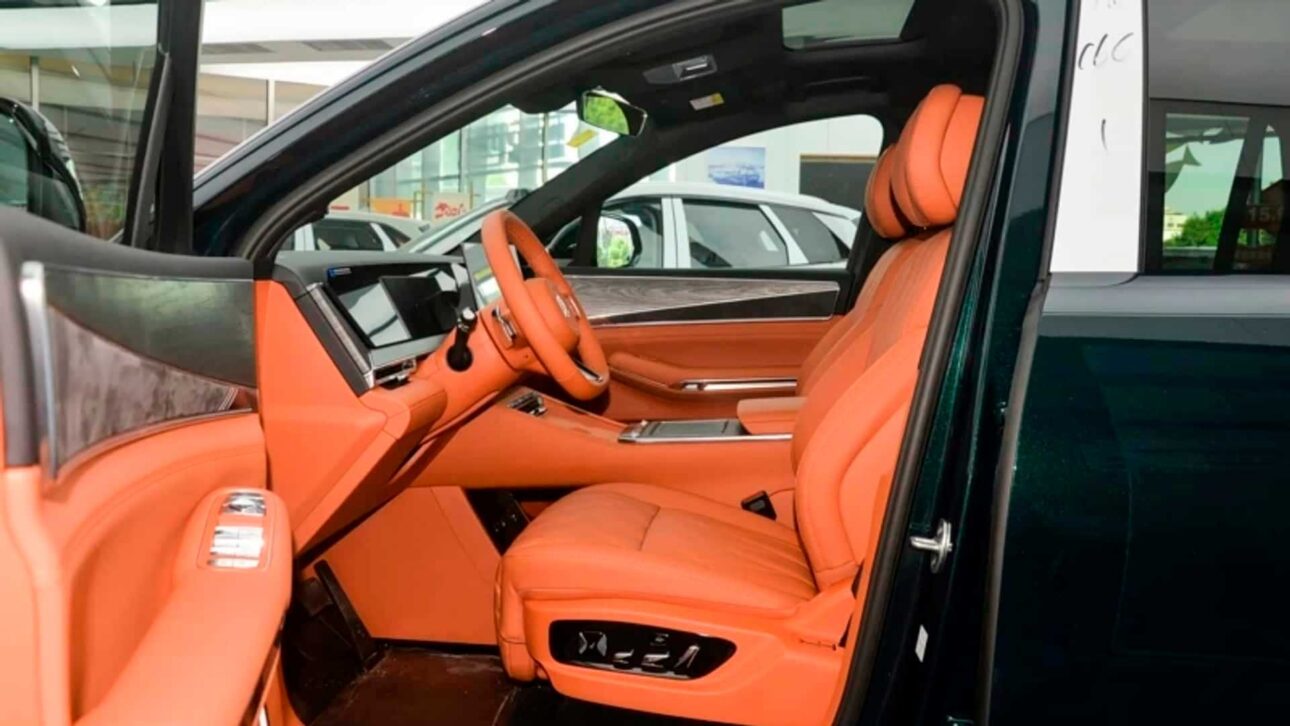
Inside, the configuration is 2+2+3, with two individual seats in the second row and three seats in the third. The proposal is to offer executive car comfort in a vehicle designed for large families, long trips, and consumers who do not want to compromise on space.
The front seats feature Zero Gravity function, designed to better distribute body weight. In the second row, the seats can recline up to 146 degrees and come with electric leg support, a solution inspired by business class seats.
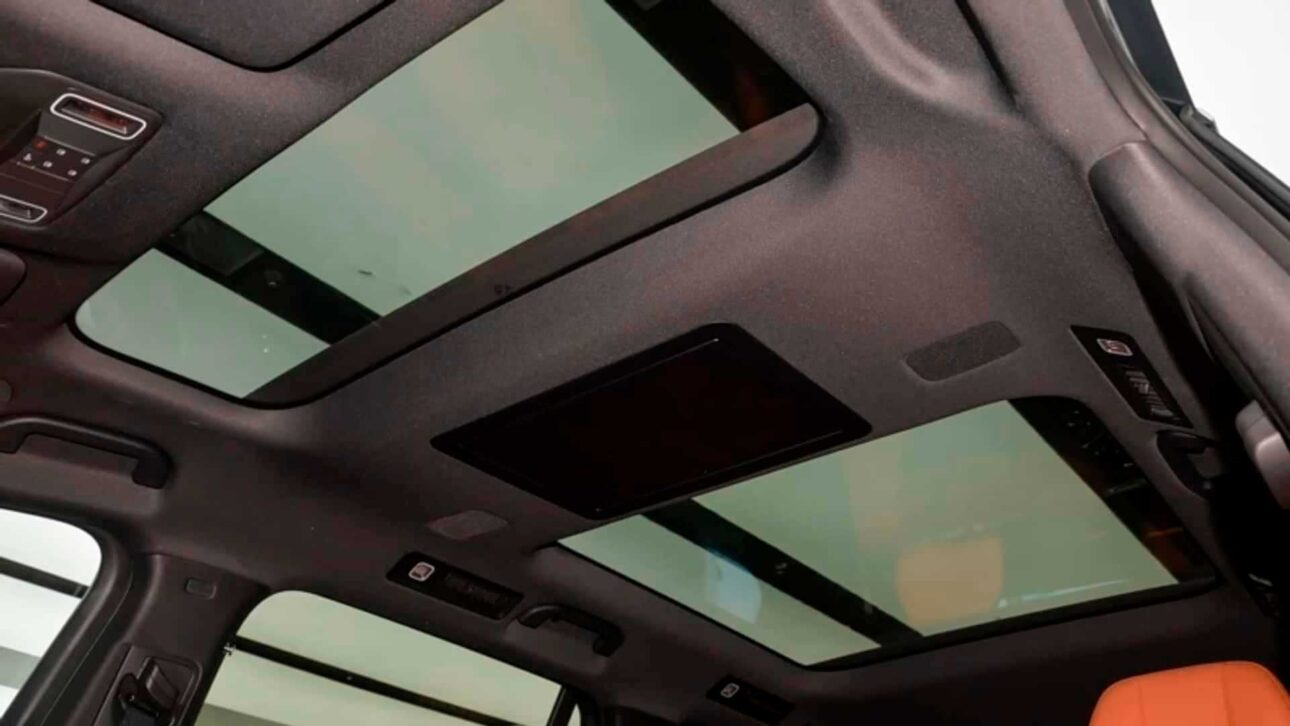
The cabin also features a suspended 17.3-inch screen for rear passengers, a 2.53 m² panoramic roof with acoustic laminated glass, and an electric curtain. Among the most curious features is the Lingdong system, consisting of small magnetic physical controls that can be repositioned inside the car to control functions such as climate, audio, and seat adjustments.
The size is intimidating, but engineering tries to make the SUV feel smaller when driving
To control a vehicle over 5 meters long, BYD included the intelligent pneumatic suspension DiSus-A. The system uses dual-chamber air springs and allows the body height to vary by up to 100 mm.
The suspension also works with sensors capable of analyzing the road and adjusting the shock absorbers before the car encounters irregularities. In practice, the solution aims to provide more comfort on rough surfaces and more stability at high speeds.
Another important feature is the rear-wheel steering. The rear wheels can turn up to 7 degrees, which reduces the turning radius to 5.2 meters, a low number for an SUV of this size.
The model also features the function known as “crab walk,” where the car moves diagonally. This technology has appeared in luxury vehicles and electric pickups but gains a different appeal in a family SUV, especially in tight maneuvers.
The premium offensive shows that BYD wants more than just selling cheap electric cars
For years, BYD was mainly seen as a strong volume manufacturer, with competitively priced electric and hybrid cars. The Great Tang shows that the company wants to expand this image and compete for higher-income consumers.
According to CnEVPost, the model has surpassed 150,000 pre-orders since reservations began, opened in April 2026 during the Beijing Auto Show. The result indicates strong interest in large, electric, and technological SUVs at a price range still below many global premium rivals.
The strategy also helps explain why the Great Tang was placed at the top of the Dynasty line. BYD already has more luxurious brands, such as Denza and Yangwang, but now it tries to elevate the value perception within its main brand.
In Brazil, there is still no official announcement about the arrival of the Great Tang. BYD’s national lineup already includes electrified models like Dolphin, Yuan, Song, Seal, Shark, Han, and Tan, according to the brand’s own Brazilian operation. The Tan, in fact, is currently the closest seven-seater electric SUV to this proposal in the Brazilian market, although it is smaller and less advanced than the new Chinese Great Tang.
What this launch says about the future of electric SUVs
The Great Tang is not just another BYD launch. It shows how the Chinese industry is accelerating in a direction that mixes larger batteries, ultra-fast charging, luxury interiors, and aggressive pricing.
The 950 km range may be optimistic as it is in the CLTC cycle, but the technical package reveals a clear trend. Electric cars are moving beyond competing only in urban efficiency and are starting to directly target consumers who previously only considered large combustion or hybrid SUVs from traditional brands.
For the Brazilian reader, the most important point might be another. Even without confirmation of sale in Brazil, the Great Tang shows the type of product that could pressure the global market in the coming years, especially if BYD manages to combine advanced technology, scale production, and competitive prices.
It remains to be seen how traditional manufacturers will react to a brand that already sells in large volumes and now tries to move up a level. If the competition reaches Brazil with this intensity, consumers may see increasingly technological electric SUVs, but also tougher competition among Chinese, Japanese, European, and American brands.
What do you think of this new electric SUV from BYD? Would the 950 km range and charging in a few minutes be enough to make you consider a 100% electric car, or is there still a lack of infrastructure for this type of vehicle in Brazil? Leave your opinion in the comments and join the discussion.







Be the first to react!