Portuguese
  Spanish


AeroRiver Project bets on ground effect vehicle to transform river mobility in the Amazon without relying on airports or roads
A Brazilian project aims to transform Amazonian rivers into high-speed corridors. The Volitan, called the flying boat, was developed to travel close to the water, transport passengers or cargo, and reduce long journeys in areas where the river is still the main road.
The Amazon may gain a new type of transport to tackle an old problem: the slowness in travel between communities, municipalities, and service centers. The AeroRiver project, a startup created by engineers from the North of the country trained at the Aeronautics Technological Institute, bets on a ground effect vehicle capable of moving at 150 km/h over the rivers.
The proposal is to use the region’s own river structure, without requiring complex airports or new roads within the forest. In practice, the vehicle functions as a mix of boat and plane, but flies very low, a few meters above the water surface, taking advantage of an aerodynamic phenomenon that reduces the effort to stay in motion.
-
New York removed the tracks from over 2,500 subway cars and dumped everything at the bottom of the Atlantic, and what seemed like trash turned into an artificial reef teeming with fish and divers.

-
From matches sold by bicycle at age 5 to a global furniture empire: the lumberjack’s son founded IKEA at 17 in his uncle’s kitchen and transformed a small company into the largest furniture retailer on the planet.
-
The mansion in Flamengo, built in 1865 for the Baron of São Clemente and closed for 20 years, has become a spa, event hall, and gym for “Symphony,” a luxury condominium that sold 70% of its gross development value in the first month on the R$ 60 million land of the former Bennett College.

-
The Ipiranga convent, a 1924 building adjacent to the Museum that remained vacant for a decade and became home to dozens of cats, is reborn as “Alma Mater,” a luxury development worth R$ 130 million with a pool in the courtyard and a clubhouse in the former nuns’ chapel.





According to information published by Revista Galileu in June 2026, the goal is for the flying boat to transport up to ten people or about one ton of cargo, with potential to shorten trips that today can last days. The promise is especially appealing in a region where distance is measured not only in kilometers but also by floods, droughts, currents, and lack of land infrastructure.
The project’s name is Volitan. And, although it seems futuristic, the logic behind it stems from a very concrete reality: in many areas of the Amazon, reaching a hospital, delivering medicines, transporting food, moving technicians, or exporting products still depends on long journeys by rivers.
How the flying boat uses ground effect to gain speed
The Volitan is a ground effect vehicle, a concept internationally known as WIG, an acronym in English for vehicles that move close to the surface taking advantage of the interaction between wing, air, and ground or water. In this type of operation, proximity to the surface improves lift and can increase the efficiency of movement.
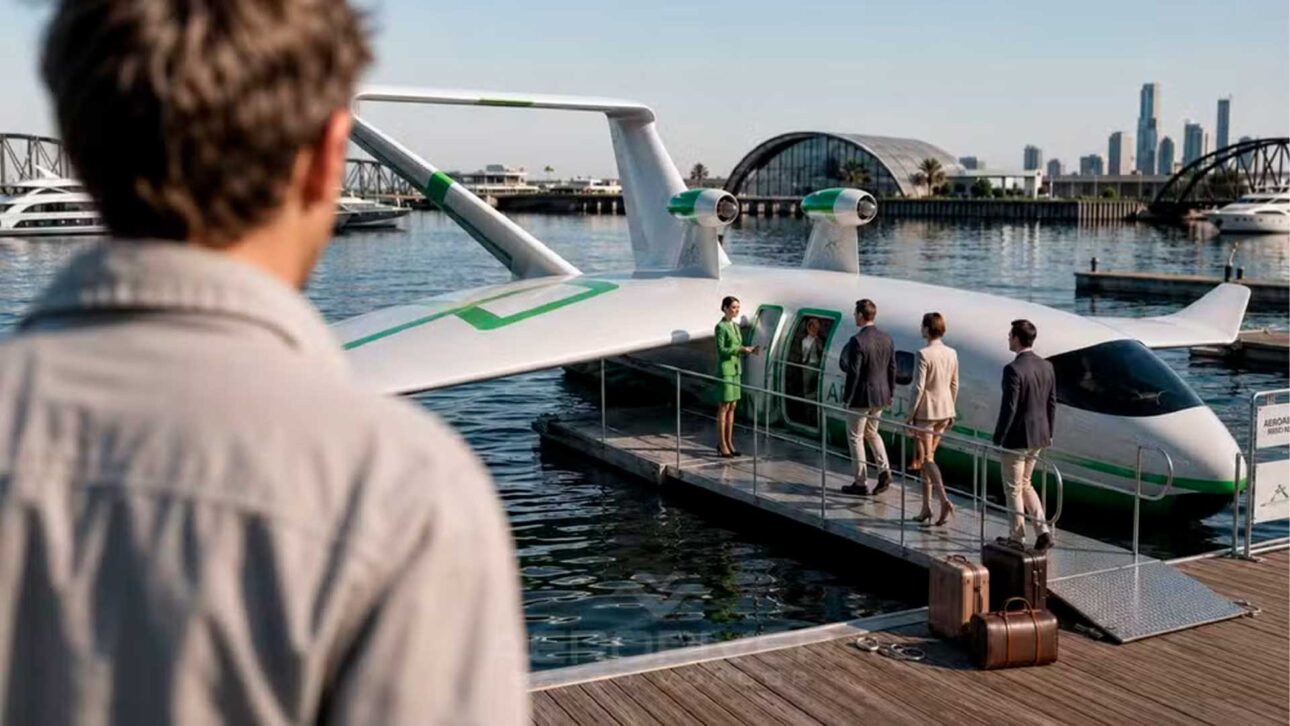
According to AeroRiver, the model was adapted to the operational conditions of the Amazon territory. The company states that takeoff and landing will be done on rivers, using a hull developed for this purpose, which allows for the use of existing ports and river structures.
The technology does not intend to replace all the boats in the region. The idea is to operate on strategic routes, especially where speed, regularity, and cargo capacity can make a difference for passengers, small cargo, sustainable tourism, public services, and emergencies.
The differentiator is in the movement without constant contact with the water during high-speed navigation. This tends to reduce drag, one of the main limitations of conventional boats, and helps explain why the project aims for a cruising speed of 150 km/h, well above most vessels used in regional transport.
Rivers are the roads of the Amazon and explain the bet on the new mode
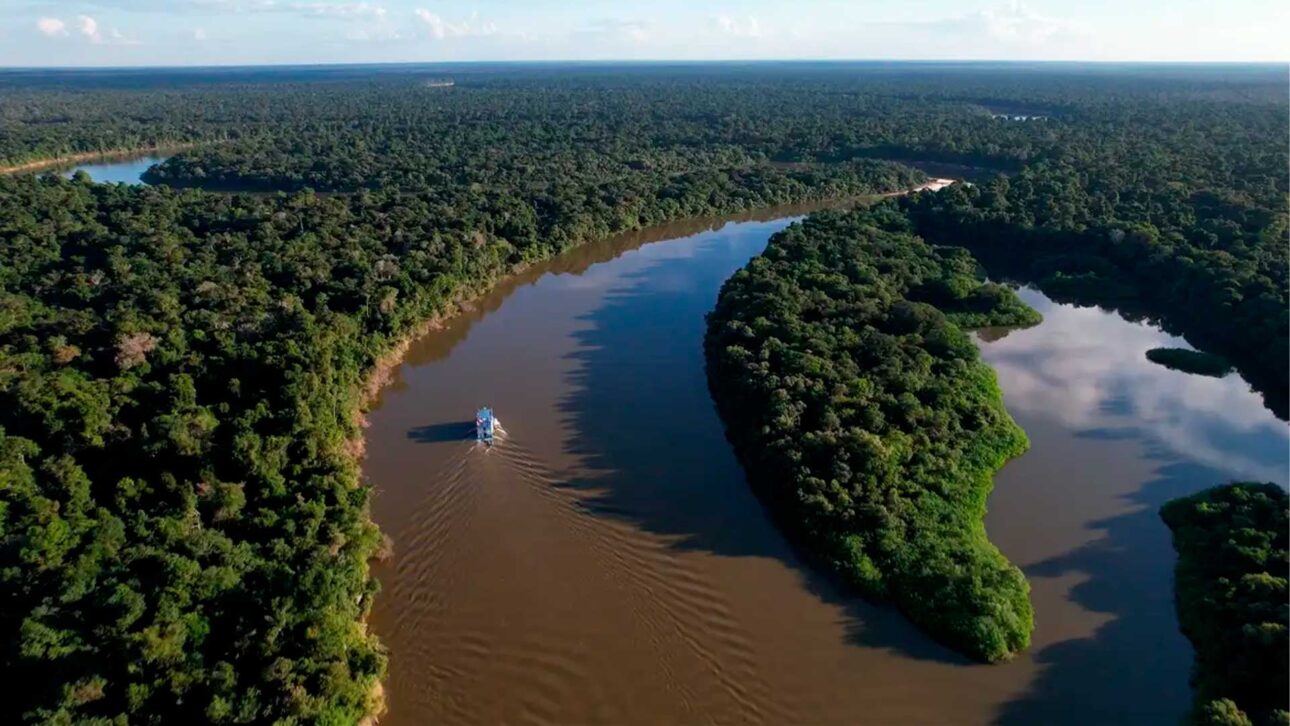
In the North region, rivers function as a link between capitals, inland municipalities, and riverside communities. The Ministry of Transport has already described the Amazonian waterway network as an essential connection for passengers, cargo, medicines, food, construction materials, and travel related to work, study, and medical treatment.
This context helps to understand why such an innovation arouses interest. In areas where building roads can be expensive, environmentally sensitive, or simply unfeasible, a vehicle that uses rivers as a runway can reduce bottlenecks without requiring the same physical intervention in the territory.
The challenge is that the Amazonian rivers also change. Floods and droughts alter routes, depths, boarding points, and travel times. Therefore, any solution needs to be more than fast: it needs to be robust, adapted to the environment, and capable of operating safely in a complex region.
The promise of the Volitan enters precisely at this point. By flying low over the water, the flying boat seeks to maintain the Amazon’s river logic but with performance closer to regional air transport, without relying on the construction of airports at each destination.
Health, cargo, and urgency may be the most sensitive uses
One of the strongest examples of impact is in health. The Ministry of Health maintains the model of River Basic Health Units, vessels equipped to serve the riverside populations of the Legal Amazon and the Pantanal Sul Mato-Grossense. These units operate with river displacement to the communities and direct service to the population.
Even with this model, travel time remains a problem in isolated areas. In urgent situations, a journey that takes many hours or days can delay assistance, transport of supplies, patient evacuation, or team arrival.
It is in this type of reality that the flying boat can gain relevance, if it moves beyond the development phase and proves operational viability. The possibility of carrying loads of up to one ton also opens up opportunities for the transport of medicines, equipment, perishable food, parts, and materials that currently depend on slow routes.
Even so, the project should not be treated as a magical solution. To become a regular service, it will be necessary to demonstrate safety, competitive cost, viable maintenance, pilot or operator training, clear navigation rules, and the ability to operate in different river conditions.
Project received public support and seeks to advance to regular operation
The project received support from the Centelha Program, an initiative promoted by MCTI, Finep, and CNPq, in partnership with CONFAP and Fundação CERTI. The program offers resources, training, and support to transform innovative ideas into businesses and has already supported thousands of startups in its national editions.
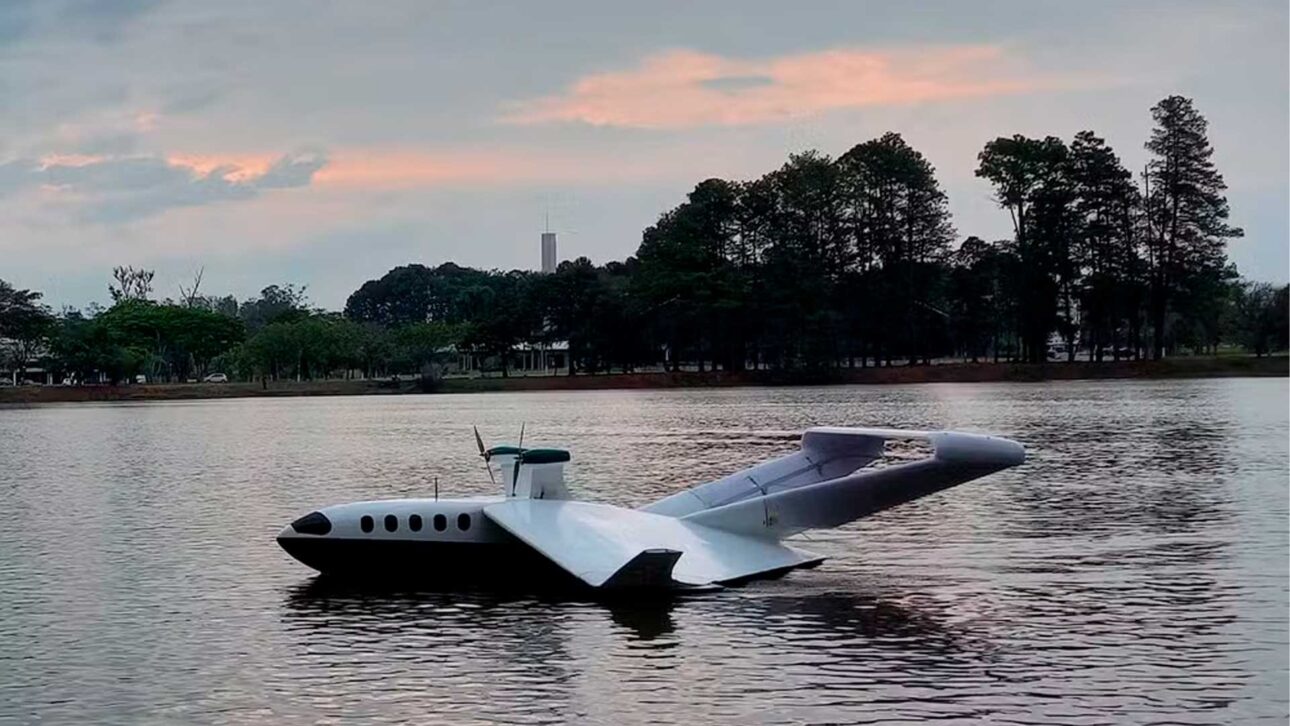
According to MCTI, Finep supported the structural development of the flying boat with a focus on improving mobility in the Amazon. The initiative connects to a larger regional innovation agenda, where solutions created by companies in the region itself seek to address local logistics, health, and economic development issues.
Agência Brasil reported in 2025 that the Volitan is a 100% national project by the Amazonian startup AeroRiver and that the technology also aims to reduce emissions compared to traditional alternatives. The company points out that the ground effect can make the vehicle up to 40% more efficient than planes in the same category, although this performance needs to be confirmed in real operation and commercial routes.
The AeroRiver website also reports an estimated range of 450 km, use of port infrastructure, and a cruising speed of 150 km/h. The combination of these factors supports the proposal to shorten travel without creating a new dependency on airports.
Upcoming tests will indicate if the promise withstands the reality of the rivers
The project team has already gone through the phase of models and subscale prototypes. The next step is to advance with larger units, water tests, navigation validation, sensing, pilot support, and operation in real Amazonian conditions.
The goal stated by those responsible is to establish a regular operation on strategic routes in the Amazon. However, as with any transportation technology, the gap between prototype and commercial operation involves certification, capital, production scale, maintenance, insurance, training, and acceptance by local operators.
There is also the regulatory discussion. Developers argue that classifying it as a vessel, rather than a traditional airplane, can reduce operational complexity. Even so, safety will depend on clear rules and adequate oversight, as the vehicle combines navigation and low-altitude flight characteristics.
If it works as planned, the flying boat can serve important niches, such as emergency travel, controlled tourism routes, light cargo transport, and connections between riverside cities. If it fails in cost or maintenance, it may be limited to demonstrations and pilot projects.
Amazonian innovation needs to prove cost, safety, and scale
The greatest merit of the Volitan is addressing a real problem. The Amazon does not only need imported technology or solutions designed for urban centers; it needs alternatives designed for long rivers, dispersed communities, extreme climate, and limited infrastructure.
At the same time, the promise needs to be approached with caution. The fact that it reaches 150 km/h and takes advantage of ground effect does not alone solve the ticket cost, maintenance in remote areas, refueling, team training, or integration with public health and transport networks.
Therefore, the central point of the news is not just the vehicle “flying” over the water. The point is that the technology attempts to address a historical bottleneck in the Amazon: how to shorten distances without destroying the forest and without relying on massive construction projects.