






 Portuguese
  Spanish


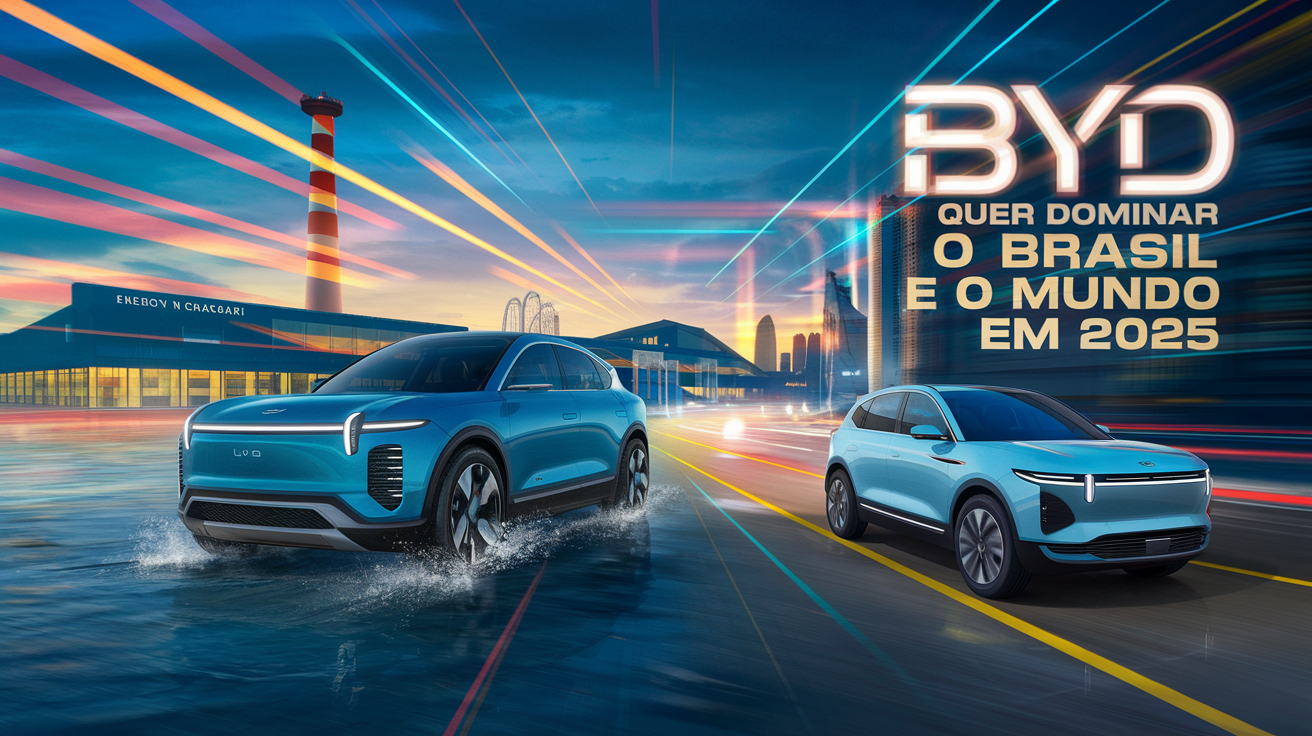


With a Focus on Global and National Expansion, BYD Heavily Invests in 2025 with Models Ranging from Affordable Compacts like the Dolphin to Futuristic Vehicles like the Yangwang U8. The New Factory in Camaçari Will Be Crucial for Nationalizing Models and Popularizing Electric Vehicles in Brazil.
A New Era in the Automotive Sector is About to Begin.
With bold strategic moves and a portfolio full of surprising models, the Chinese giant BYD is determined to conquer not only the Brazilian market but also solidify its global leadership.
Despite already being one of the leading names in the electric vehicle market, the brand is heavily investing to make 2025 a historic milestone.
-
2027 Toyota Corolla Cross Unveiled: New Design, Enhanced Fuel Efficiency, Reduced Maintenance Costs, Advanced Technology, Connected Services, and Up to 10-Year Warranty

-
Fiat Cronos Precision 2018: Affordable Sedan with Spacious Trunk and Reliable Maintenance
-
Volkswagen to Cut Production by 1 Million Cars by 2030, Reducing Jobs and Platforms, Focusing on More Profitable Models

-
Toyota Launches First 100% Electric Car in Brazil: bZ4X with 343 HP, All-Wheel Drive, 361 km Range, Priced at $419,990 BRL, Limited to 99 Units



In Brazil, the focus is on the inauguration of the factory in Camaçari, Bahia, a region that once hosted Ford’s operations.
This new unit promises to nationalize strategic models, such as the Dolphin line and the innovative Shark pickup, bringing adaptations tailored for local consumers.
In the global landscape, BYD will unveil unprecedented vehicles equipped with cutting-edge technologies, such as the Sealion 7, the Seal 06, and the impressive Yangwang U8. Check out the highlights of this offensive.
Dolphin and Dolphin Mini: Strategic Nationalization
The Dolphin line will be one of the pillars of BYD’s strategy in Brazil.
According to Pablo Toledo, Communication and Marketing Director of BYD in Brazil, the nationalization of these models seeks to meet the high demand from the Brazilian market for compact and electric vehicles.
Local production will allow for exclusive adjustments, such as new color options and versions, tailored to Brazilian consumer preferences.
Both models feature compact bodies, electric motors, and estimated prices of R$ 120,000 (Dolphin Mini) and R$ 160,000 (Dolphin).
This line will play a crucial role in BYD’s expansion plan, which aims to popularize electric vehicles in the country, standing out as an accessible and modern alternative.

Shark Pickup: Innovation and Performance
Another major highlight is the Shark pickup, which combines power and energy efficiency with advanced technology.
Launched in October 2024, it became a reference by being the first medium hybrid plug-in pickup in the Brazilian market.
Combining a 1.5-liter combustion engine and two electric motors, the Shark delivers an impressive 437 horsepower and accelerates from 0 to 100 km/h in just 5.7 seconds.
Additionally, it features terrain modes (sand, mud, and snow), ensuring robust performance in different conditions.
The pickup will be manufactured locally in 2025 and is expected to be priced at R$ 380,000, making it a premium option in the segment.

Sealion 7: The SUV That Redefines the Market
In the global market, BYD bets on the Sealion 7, an SUV developed with the e-Platform 3.0, ideal for electric vehicles.
Equipped with Blade batteries, the model promises up to 313 horsepower and all-wheel drive, combined with the advanced iTAC system, which intelligently distributes torque.
With an estimated price of R$ 380,000, the Sealion 7 aims to attract consumers seeking luxury and technology.
According to experts, it will play a central role in consolidating the brand in the most demanding markets worldwide.

Seal 06: Sophistication and Versatility in BYD
The Seal 06, inspired by the Ocean-M concept, will be a medium hatchback with modern design and remarkable performance.
Although there are still few details about its engine, it is expected to have electric and hybrid plug-in versions.
With generous dimensions and a price above R$ 200,000, the model should compete directly with vehicles from renowned brands such as Audi, BMW, and Mercedes-Benz.

Yangwang U8: Futuristic Technology
The Yangwang U8 is a true technological masterpiece.
Developed as part of BYD’s premium sub-brand, the SUV impresses with its unique capabilities, such as floating on water and driving sideways at 90-degree angles.
Equipped with four independent electric motors, it offers an unparalleled driving experience, further reinforcing the brand’s commitment to innovation.
If it arrives in Brazil, it will be a niche model aimed at high-end consumers.

BYD Positions Itself as One of the Most Innovative and Visionary Brands in the Automotive Sector.
With a bold strategy and a diverse product line, BYD positions itself as one of the most innovative and visionary brands in the automotive sector.
The inauguration of the factory in Camaçari and the nationalization of models are important steps to meet the demand of the Brazilian market, while the launch of technological vehicles like the Yangwang U8 reinforces its global leadership.
Which BYD model caught your attention the most? Do you believe the brand will manage to dominate the Brazilian and global markets in 2025? Share your thoughts in the comments!




Quando os carros chineses vende muito,vai ter país ocidente fazer sanção dizendo que é carros chinês feito com mão de obra escravo mesmo fabricado por brasileiros, ou taxar os carros