






 Portuguese
  Spanish





From The Inaugural Flight To Series Production, The KF-21 Boramae Symbolizes South Korean Technological Maturity, Redefining Strategic Autonomy, Industrial Ambition, And The Country’s Role In The Global Military Aerospace Market.
When the Defense Acquisition Program Administration (DAPA) confirmed, in 2022, the first successful flight of the KF-21 Boramae, it became clear that South Korea is no longer just a buyer of defense systems, but an industrial player capable of designing, manufacturing, and testing a high-performance supersonic aircraft with 5th generation ambitions. The program, led by Korea Aerospace Industries (KAI) with support from the South Korean government, represents a structural change in the country’s technological base.
The prototype, officially named KF-21, measures about 16.9 meters in length, with a wingspan of 11.2 meters, and uses domestically developed AESA (Active Electronically Scanned Array) radar — one of the critical components that differentiate 4th and 5th generation aircraft. The combination of advanced sensors, data fusion, and reduced radar signature positions the Boramae in a segment that many analysts refer to as “transitional 5th generation,” meaning aircraft that carry stealth and electronic elements typical of an F-35, but still lack the complete level of stealth integration.
A Program Aiming For Industrial Sovereignty
The KF-21 did not emerge in isolation. It is part of a broader industrial project aimed at reducing external dependencies and consolidating a national aerospace chain. Historically, South Korea has operated F-5, F-4, and F-16 fighters, and is now investing in both the F-35 and local development. This combination allows for a gradual and technically secure transition.
-
China Develops Custom 140-Ton Electric Mining Truck with 770 kWh Swappable Battery, Deploys 290 Units in Xinjiang’s Largest Zinc Mine

-
Meta to Launch Arena, a New Prediction App Targeting 3.56 Billion Users, Competing with Polymarket and Kalshi

-
Scientist Challenges Famous Human Evolution Theory, Argues Homo Sapiens Evolved Gradually Over Thousands of Years
-
15-Year-Old American Builds Ocean Generator with PVC Pipe and 3D-Printed Propeller for $12, Wins National Prize, Presents at White House, and Makes Forbes 30 Under 30 List




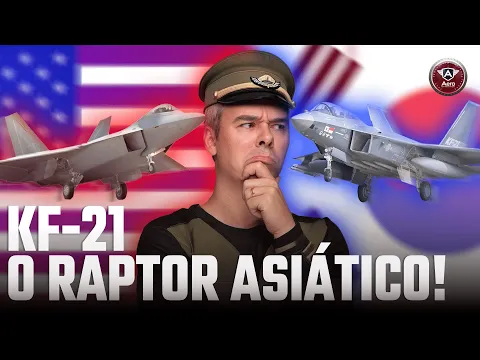

According to data released by Yonhap News, the development involved more than 200 domestic companies, including radar systems, avionics, infrared sensors, glass cockpit, and integrated systems. The engine is not yet domestic — the program utilizes two General Electric F414 turbofans, with sufficient thrust to break the sound barrier without afterburner under certain conditions.
This model of gradual industrialization — where sensors and avionics are nationalized first, followed by engines and materials — is similar to what has been seen in Japan and Turkey, countries also seeking autonomy in the aerospace sector.
What Does It Mean To Be “In Testing”?
The first flight, conducted on July 19, 2022, at Sacheon Air Base, represented only the beginning of the campaign. Since then, the program has entered a sequence of envelope expansion flights, which test:
- aerodynamic stability
- supersonic behavior
- integration of radar and sensors
- integration of air-to-air missiles
- performance of electronic systems
DAPA confirmed multiple flights throughout 2023 and 2024, with plans to incorporate guided weapons and medium-range air-to-air missiles, including variants capable of future integration with European and American platforms.
It’s not just about testing pure flight — the focus is on certifying mission architecture, electronic warfare systems, data fusion, and tactical link, elements that define the new generation of combat.
A Fighter Between Two Generations
Experts from Jane’s Defence classify the KF-21 as a “4.5+ with 5th generation ambitions.” This means that it already incorporates:
- Domestic AESA Radar
- Sensor Fusion
- Open Architecture
- Glass Cockpit
- Supersonic Capability
- Reduced RCS (Radar Cross Section)
But it still lacks:
- internal weapons bay (only planned for future phases)
- integral stealth (like the F-35 or B-21)
This “transitional” characteristic creates an interesting scenario: the KF-21 will be delivered in evolutionary batches, with the so-called Block 1 focusing on air-to-air missions, and future Blocks 2 and 3 adding air-to-ground capabilities and deeper stealth revisions. This block evolution model is common in expensive programs — the F-16, Gripen, and Rafale had similar cycles.
Regional And Geopolitical Impact
The KF-21’s entry into testing comes at a delicate moment in East Asia, with:
- accelerated modernization of Chinese aviation (H-20, J-20, J-31)
- Japanese stealth programs (F-X and GCAP)
- military restructuring in Oceania
For South Korea, the Boramae is not just a fighter: it is a geopolitical instrument that signals industrial capability, reduces strategic dependencies, and creates military export potential — something the country is already doing with combat vehicles, frigates, missiles, and artillery systems (such as the K9 Thunder, sold to Poland, Norway, and Finland).
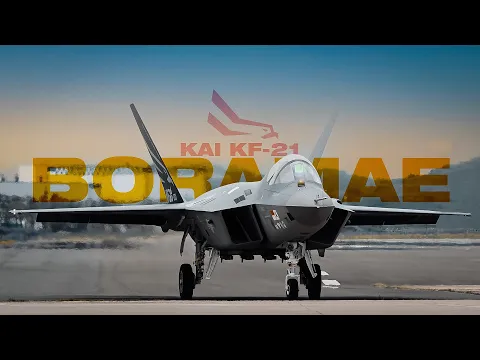
The possibility of exporting the KF-21 to countries like Indonesia — which is a partner in the program — enhances its relevance. Indonesia itself is expected to receive units in the future, following industrial negotiations that include technology offsets and training.
Confirmed Summary Timeline
- 2015–2019: development and engineering phase
- 2022: first official flight in Sacheon
- 2023–2026: envelope expansion testing + weapon integration
- 2026–2028: beginning of limited production (as estimated by DAPA)
- 2030+: potential for stealth blocks and exports
These projections have been discussed by publications like Yonhap, The Korea Herald, Aviation Week, and Jane’s.
What Makes The Boramae A Game-Changer
Few countries in the world can design, manufacture, and test a modern supersonic fighter. The list includes:
- USA
- Russia
- China
- France
- United Kingdom
- Sweden
- Japan (in development)
- Turkey (in development)
- South Korea (now included)
For a country historically dependent on F-4 and F-5, this leap is enormous.
What Comes Next?
The future of the KF-21 will depend on:
- weapon certification
- RCS reduction
- production costs
- export decisions
- technological partnerships
But the essential fact is that the program has already been realized, flown, and is now in a real test campaign, as confirmed by DAPA, Yonhap, and industry media.







Seria uma opção interessante para o Brasil, deixando o gripen como espinha dorsal e o KF21 como caça de superioridade aérea