Portuguese
  Spanish


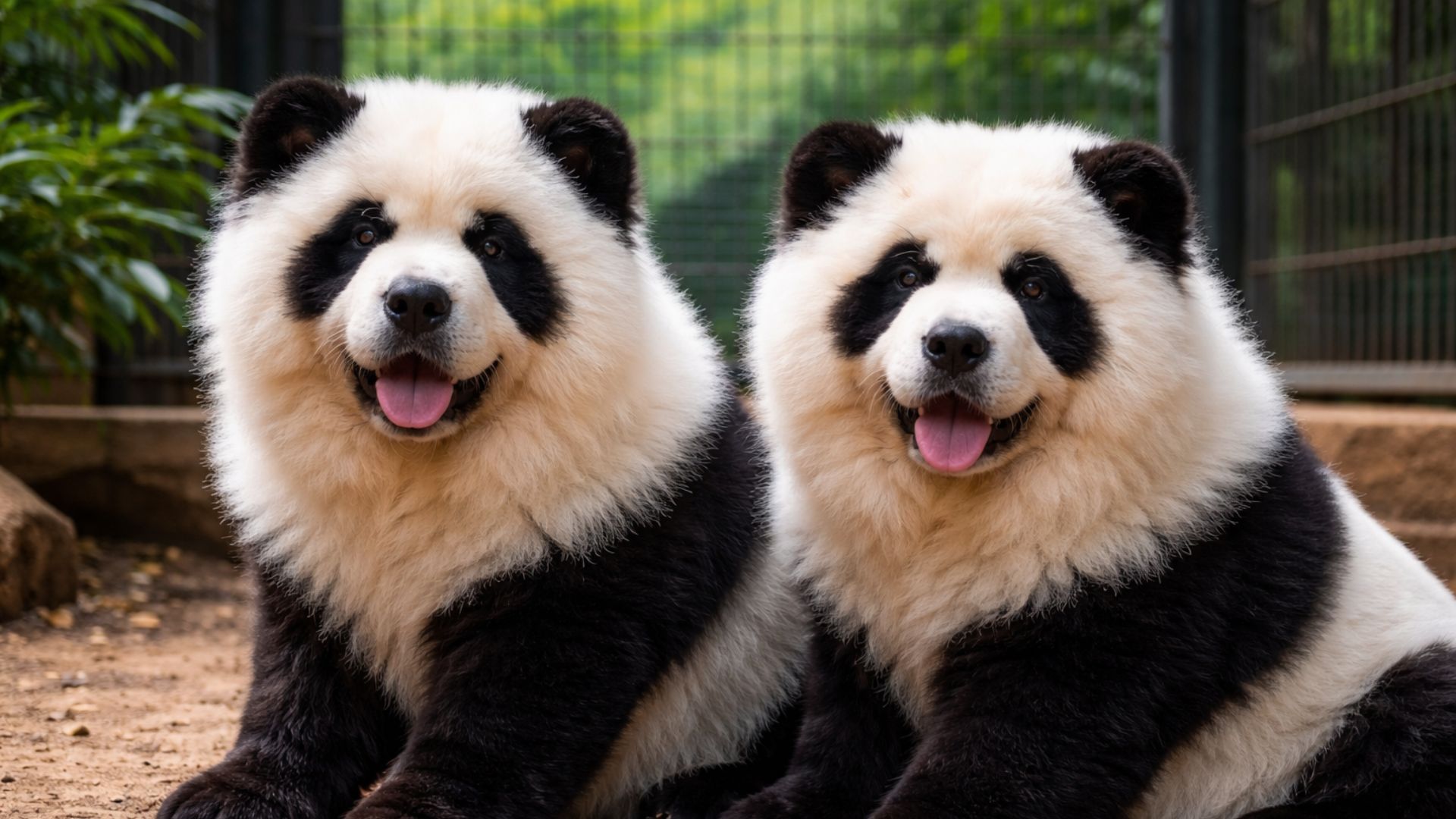


Visual Trick With Dye On Dogs Transformed Animals Into “Pandas” For Visitors, Generated Videos And Photos That Spread On Social Media And Put Zoos Under Spotlight For Marketing Strategies With Aesthetic Appeal. Global Reaction Divided Opinions And Reignited Debate On Transparency And Well-Being.
A simple visual trick, done with dye on dogs’ fur, was enough to transform two ordinary animals into one of the most talked-about attractions on social media.
Instead of displaying real pandas, a zoo in China showcased chow chow dogs with black and white markings, creating the appearance of “pandas” for the public and sparking immediate curiosity in videos and photos shared online.
The attraction was advertised as “panda dogs,” with signage indicating that they were dogs, although the impact of the visual led some visitors to question what they were seeing.
-
Neon Blue Glow in Brazilian Waters Captivates Locals and Goes Viral, Unveiling Rare “Sea Fire” Phenomenon

-
Forgotten Map Leads Diver to Shipwreck with Gold, Rare Jewels, and Secrets Hidden for Nearly 350 Years
-
Furong: The 2,000-Year-Old Chinese City Built on a 60-Meter Waterfall Becomes a Global Tourist Phenomenon

-
YouTube Inventor Dubbed “Real-Life Tony Stark” Builds Robotic Legs for Father’s Day, Creating a Wheelchair That Conquers Stairs and Rough Terrain




The circulation of images showing the animals in the enclosure, with ears and spots painted to mimic the typical coloring of a panda, amplified the discussion about how far zoo and theme park marketing can go when the strategy depends on altering an animal’s appearance.
According to a report from the zoo itself shared by the press, the dogs were chosen for a characteristic that favored this type of “disguise”: the voluminous fur of the chow chow, which helps sustain the contrast of the dyed areas and reinforces the similarity from a distance.
The backlash, however, was not limited to surprise.
The idea of painting an animal to gain attention divided opinions, with criticisms about the ethics of the method and questions about well-being, while the establishment defended the appeal of the attraction and treated it as a curious experience for the public.
Virality, Global Curiosity And Public Reaction

The case gained traction because it fits perfectly into the type of content that spreads quickly: it is easy to understand without context, relies on a striking image, and provokes an immediate reaction, whether of laughter, outrage, or shock.
In practice, the impact of the “panda dog” works as a visual click, and the explanation comes later, as the viewer tries to find out if there was deception, if the display was transparent, and what limit was adopted by the venue.
In the public defense cited by international media, representatives of the zoo argued that the attraction continued to be popular and that the aesthetic change was not fundamentally different from the human habit of dyeing hair.
At the same time, negative reactions also emerged strongly, especially among those who saw the episode as an example of a “forced” strategy to compensate for the absence of rare animals, such as the giant panda, a species that is typically displayed only under specific conditions and strict institutional agreements.
The controversy does not arise in a vacuum.
The panda is a globally recognized symbol, associated with conservation and the image of traditional zoos, which amplifies any attempt to reproduce the “panda effect” through artificial means.
When the public encounters a domesticated animal transformed to resemble another, the discussion shifts from being merely about creativity to involving transparency with visitors, entertainment boundaries, and the responsibilities of institutions that keep animals on display.
The very backlash to the “panda dog” feeds off a contrast that draws attention: the intention to create a “cute” attraction with an exotic-looking dog, but at the same time, the perception that something does not match the expectation generated by the word “panda.”
In shared videos, many viewers quickly identified typical dog behaviors, which heightened the sense of strangeness and fueled comments like “doesn’t look like a panda” or “that’s a dog,” reinforcing the cycle of viral sharing.
Zoos In China And The Repetition Of The Case
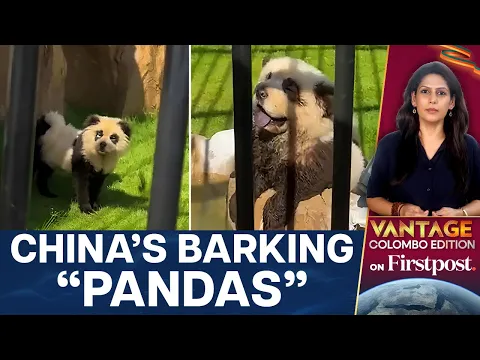

The coverage of the incident also highlighted that it is not an isolated case.
Other Chinese zoos have already resorted to dyed black and white dogs to create the same “panda dog” proposal, repeating a pattern where the attraction is not the biological rarity, but the aesthetic impact.
In one such example, the press reported that the zoo decided to present the dogs as an alternative after failing to display real pandas, and the fact that they were dyed chow chows was confirmed by local authorities and spokespeople for the establishment itself.
This type of repetition helps explain why the topic attracts attention outside the country of origin.
The storyline is simple, yet touches on universal questions: how far can a visitation place “stage” an experience?
When the signage indicates they are dogs, were the visitors deceived or merely drawn by curiosity?
And, primarily, what does this type of practice indicate about the pressure for novelty in environments competing for visitor flow and relevance on social media?
Animal Welfare, Transparency, And Limits Of Entertainment
The debate over dyeing animals tends to be especially sensitive because the public cannot verify at first glance what product was used, how it was applied, and whether proper veterinary monitoring was in place.
In reports associated with similar cases, zoo representatives claimed to have used dyes considered safe and even compared the procedure to common practices among humans.
On the other side, criticisms focused on the idea of subjecting animals to aesthetic manipulation for entertainment purposes and the risk of normalizing such interventions as “play.”
Even when the establishment maintains there is no harm, controversy tends to persist for a simple reason: the public’s trust in institutions that display animals depends not only on internal rules but also on the social perception of care and boundaries.
Generally, the more a case appears to be a “trick” to generate attention, the more it triggers reactions of disapproval, especially when involving zoos, which are often held to stricter standards than purely commercial attractions.
Social Media And The Pressure For Novelty In Animal Attractions

The dynamic of virality, in turn, creates a hard-to-ignore incentive.
The “panda dog” works as a spectacle ready for the camera, with high sharing potential, and this can increase visitor traffic, fuel curiosity, and solidify the place as a recurring topic on social media.
Yet, the same mechanism that attracts an audience can heighten the demand for explanations, as the more people see, the more people ask about the reason, procedure, and justification.
Another element that reinforces global interest is the familiarity of the chow chow as a breed.
This is a medium-sized dog, with dense fur and a striking appearance, known in various countries, which facilitates recognition when someone realizes that the “panda” has canine traits.
The result is a kind of “perception game” for those watching the videos: some people believe for a few seconds, another part immediately identifies the dog, and almost everyone reacts to the contrast between what they expected and what the image delivers.
The story also highlights a shift in how animal attractions are consumed by the public.
Previously, a visitor needed to be physically present at the location to be surprised; now, a short video is enough to turn a specific site into an international topic.
In this scenario, what was a local marketing strategy is now evaluated by a global audience, with different cultural standards and sensitivities, which multiplies reactions and causes the discussion to escalate quickly.
By placing a dog in the role of “panda,” zoos that bet on this type of resource can achieve instant attention but also expose themselves to more intense scrutiny, especially because the aesthetics of the disguise become the center of the experience.
Between the curiosity that amuses and the criticism that demands limits, the “panda dog” became a symbol of how visual interventions in animals can transform an ordinary visit into a public debate in a matter of hours.
If a simple effect like dyeing fur is capable of attracting crowds and generating global controversy, what should be the ethical limit for transforming animals into “characters” of attractions?