





 Portuguese
  English
  Spanish
  4 min of reading
  0 comments


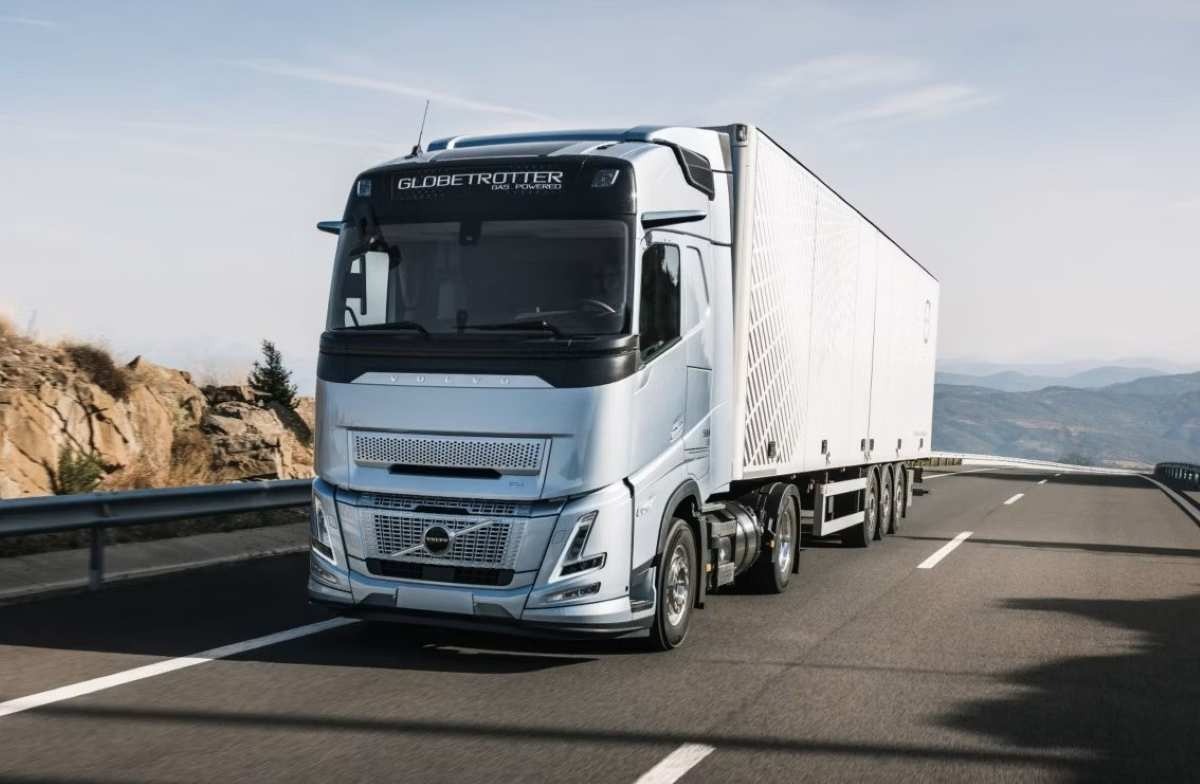
With HPDI Technology, Engines Up to 500 HP and a Range of 1,000 Km, Volvo’s Biogas Trucks Have Exceeded 8,000 Units Sold in Europe and Promise to Reduce CO₂ Emissions by Up to 100%
Volvo’s biogas trucks are gaining a prominent role on European roads. With a range of up to 1,000 kilometers and the potential to reduce CO₂ emissions by up to 100%, these vehicles are establishing themselves as a concrete alternative to diesel on long-haul routes.
The technology, which combines energy efficiency, high performance, and sustainability, is transforming heavy transport and helping the industry advance towards more ambitious climate goals.
Growth Driven by Demand for Clean Solutions
The advancement of Volvo Trucks’ natural gas trucks is no accident. It reflects the urgent need for solutions that drastically reduce emissions in a climate emergency scenario.
-
Balloon the size of a stadium spends 25 days alone over Antarctica at nearly 37 km altitude and returns with data on cosmic antimatter that may reveal one of the rarest clues ever sought about the existence of dark matter.

-
The sea has stopped just warming and has started pushing storms towards the continent: marine heatwaves are already entering the path of up to 25% of extreme coastal rains and can increase storms by 30%, worsening floods on the coast.

-
Drone flies over indigenous area in Xingu and creates a point cloud capable of penetrating the tree canopy, revealing the forest floor, and mapping archaeological sites, ancient villages, roads, and ditches used to understand the historical occupation of the Kuikuro territory.
-
New technology may retire the common electric shower: Xiaomi introduces an intelligent model with tempered glass, a giant 305 mm spreader, antibacterial function, four water modes, and controls inspired by piano keys for around R$ 640 in China.



In 2024, sales of these vehicles grew by 25% compared to the previous year, surpassing 8,000 units sold globally.
Countries like Sweden, Norway, the Netherlands, Spain, and the United Kingdom are leading this transition, driven by an increasingly robust refueling network and public policies that encourage cleaner fuels.
Models such as the Volvo FM, FH, and FH Aero, all compatible with LNG (liquefied natural gas) and biogas, stand out for combining reliable technology, high autonomy, and a reduced carbon footprint.
Already integrated into regional and long-distance transport fleets, these vehicles are also beginning to gain traction in sectors such as construction, demonstrating their versatility and operational viability.
Biogas: From Waste to Strategic Fuel
The main key to this environmental transformation lies in the use of biogas, known as Bio-LNG. Produced from organic waste — agricultural, urban, or from wastewater treatment plants — this renewable fuel can transform waste into clean energy. In countries that offer tax incentives and subsidies for renewable energy, Bio-LNG is not only more sustainable than diesel, but also more economical.
The impacts are significant: substituting diesel with LNG already reduces CO₂ emissions by about 20% in the “Tank to Wheel” cycle.
The switch to Bio-LNG raises this reduction to up to 100% in the “Well to Wheel” cycle, especially when combined with HVO (hydrotreated vegetable oil) as an ignition fuel.
This change is crucial for Volvo Trucks to achieve its net-zero emissions goal by 2040. The trend is one of expansion: in 2024, global biogas production grew by 21%, driven by climate policies and international decarbonization commitments.
Power and Efficiency Without Compromises
Volvo has invested in technology to ensure that sustainability does not mean sacrificing performance. The natural gas trucks utilize the same Euro 6 D13 engine as the diesel models, but incorporate HPDI (High-Pressure Direct Injection) technology, developed in partnership with Cespira. The result is a more efficient combustion and robust performance: up to 500 horsepower, 2,500 Nm of torque, and excellent engine response.
The 225 kg fuel tank ensures a real range of up to 1,000 kilometers, without requiring changes to logistics infrastructure.
This reduces operational costs and the total cost of ownership for companies, while maintaining productivity and improving the driver experience. In addition to energy efficiency, the quieter and smoother operation of the vehicles represents an added gain in comfort and safety on the roads.
Infrastructure and Regulation Accelerate the Transition
The growing adoption of gas as a fuel in heavy transport is directly linked to the advancement of infrastructure.
Europe is investing in a transnational network of LNG and Bio-LNG refueling, aligned with the European Green Deal and the Alternative Fuels Infrastructure Directive (AFIR). These policies require member countries to ensure refueling stations at regular intervals on the continent’s main logistics routes.
The regulatory pressure to reduce emissions in road transport also accelerates this transition. While electric and hydrogen technologies continue to face challenges in terms of cost, range, and infrastructure, renewable gas emerges as an immediate and scalable solution.
It acts as a transition link, allowing fleets to become cleaner without relying on innovations that are still under development.
Prospects and Conditions for the Future
Gas trucks do not represent an isolated solution but an essential piece in a broader set of strategies towards sustainable transport. Their potential will be fully realized if certain conditions are met.
Among them, the need to expand the decentralized production of biogas, especially in rural areas with high volumes of organic waste, stands out. It is also essential to expand the network of Bio-LNG refueling stations, connecting strategic industrial and logistics centers.
Stable and predictable tax incentives are another key piece to maintaining the economic attractiveness of this technology. Furthermore, the integration of digital solutions that optimize routes, consumption, and loads can further increase efficiency.
Finally, a mixed strategy that combines renewable fuels, electrification, and hydrogen, tailored to different operational contexts, will be crucial for accelerating the decarbonization of heavy transport.
Realistic Path to Decarbonization
Renewable gas stands out as a realistic, scalable, and effective alternative for reducing emissions in freight transport. Although it is not the definitive solution to all climate challenges, it represents a concrete and immediate step towards sustainability.
The transition to cleaner technologies does not have to wait for the future: it is already happening on European roads with Volvo’s biogas trucks, which prove it is possible to combine performance, economy, and respect for the environment in a single package.








-

1 person reacted to this.