






 Portuguese
  Spanish
  3 min of reading
  0 comments


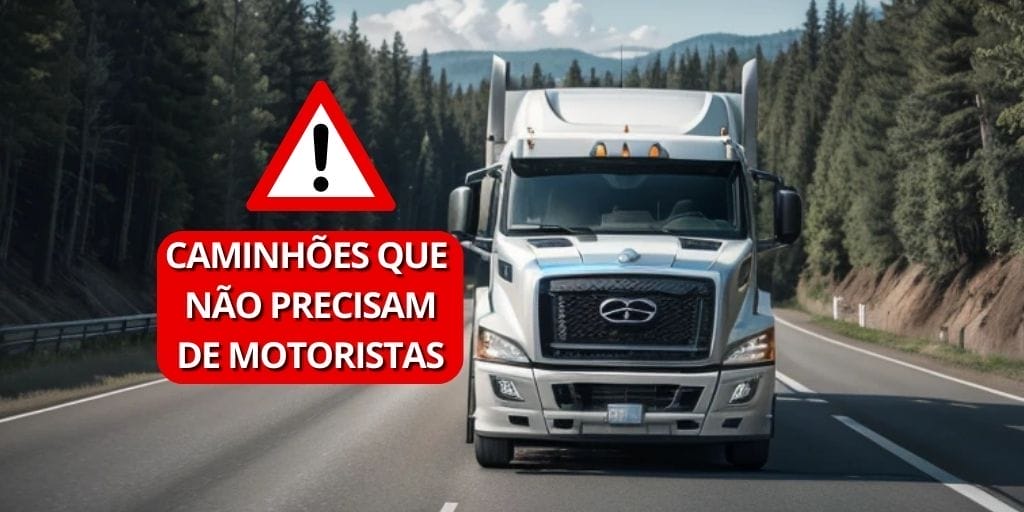
Imagine roads filled with trucks driving themselves, powered by artificial intelligence. It seems like a science fiction scenario, but this is the reality that Waabi, a Canadian startup led by scientist Raquel Urtasun, is about to turn into reality.
With a robust investment of R$ 1 billion, the company plans to put autonomous trucks on the roads in less than a year. Major companies like Uber, Volvo, and Porsche are among the backers of this ambitious project.
Revolution in Freight Transportation
By 2025, AI-powered autonomous trucks will be transporting commercial loads in Texas, United States.
This is Waabi’s timeline, which has received US$ 200 million in capital. Among the investors are giants like Uber, Khosla Ventures, Nvidia, Volvo, and Porsche.
-
Helicopter Drops 180 Tons of Sand and Gravel on Swedish River to Revive Ecosystem Damaged by Decades of Exploitation

-
Brazilian Company Launches Retro Smartphone with 48 MP Camera, T9 Keyboard, and Privacy Features for Social Media-Free Use

-
Self-Taught Chinese Farmer Builds 5-Ton Submarine from Scrap, Launches It in Anhui River
-
Invisible Induction Technology Enables Wireless Power for Blenders, Coffee Makers, and Air Fryers, Reducing Countertop Cables





The company, founded three years ago in Toronto, Canada, believes it can succeed where many others have failed, thanks to its generative artificial intelligence platform.
Raquel Urtasun, founder and CEO of Waabi, assures that its software can evaluate and respond to road conditions in a way similar to human reasoning.
“I built Waabi with very different technology, which will allow us to launch a driverless service quickly, safely, and efficiently”, she explained in an interview with Forbes magazine.
Challenges and Overcoming in the Autonomous Vehicle Sector
The development of autonomous vehicles has progressed more slowly than many predicted a decade ago. Many robotic truck startups have failed, and billions of dollars have been invested in companies that ended up closing, such as the Ford-Volkswagen joint venture Argo AI, or being sold, like Uber’s ATG division.
Even Waymo, considered the most successful company in autonomous driving technology to date, suspended its robotic truck operations to focus exclusively on robot taxis, which are starting to generate revenue. However, Waabi believes its simpler and cheaper technology can overcome these challenges.
Waabi’s Action Plan for 2025
Texas will be the first commercial market for Waabi’s autonomous trucks. In the article mentioned, the company did not disclose how many trucks will be part of the initial fleet, but manufacturers such as Volvo and Scania also participated in the latest funding round, along with Porsche and Ingka Investments, linked to Ikea.
With the latest funding round, Waabi raised over US$ 280 million, a considerable amount, though less than some competitors. Urtasun believes that her approach, focused on efficiency and cost, will make the technology viable in the long run.
Autonomous Vehicles in Brazil
But what about Brazil? How is the situation for autonomous vehicles? Although the country is still taking its first steps in this technology, there are already promising initiatives. According to the Institute of Technological Research (IPT), tests with autonomous buses are being conducted in São Paulo. These tests, carried out in partnership with technology companies and universities, aim to create a viable model for autonomous public transportation in Brazil.
In addition to buses, the IPT is also developing projects for autonomous trucks. Brazilian companies, such as Embraer, are exploring autonomous vehicle technology in their innovation centers. According to Anfavea (National Association of Motor Vehicle Manufacturers), domestic truck manufacturers are already investing in research and development to adapt Brazilian roads to the reality of autonomous vehicles.
However, the challenge is not only technological. Regulation and infrastructure also need to evolve to accommodate these vehicles on Brazilian roads. The Chamber of Deputies is analyzing proposals to create a regulatory framework for autonomous vehicles, following examples from countries like the United States and Germany.
In any case, it is clear that, with the advancement of Waabi and other startups, the future of the roads seems increasingly technological and autonomous. For experts, the promise of trucks driving themselves brings numerous advantages, such as reducing accidents caused by human error and improving the efficiency of freight transport.
But what about you, reader? What do you think about the idea of having trucks driving themselves on Texas roads and even on Brazilian roads in the near future? What impact does this have on you?




Be the first to react!