Portuguese
  Spanish



With a billion-dollar investment and a structure planned to cross the hinterland, the water project in Ceará has already brought water to part of the system and rekindled the expectation of water security for municipalities that experience irregular rainfall and long periods of drought.
In the hinterland, where the landscape usually waits for rain as one waits for a difficult answer, a project of concrete, tunnels, and canals has begun to redraw the path of water in Ceará.
The project is the Cinturão das Águas do Ceará, known as CAC. Called by international media as the longest artificial river in Latin America, it is officially a major water transfer project, with 145.3 kilometers in Section 1.
The promise is simple to understand but enormous to execute: to bring water captured at the Jati dam, connected to the North Axis of the São Francisco River Integration Project, to regions facing drought, irregular rainfall, and pressure on water sources.
-
Pre-mixed stabilized mortar set to revolutionize construction in 2026: extends usability to 36 or 72 hours, boosts productivity, and minimizes waste in building projects.

-
Mexico Sinks Giant Fabric Tubes Filled with Sand off Yucatán Coast to Create Invisible Barrier and Restore Hurricane-Damaged Beaches

-
Modern Liquid Porcelain Flooring Offers Seamless, High-Gloss Finish for Home Renovations Without Demolition
-
Brazilian Couple Builds Entire Cabin from Cement and Shade Cloth in Just 7 Days to Escape Renting, Using Affordable Farm Supplies Instead of Steel Mesh




A project made to overcome distance and drought
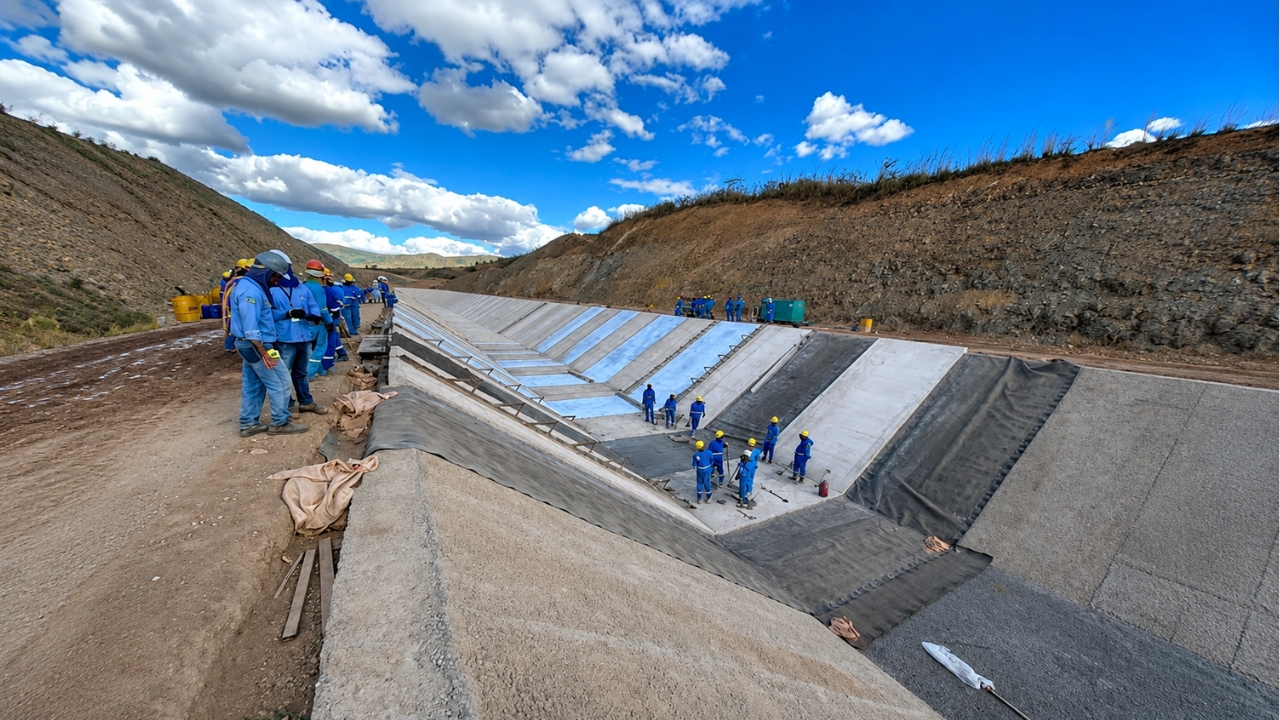
Ceará is not just building a canal. The structure includes open-air canals, tunnels, and siphons to conduct water along a path designed to supply areas that, for decades, have lived with water scarcity.
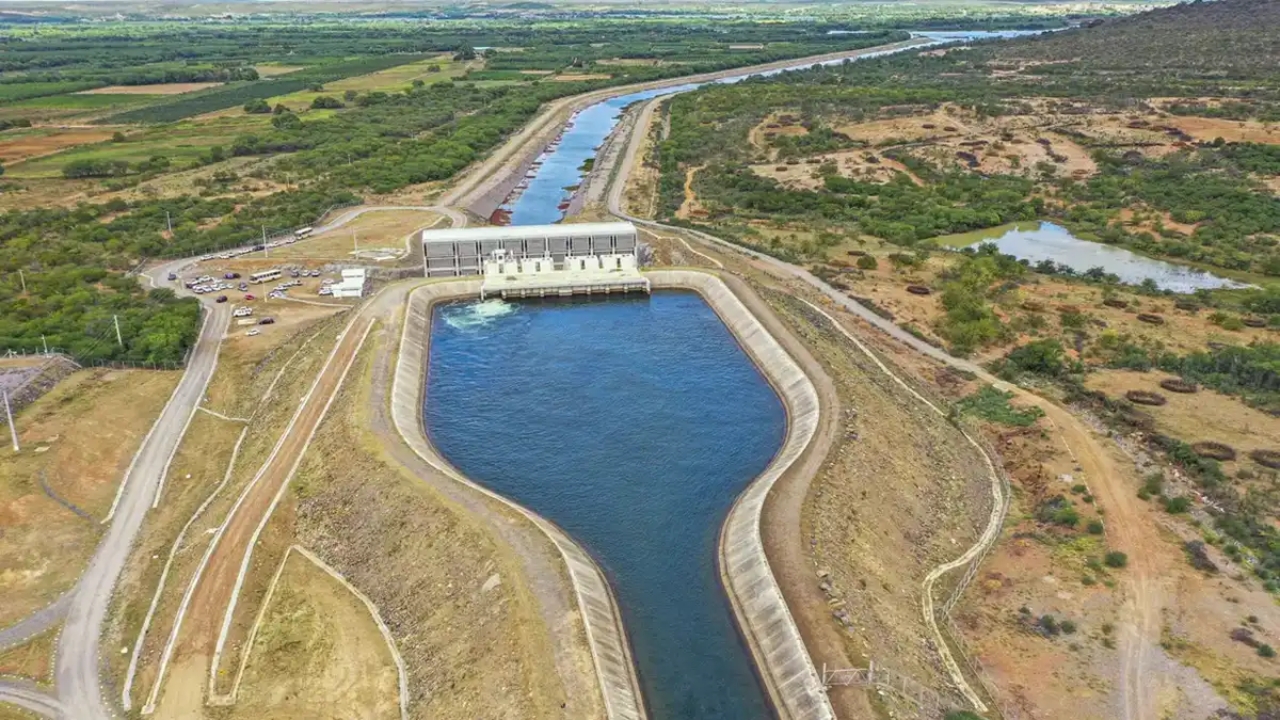
According to the Ceará Water Resources Secretariat, Section 1 starts at the Jati dam and continues to the headwaters of the Cariús River in Nova Olinda. The maximum expected flow is 30 cubic meters per second.
A technical detail stands out: this section is entirely gravitational. In practice, the main conduction takes advantage of the terrain’s slope to move the water forward, without relying on pumping along this route.
It’s an engineering solution that attempts to address an old problem. In Cariri, one of the most important regions of the state, the Missão Velha aquifer is already showing signs of exploitation limits, according to SRH itself.
The progress that changed the perception of the project
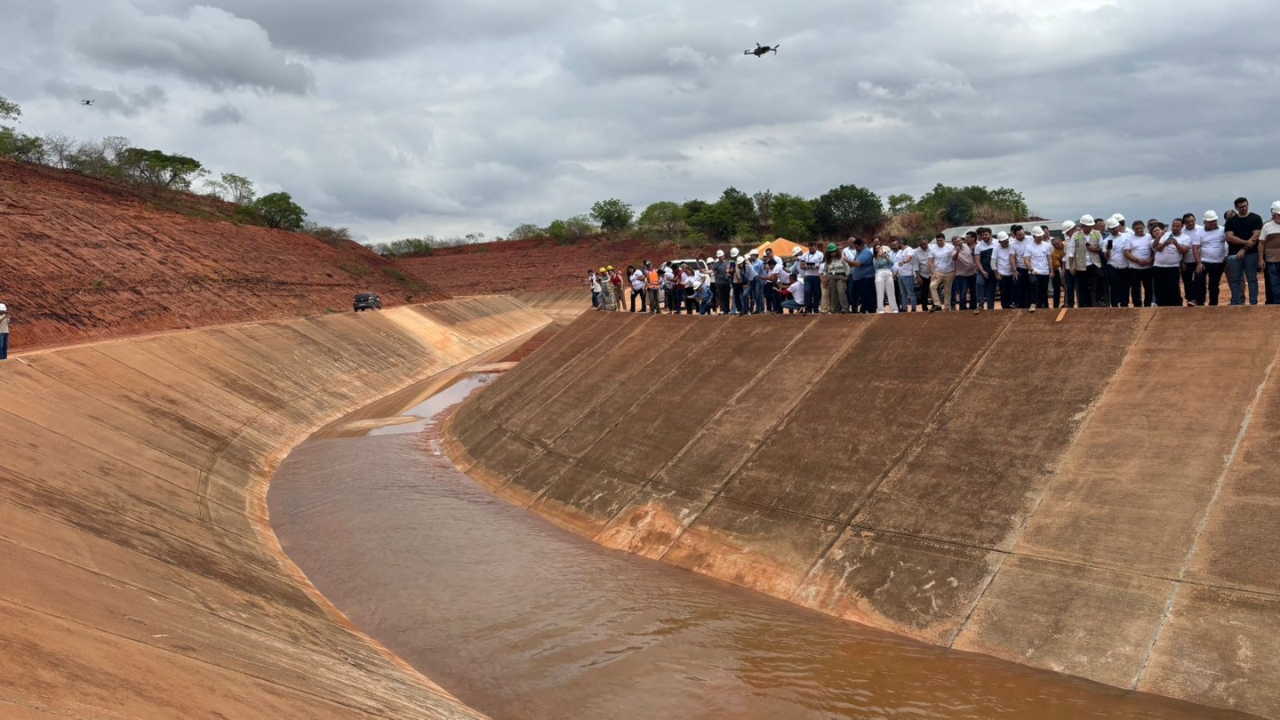
The project was being treated as a delivery scheduled for 2026. But the latest update changed the tone of the story.
According to Diário do Nordeste, the Water Belt reached 92% completion in July 2026, after the delivery of a new section in Barbalha. With this, about 100 kilometers were already completed, with water available up to kilometer 100.
At the same time, the final delivery forecast was moved to 2027, according to information attributed to the Ministry of Integration and Regional Development by the Ceará newspaper.
This detail changes the agenda. The project advanced, brought water to part of the system, and delivered new sections, but it is not yet finished.
Channels, lots, and billions on the water’s path
The scale helps explain why the CAC became one of the most observed water projects in the Northeast.
The project has a total value of R$ 2.3 billion, with execution by the Government of Ceará and federal investments, according to Diário do Nordeste. The structure was divided into five lots.
Lots 1, 2, and 5 have already been completed. In the latest update, 15 kilometers of lot 3 were delivered. Lot 4 reached 75% completion.
The project does not speak only with maps and spreadsheets. It directly impacts the routine of cities where access to water affects human consumption, agriculture, livestock, and the water security of families living in areas vulnerable to drought.


The expected transformation in Cariri
The section between Jati and the Cariús river aims to ensure supply for 24 municipalities, with about 561 thousand people directly benefited, according to O Estado CE.
When completed, the system is also considered a strategic piece to enhance water security in Ceará. The cited estimate is that the project could benefit around 5 million people in the state.
Among the municipalities mentioned in the updates are Juazeiro do Norte, Crato, Barbalha, Caririaçu, Farias Brito, Nova Olinda, and Santana do Cariri.
Names that, for many people outside Ceará, may seem distant. But within the project, they form a supply corridor, where each completed kilometer represents a chance to reduce dependence on irregular rainfall.
The Cinturão das Águas is not just an engineering curiosity called an artificial river. It is a concrete attempt to transform a historical problem into permanent infrastructure, carrying water over 145.3 kilometers to where drought has always arrived first.