Portuguese
  Spanish


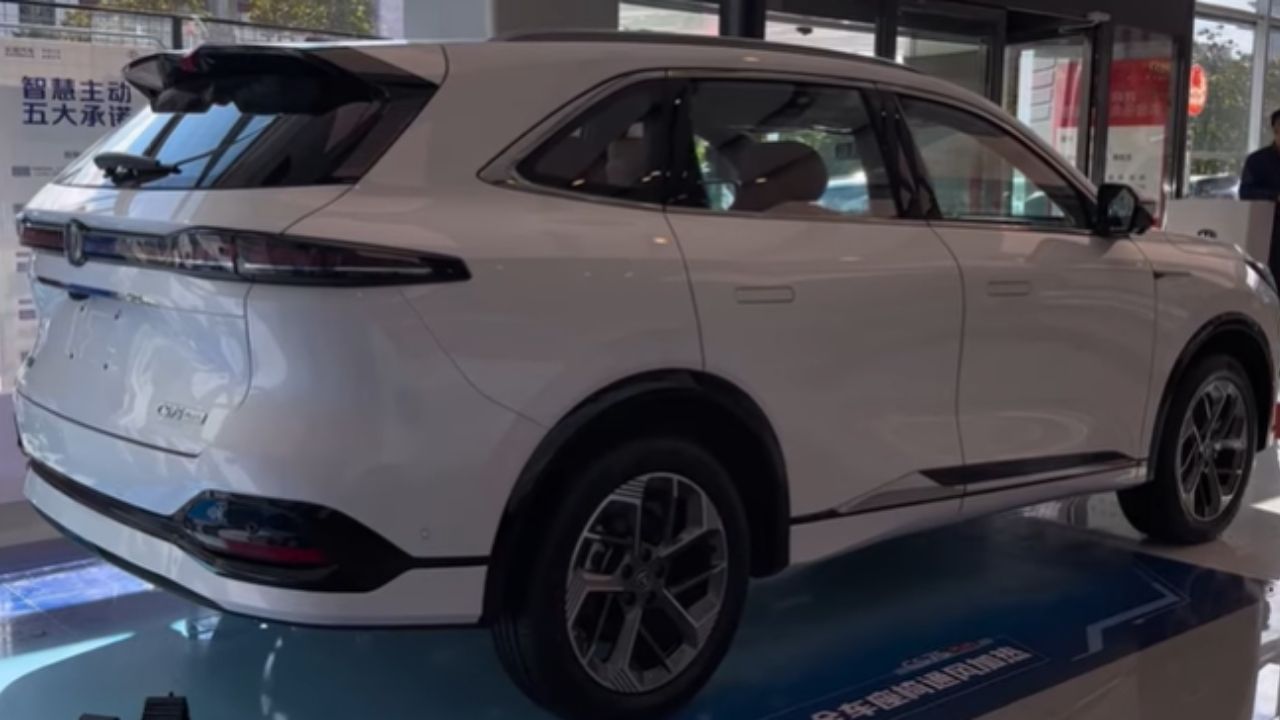


Caoa Changan plans to expand its lineup in Brazil with the CS55 and CS75 SUVs, both slated for national production in Anápolis (GO), using a 1.5 turbo flex engine, as the Chinese brand expands dealerships and aims for a spot among the country’s most competitive utility vehicles.
Caoa Changan prepares two new national SUVs for 2026 in Brazil, in an offensive that should bring the CS55 and CS75 models to the assembly line in Anápolis (GO). The duo is expected to expand the Chinese brand’s presence beyond the recently launched Uni-T and the premium electric Avatr 11, focusing on flex versions and local production.
According to the Quatro Rodas portal, the striking detail is the strategy: instead of starting with higher-volume hybrids or electric vehicles, Caoa Changan intends to first use the 1.5 turbo flex engine, sharing a mechanical base among different SUVs. In the case of the CS55 and CS75, the projected power reaches 192 cv and 31.6 kgfm, exceeding the 180 cv and 29.2 kgfm of the Uni-T.
Caoa Changan Aims to Expand National Lineup After Opening First Dealerships

Caoa Changan’s expansion begins with its network. The brand has opened its first 20 dealerships and is working towards a goal of reaching 60 units by the end of the year, a necessary move to support a larger product line in Brazil.
-
Hilux’s little sister: Toyota relaunches the Land Cruiser 70 in the 2027 lineup with over 40 years of production, a 2.8 turbo diesel engine with 201 hp and 51 kgfm, a six-speed automatic transmission, and a renewed retro look.

-
Automatic, economical, and known for reliability: with a 1.5 engine of up to 110 hp, CVT transmission, seven airbags, and fuel consumption of up to 15.9 km/l, this used hatchback appears as a rational alternative to Polo, HB20, and Onix; meet the Toyota Yaris XLS 2020.
-
He surpassed the Tera, Creta, and Tracker: With a TSI engine of up to 150 hp, 6-speed automatic transmission, and a 373-liter trunk, the Volkswagen T-Cross was the best-selling SUV in June, with 11,753 registrations.

-
It looks factory-made, but it came out of a workshop: a mechanic from Pernambuco builds a handcrafted “mini Toyota,” drives it through the streets, and the video goes viral on social media, leaving residents astonished.



With more stores, the company needs to go beyond just a few showroom models. Therefore, the upcoming launches gain strategic importance.
The expectation is that Caoa Changan will make three launches throughout 2026, consisting of two national SUVs and a third larger electrified model.
In this plan, the strongest names are CS55 and CS75, two SUVs that are expected to be produced in Anápolis and positioned above or alongside the Uni-T, each with a different proposal.
CS55 and CS75 Expected to Be the Two National SUVs from Anápolis

Caoa Changan’s industrial plan foresees assembly lines for the CS55 and CS75 in 2026, repeating a strategy already known in the Brazilian market: starting with a flex engine to meet local consumer demand.
The choice of Anápolis reinforces the importance of Caoa’s factory in Goiás, already used as a base for other industrial projects of the group.
The duo also helps the brand cover different segments of the SUV market. The CS55 is expected to act as a more family-oriented option, closer to the Uni-T, while the CS75 appears as a larger, more equipped alternative with a superior positioning.
This move expands Caoa Changan’s reach in a category that remains among the most competitive in the Brazilian market.
1.5 Turbo Flex Engine of Up to 192 cv Will Be the Link Between New Models
The most important technical aspect lies in the engine.
The CS55 and CS75 are expected to use the 1.5 turbo flex engine, calibrated to deliver 192 cv and 31.6 kgfm. This is the same mechanical concept as the Uni-T, but with higher figures than the coupe SUV already launched here.
The advantage of this strategy is industrial. By sharing engines among different models, the brand reduces production complexity, facilitates maintenance, simplifies network training, and improves predictability for the consumer.
In practice, the same mechanical set can serve distinct purposes: a more family-oriented SUV, a larger and more equipped one, and an entry-level model to consolidate the brand.
CS55 bets on family size and a larger trunk than the Uni-T

The Changan CS55 Plus is expected to arrive as a more traditional SUV compared to the Uni-T.
It measures 4.55 meters in length, 1.86 meters in width, 1.67 meters in height, and has a 2.65-meter wheelbase. Despite being only 2 cm longer than the Uni-T in length, its less coupe-like body tends to favor interior space.
The proposal is more family-oriented. The reported trunk capacity is 475 liters, an important number for those looking for an SUV for urban routine, travel, and family use.
The interior should also have technological appeal, with a 10.25-inch screen for the driver and a 14.6-inch multimedia center, in addition to features such as a massage system in the front seats, according to automotive coverage information.
CS75 will be larger, more technological, and positioned above the Uni-T
The CS75 Plus is expected to occupy a higher segment within the Caoa Changan lineup.
The SUV measures 4.77 meters in length, 1.91 meters in width, 1.69 meters in height, and has a 2.80-meter wheelbase. Compared to the CS55, it has 15 cm more wheelbase, a difference that tends to primarily favor space for rear-seat passengers.
The interior follows a more digital approach. The dashboard integrates a 10.25-inch screen for the driver, a 14.6-inch multimedia center, and a 12.3-inch monitor for the passenger.
The driving assistance package can reach Level 2 automation, with features such as adaptive cruise control, lane centering, and autonomous parking maneuvers, depending on the final configuration for Brazil.
Transmission may differentiate the two national SUVs
Although both SUVs are expected to share the 1.5 turbo flex engine, the transmission may mark an important difference between them.
The Uni-T and CS55 use a dual-clutch automated transmission with seven gears. The CS75, on the other hand, is sold in China with an eight-speed automatic transmission with torque converter.
If this difference is maintained in Brazil, the CS75 could reinforce a more comfortable and refined proposition, while the CS55 would remain closer to the Uni-T’s mechanical strategy.
The multilink rear suspension should be maintained, a solution that aids comfort and stability, especially in larger SUVs.
Brand also promises hybrids and electric vehicles with range extender

Despite launching the new national SUVs with flex-fuel engines, Caoa Changan also promises to expand its presence in electrification.
The company has already indicated plans for full hybrids and electric vehicles with range extenders, known as EREVs, still in 2026.
One of the models seen undergoing tests in Brazil is the S09, a large electric SUV with range extender technology.
This shows that the brand’s strategy has two fronts: using flex-fuel engines to gain national scale and, at the same time, preparing a technological showcase with electrified models.
Prices expected to target ranges near and above the Uni-T
Price positioning still depends on the official launch, but estimates indicate a lineup with clear steps.
With the Uni-T debuting at R$ 169,990, the CS55 is expected to be in a similar range, around R$ 190,000. The CS75, being larger and better equipped, should not cost less than R$ 200,000, according to the projection published by Quatro Rodas.
This difference helps organize Caoa Changan’s SUV family in Brazil.
The Uni-T remains as a more coupe-style option, the CS55 enters as a family alternative, and the CS75 rises to a higher level, with more technology and a more robust stance.
Caoa Changan’s Advance Increases Competition Among Chinese SUVs in Brazil
The arrival of two more national SUVs shows how Chinese brands continue to expand their presence in Brazil.
Caoa Changan doesn’t just enter with niche imports. By preparing national models in Anápolis, the brand tries to gain volume, strengthen its network, reduce import dependence, and compete in highly contested price ranges.
The SUV segment already concentrates some of the main disputes in the Brazilian market. In this scenario, a flex-fuel engine, local production, equipment list, and competitive price can be decisive.
The strategy also reinforces a bigger change: Chinese brands have stopped acting merely as a promise and have started directly competing for space in dealerships, factories, and in the Brazilian consumer’s purchasing decision.
New SUVs Could Define Caoa Changan’s Pace in the Country


Caoa Changan’s offensive in 2026 will be an important test for the brand.
With the CS55 and the CS75, the company tries to build a more complete lineup, capable of serving everyone from those looking for a family SUV to those seeking a larger, more technological model with a more sophisticated look.
The 1.5 turbo flex engine with up to 192 hp, production in Anápolis, expansion to 60 dealerships, and the promise of electrified vehicles in the same year create a multi-layered growth strategy.
If the execution follows the plan, Caoa Changan could stop being just another new Chinese brand in Brazil and start competing for real space in one of the most valued segments of the national market: that of medium and large SUVs.