Portuguese
  Spanish


Discover the specifications and fate of the last units of the C-2A Greyhound, the historic cargo plane that bid farewell to the US Navy.
The fate of most of the remaining C-2A Greyhound aircraft is already set: long-term storage at the 309th Aerospace Maintenance and Regeneration Group (AMARG), located at Davis-Monthan Air Force Base in Arizona. A smaller portion of these surviving airframes will be spared from the desert to be preserved in museums, serving historical and training purposes.
This move towards final retirement comes shortly after the iconic transport aircraft made its last arrested landing and final catapult takeoff aboard the USS Nimitz (CVN-68) aircraft carrier, in an operation conducted on June 25, 2026.
C-2A Greyhound: Engineering and power at the service of the naval fleet
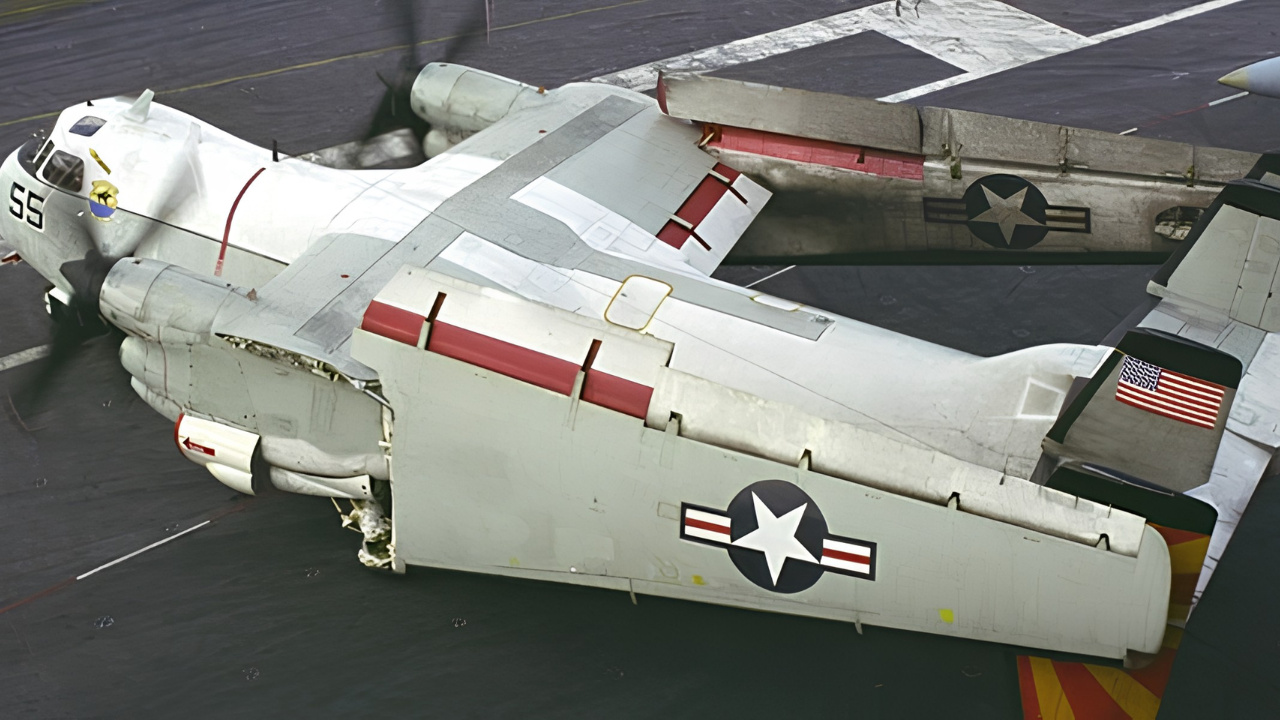
Directly derived from the E-2 Hawkeye early warning system, the C-2A Greyhound, a veteran of rotary wings, inherited the high-wing configuration and original turboprop engines but gained crucial modifications for its cargo function.
-
Italy’s New Military Helicopter, the Powerful AW249 Fenice, Impresses with AI, Advanced Weaponry, and Drone Integration in Combat

-
Brazil’s 72-meter submarines patrol 4.5 million km² of the South Atlantic, as the country builds its first nuclear-powered submarine capable of staying submerged for months.

-
Brazil’s AV-TM 300 Tactical Cruise Missile, Known as “Matador,” Offers a Cost-Effective Alternative to the American Tomahawk with a 200 kg Warhead and 300 km Range.

-
New Brazilian Frigate Equipped with Advanced Missiles and Radars to Safeguard Strategic Maritime Areas


The manufacturer introduced a considerably expanded fuselage in width and added a rear access ramp, facilitating the handling of heavy volumes on flight decks.
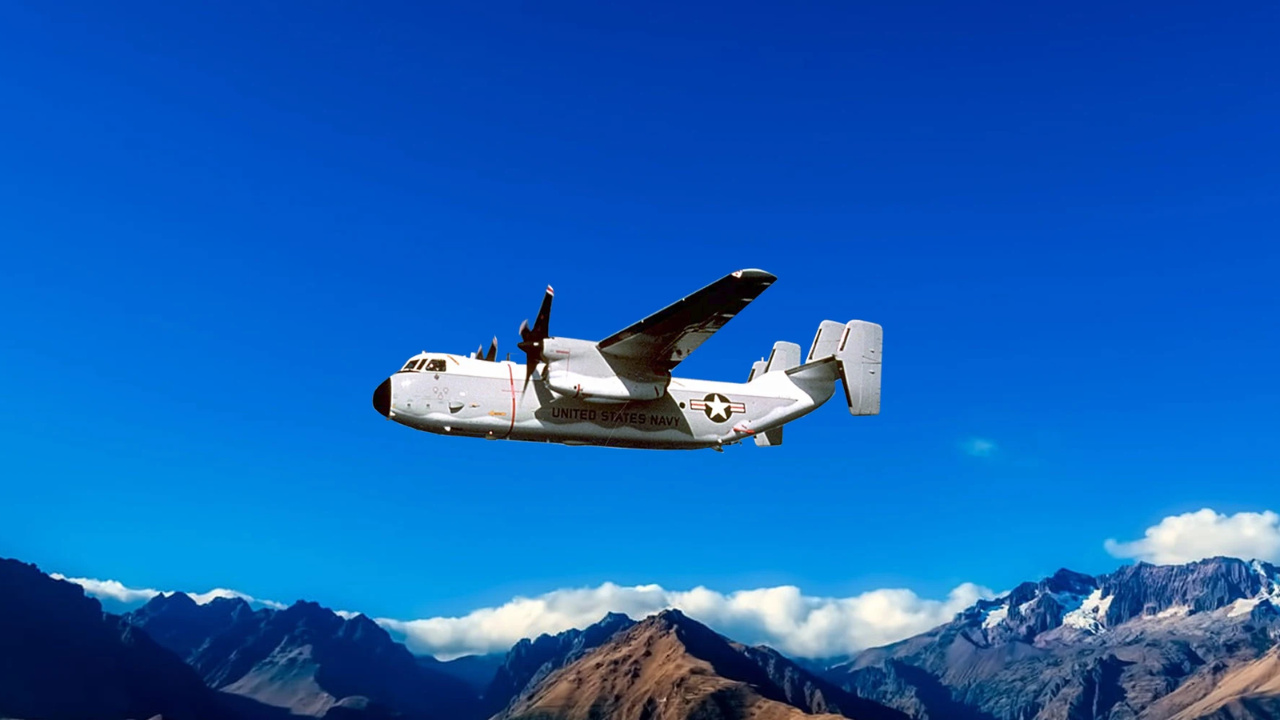
The official specifications and capabilities that kept this vector active for six decades include the following performance data:
- Propulsion systems: Two Allison T56-A-425 turboprop engines with 4,600 shp each;
- Maximum speed: Approximately 343 knots cruising speed;
- Ceiling and range: Capability to fly up to 30,000 feet altitude and range of about 1,000 nautical miles;
- Internal operation: Cabin sized for a crew of four people.
The human and military impact in global conflicts
Introduced into the ranks of naval aviation in 1966, the aircraft served as the main physical link between isolated crews at sea and the rest of the planet.
Its reliability was tested and proven in highly complex geopolitical scenarios, providing essential logistical support during the tense period of the Cold War, in Middle East operations such as Desert Shield and Desert Storm, as well as in the campaigns of Operation Enduring Freedom and in international humanitarian support missions.
For the embarked sailors, the arrival of the C-2A Greyhound meant maintaining the combat capabilities of the ships and contact with the outside world.
In the aircraft’s cargo compartments, critical necessity items traveled:
- Mail bags and packages destined for the military;
- Complete engines and spare parts for quick repairs on fighters;
- New teams of technicians and replacement crew members for missions;
- Injured soldiers needing urgent medical evacuation.
The definitive transition and the end of arrested landings with the C-2A Greyhound
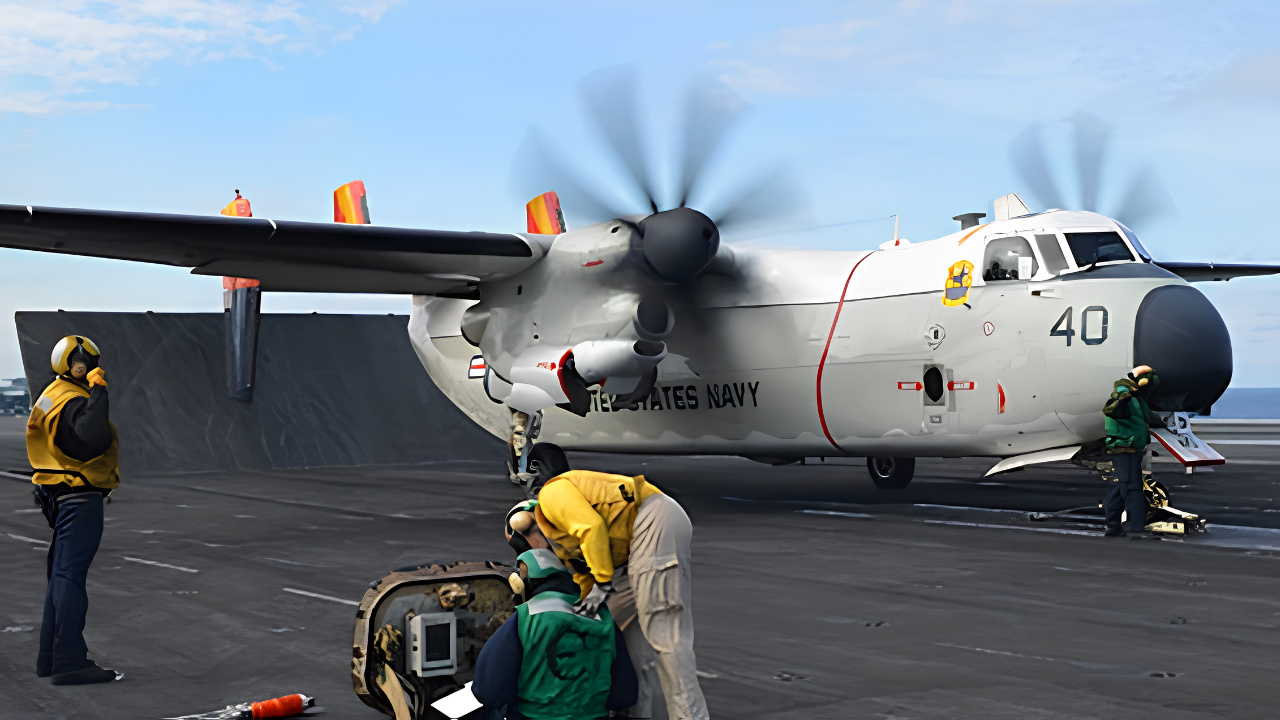
The historic farewell on the USS Nimitz was conducted by the Fleet Logistics Support Squadron 40 (VRC-40) “Rawhides”, specifically using the aircraft with registration BuNo 162159 (modex 40).
The event marks the end of the use of fixed-wing cargo transport aircraft operated by arresting cables on aircraft carriers, transferring the tactical onboard delivery (COD) missions to the modern CMV-22B Osprey.
Finally, it is worth noting that the replacement process did not occur without unforeseen events in the military schedule.
Due to a technical stoppage suffered by a portion of the V-22 model fleet during the year 2024, the US Navy was forced to postpone the retirement of the Greyhound.
This forced delay ended up reinforcing the reputation of extreme reliability of the C-2A Greyhound, which ensured the stability and security of naval supply chains during a period of great technological uncertainty before its final decommissioning.
With information from Poder Naval and image by Alex Feldman