






 Portuguese
  Spanish


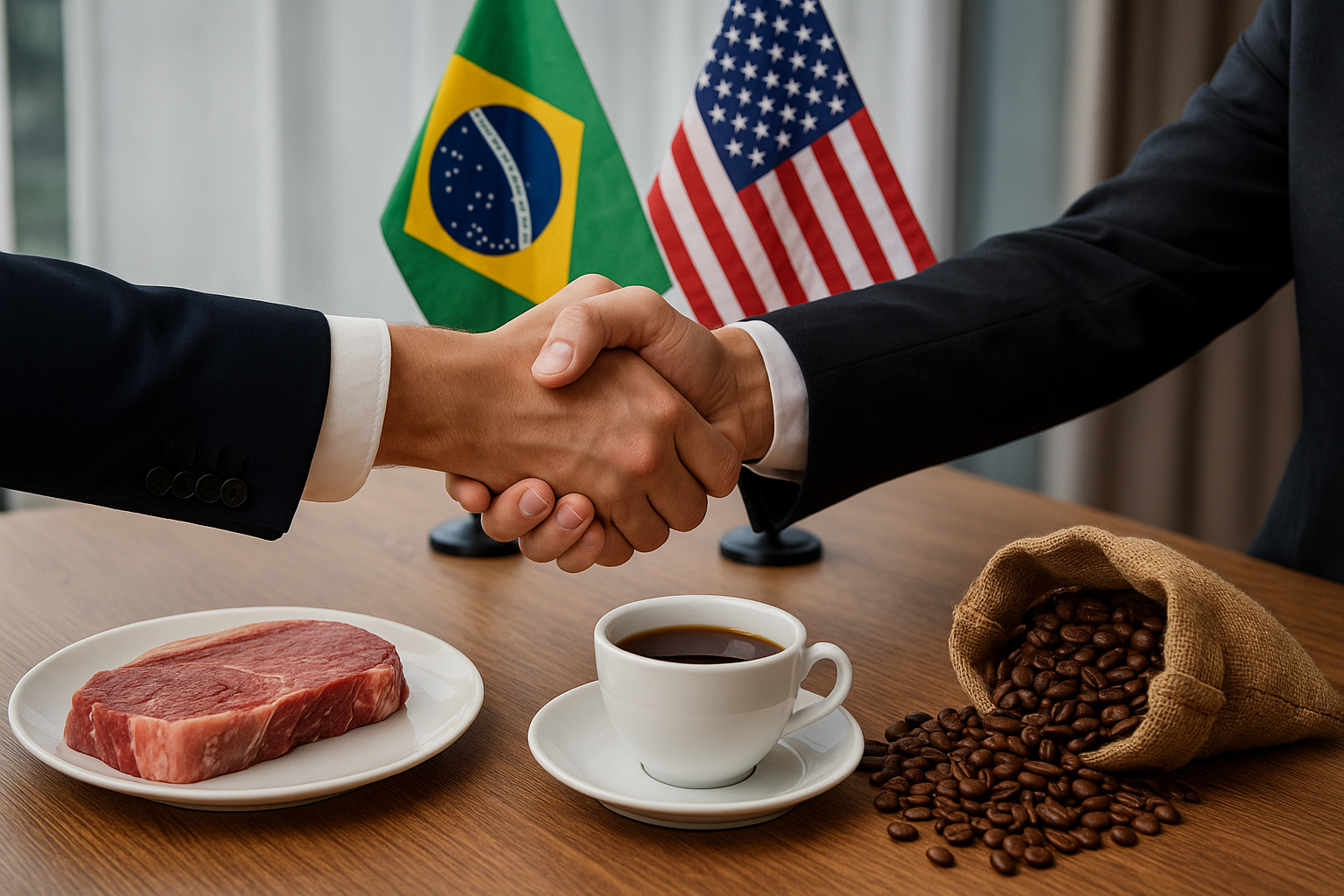


Brazil Advances With The USA To Tackle High Tariffs And Liberate Beef And Coffee; Agriculture Expects Historic Agreement.
Brazil Accelerates Negotiations To Tackle High Tariffs On Beef And Coffee
The government of Brazil intensified, this Monday (3), negotiations with the United States to end the high tariffs that affect national exports of beef, coffee, and fish.
The initiative, led by the Minister of Agriculture, Carlos Fávaro, progresses with proposals already sent to the Americans. Discussions are taking place in Washington and Brasília, precisely because the Brazilian agribusiness is pressuring for a quick agreement that expands markets and reduces costs.
The movement arises in response to the burden of the tariffs imposed by the USA, which limit the country’s competitiveness.
-
India’s Sugar Export Cuts and Ethanol Shift Amid El Niño Threat Could Impact Global Prices and Stocks

-
Quarantine Pest Threatening Palm Trees Puts Brazilian Authorities on Alert, Prompts Monitoring at University of Taubaté and Potential Control Measures Across São Paulo
-
Global Alert: Report Finds 159 Pesticides in Coffee Beans Sold in Europe, Posing Serious Risks to Millions of Farm Workers
-
Low-Demand Brazilian Beef Offal Gains Popularity Abroad: Indonesia Purchases $19.5 Million, Boosting Revenue and Reducing Waste



According to Fávaro, “the proposals from the Brazilian agricultural sector for trade negotiations with the United States have already been submitted.” However, the minister has not yet detailed the items on the table.
High Tariffs Block Agribusiness Exports
The talks aim to eliminate a high tariff of up to 40% on emblematic products of the national agribusiness, such as beef, coffee, and fish.
These items are among the most important on the Brazil export agenda, and their full release would open new trade flows and strengthen producers and cooperatives.
Moreover, the US government is also seeking advantages — and this exchange involves bilateral concessions.
USA Wants Space For Ethanol; Brazil Protects Sector
Behind the scenes, advisors indicate that the agreement touches on a sensitive point: ethanol.
The government is considering allowing greater entry of American fuel, currently taxed at 18%. This could occur through a reduction of the rate or the creation of specific quotas.
However, this possibility faces resistance within the Brazilian sugar and ethanol sector, which fears a loss of competitiveness. Still, diplomacy insists that the economic benefit of liberating beef and coffee would outweigh the impact.
Climate Of Optimism Between Government And Industry
Fávaro expressed confidence in a positive outcome.
According to him, “gradually we have already succeeded with some products that were removed from this overtaxation, and we are now in a very opportune phase of the final negotiation.”
In other words, there is a clear perception of progress, and Brasília is betting that a solution is near.
Additionally, the president of Abiec, Roberto Perosa, reinforced the optimism by stating in China that he expects the removal of American tariffs on Brazilian beef within 60 days.
Dialogue Prevails Over Retaliation
Although the government has discussed adopting a reciprocity law — a mechanism that would allow for the retaliation of American exports — diplomacy prevailed.
“We are managing to overcome the challenge,” Fávaro stated at the Itamaraty Palace.
The strategy, therefore, prioritized dialogue, avoiding unnecessary trade tensions.
Furthermore, the minister recalled that Brazil has already opened alternative markets and, consequently, reduced impacts:
“The United States is very important for the trade relationship with Brazil, but they are not the only option we have.”
Agreement Could Redefine Agribusiness
If confirmed, the end of the high tariffs would mean a strategic victory for the national agribusiness.
Producers of beef and coffee would gain more competitive access to the largest consumer market on the planet, boosting exports and increasing revenues.
Thus, the issue becomes central for companies, cooperatives, investors, and the entire agro-industrial chain.









Tokopedia seller menghubungi kami layanan resmi dan Nomor, 085134079583
Hubungi WhatsApp Tokopedia Seller di chat nomor +62.0853-8258.7083. Nomor ini tersedia sebagai layanan dukungan pelanggan Tokopedia
Berikut ini cara menghapus akun Gopay Pinjam, hubungi Customer Service Gopay Pinjam, Chat 62.852.ll65.5933