Portuguese
  Spanish


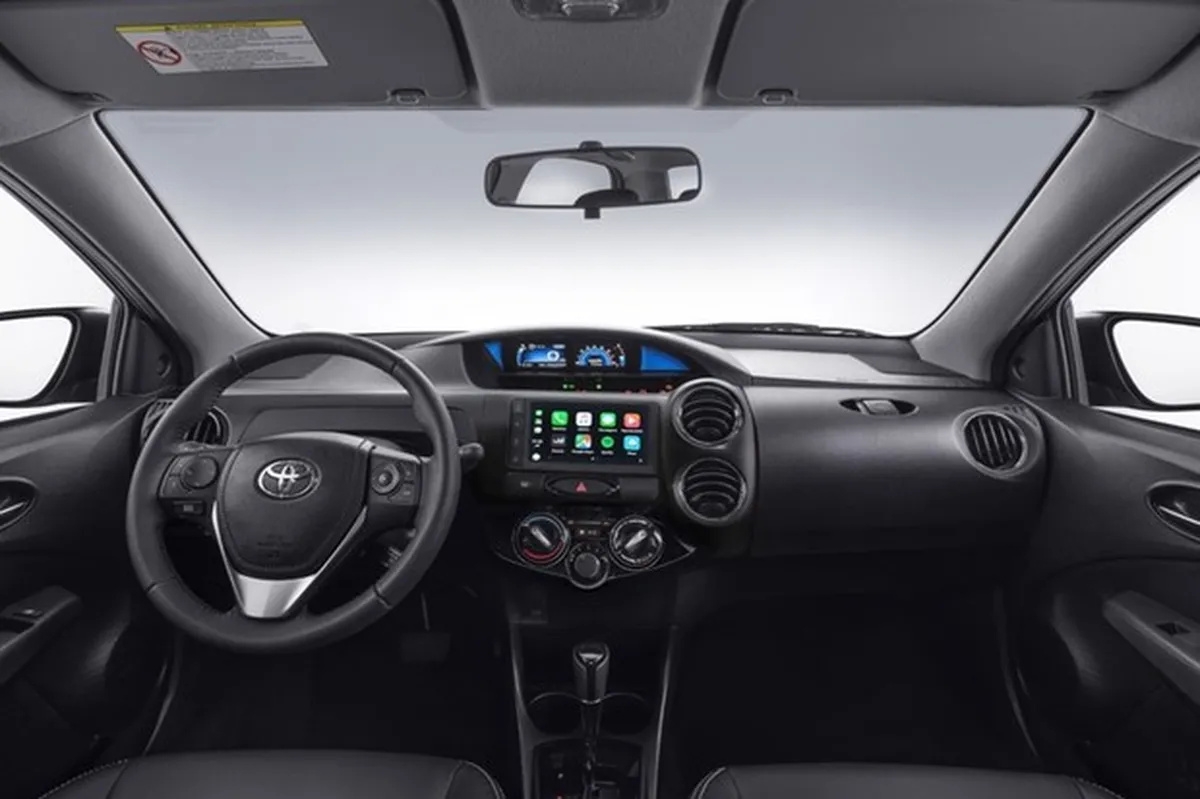


Toyota Etios Was Discontinued in 2021, But Remains Valued Among Rideshare Drivers for Its 98 HP Engine, Affordable Maintenance, and Reliability.
The Toyota Etios stopped being sold in Brazil in 2021, but its legacy still echoes strongly in the used car market. Even outside dealerships, the compact from the Japanese automaker remains one of the most sought-after models by rideshare drivers, families, and those looking for an economical, durable, and low-maintenance car.
With simple engines, accessible servicing, and a history of remarkable reliability, the Etios earned the reputation of being “unbreakable,” a label that still makes many owners reluctant to sell it.
A Simple Car That Became a Reference in Reliability
Launched in Brazil in 2012, the Etios faced initial resistance due to its understated design and interior finish considered “spartan.” However, it took just a few years for the model to gain traction thanks to its robust mechanics and low maintenance cost, attributes that are a priority for drivers who log a lot of mileage, like rideshare drivers.
-
Sales of Brazil’s Cheapest Electric Car Halted Before First Deliveries: E-Motors Suspends Emova Easy Due to Import Tax Increase and Rising Freight Costs

-
Nissan Discontinues Qashqai SUV Amid Cost-Cutting, Chinese Competition, and Product Line Review

-
BYD Patents Revolutionary System Using Computer Vision to Detect Animals Under Cars Before Starting, Preventing Tragedies

-
Study Reveals Why Cars Are More Expensive to Produce and Buy in Brazil Compared to Mexico, Highlighting Taxes, Logistics, and Industrial Costs as Key Factors.





According to Toyota, the Etios was designed to offer durability and economy, rather than sophisticated solutions. This choice made the model one of the most reliable compacts of the last decade, competing with the Honda Fit and Nissan Versa.
Efficient Engine with Up to 98 HP
The Etios was offered in Brazil with 1.3 and 1.5 Flex engines, both 16 valves and with variable valve timing (VVT-i). The 1.3 engine delivered 90 HP on ethanol, while the 1.5 reached 98 HP on gasoline and 107 HP on ethanol.
Although not the most powerful in its class, the Toyota compact was known for its balance: good performance for daily use, quick responses in urban driving, and, most importantly, exemplary fuel consumption. The Etios achieved averages of up to 14.5 km/l on the highway with gasoline, rivaling much weaker 1.0 models.
This combination of fair performance and economy was one of the factors that made it a favorite among rideshare drivers.
Toyota Etios Fuel Consumption: Economy That Impresses Even Today
One of the main attractions of the Etios has always been its fuel economy. According to data from Inmetro, the 1.5 manual model averaged:
- Ethanol: 8.5 km/l in the city and 10.5 km/l on the highway
- Gasoline: 12.5 km/l in the city and up to 14.5 km/l on the highway
For the automatic version, the numbers were slightly lower, but still competitive against rivals like the Volkswagen Gol, Fiat Palio, and Chevrolet Prisma.
For drivers who cover hundreds of kilometers each week, this efficiency translated to real savings, a decisive factor in establishing the Etios in the market.
Affordable Servicing and Cheap Maintenance
Another major advantage of the Etios is its low maintenance cost. Dealership servicing averaged between R$ 500 and R$ 700, which is lower than the fees charged by brands like Volkswagen, Ford, or Chevrolet for equivalent popular models.
Additionally, because it shares various components with other Toyota cars, the Etios offers ease in finding replacement parts, both original and aftermarket, at fair prices.
This feature explains why the car was widely adopted by rideshare drivers: in addition to high mileage, it required little from the workshop.
Internal Space and Above-Average Comfort
Even being a compact car, the Etios always surprised with its internal space. The hatch offered good utilization, while the sedan stood out for its 562-liter trunk, one of the largest in its category, rivaling even mid-size sedans.
Another differentiator was the suspension, designed to tackle the uneven surfaces of Brazilian cities. The setup prioritized robustness and comfort, ensuring stability in curves and good absorption of impacts from potholes and speed bumps.
End of Production in Brazil in 2021
Despite its reliability, the Toyota Etios was discontinued in Brazil in April 2021, when Toyota decided to focus its efforts on more modern models like the Yaris and Corolla.
The Etios continued to be produced only for export until August 2023, but it was removed from the national catalog. Nevertheless, used units remain in high demand in the market, with prices boosted by their durability and the reputation of being a “headache-free” car.
Etios in the Used Car Market in 2025
Today, in 2025, a used Toyota Etios can be found for between R$ 35,000 and R$ 55,000, depending on the year and version.
Although it has stopped being sold, it is still considered one of the best deals for those seeking reliability, economy, and low maintenance costs.
It’s common to hear rideshare drivers claim that the Etios easily reaches 300,000 km without major mechanical issues, reinforcing its reputation as a durable car.
The Legacy of the Etios Among Brazilians
The Toyota Etios may have been discontinued in 2021, but its legacy endures. It solidified itself as one of the most reliable cars of the last decade in Brazil, beloved by rideshare drivers, families, and anyone who prioritizes economy and durability.
With an engine of up to 98 HP, affordable servicing, and competitive fuel consumption, the Etios has left a mark that is unlikely to be erased. In the used car market, it remains a solid option and, in many cases, a better deal than popular cars still in production.