Portuguese
  Spanish


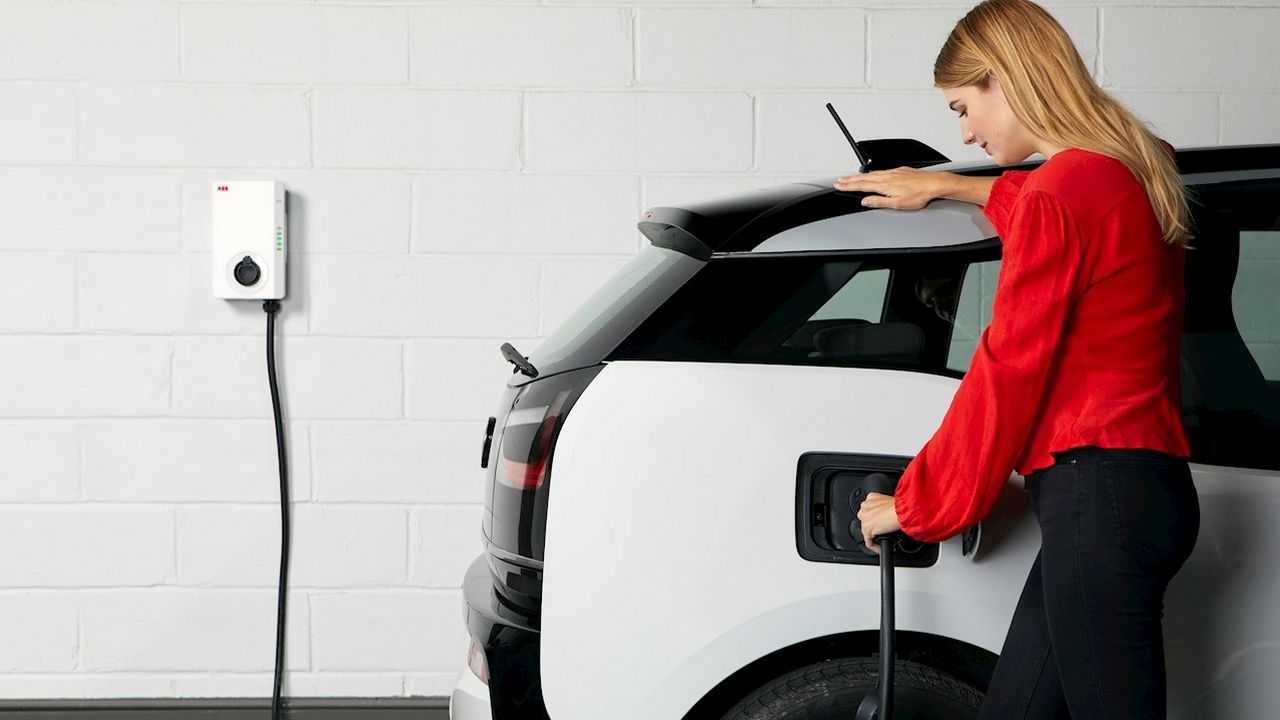

New Technologies Can Make Electric Cars More Efficient, While Reducing Charging Time
Today, nine out of ten users usually charge their electric car at work or at home, to make the most of the time the vehicle is parked. The data was released by General Motors, in a survey conducted recently.
On average, people commute about 40 kilometers per day; thus, it is possible to say that a full charge is enough to drive for more than a week with modern electric cars that have a range of over 400 km. Therefore, it is ideal for the car owner to have a wallbox charger installed in the garage. The charger allows charging up to four times faster than what the vehicle would get from a standard 220V outlet.
For example, the Bolt EV can achieve a range of up to 40 km with just one hour of charging on the wallbox. Thus, GM’s model averages 4610 km on the WLTP cycle or 416 on the EPA cycle. This is because the use of electric cars in urban areas allows a significant portion of energy to be recovered through regenerative braking. In exceptional cases, when owners take the opportunity to charge during the day, a great option is super-fast charging for EVs, typically found at highway charging stations, which results in saving a few minutes for extra range to continue the journey.
-
Does a Flag on Your Car’s Hood Overheat the Engine? Expert Reveals the Overlooked Danger for Drivers

-
How to Identify and Remove Superficial Scratches Before Spending on Car Bodywork

-
Electric Car with Extended Range: Company Patents Hybrid Transmission System Using Gasoline Engine for Backup
-
GM Developed the Chevette to Rival the Beetle, Launched it in Brazil Before Europe, Sold 1.6 Million Units, and Left a Generation with Gas Station Trauma


Additionally, the number of public chargers is growing, and you can check their locations through specific apps like Waze or Plug Share.
Electric Cars Will Have Increasingly More Range
Recently unveiled in the US, the Blazer EV will be launched in 2023, already featuring a cutting-edge platform, motor, and battery set. Named Ultium, it will allow for an additional 130 km of range for every 10 minutes at an ultra-fast charging station. Therefore, GM’s future premium SUV will run up to 530 km on a full charge, according to the manufacturer’s estimates. Thus, the range of electric cars is directly related to the battery capacity, much like a traditional combustion car’s range is conditioned by the fuel tank volume.
An example of this is the current Bolt EV, equipped with a 66 kWh battery, which has nearly 10% more range than the previous model, which had a 60 kWh battery. In terms of charging speed for EVs, this is influenced by the charger’s power, the voltage, and the current of the electrical network, which is limited by the maximum charging capacity of the vehicle’s battery.
In this way, EVs are considered more advanced than combustion or hybrid cars, especially due to their sustainability, being zero-emission. Furthermore, they have the advantage of lower maintenance costs and operating costs, which can be approximately a quarter of the value of a similarly sized conventional car.