






 Portuguese
  Spanish


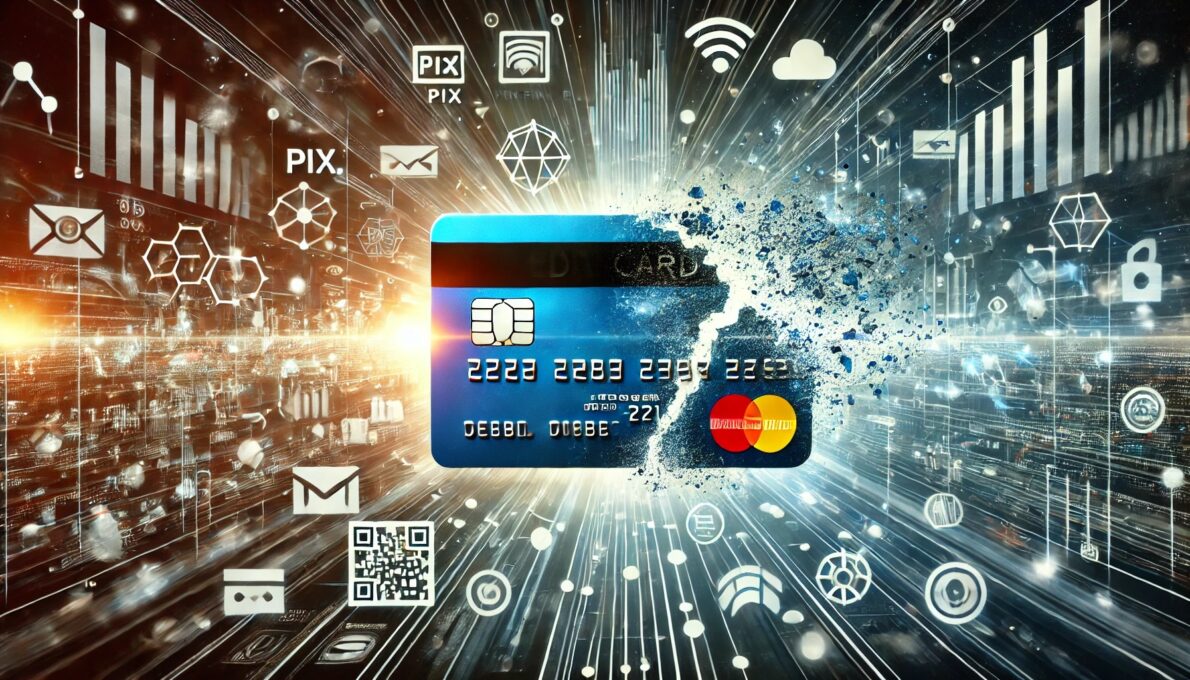

With the Rise of Pix and the Arrival of Open Finance, the Traditional Credit Card May Be Running Out of Days. See How These Changes Impact the Market and Consumers.
If you are already used to paying for everything with a simple click on your cell phone, get ready, because the way we conduct financial transactions is undergoing an even greater transformation! According to the President of the Central Bank, Roberto Campos Neto, the future of the physical credit card may be numbered. The reason? Pix, which has already won the hearts of Brazilians, and Open Finance, which promises to integrate everything in a much more practical and efficient way. But what does this mean for us, consumers? Is this the end of the traditional credit card?
The New Way to Pay and Manage Your Finances
Who hasn’t heard of Pix, right? It has practically become the best friend of Brazilians. Since it was launched by the Central Bank, the instant payment system has revolutionized the way we transfer money. Fast, easy, and best of all: without abusive fees! But Pix doesn’t stop there; it is about to expand even more, and the idea is that soon you will even be able to split purchases or pay in installments using Pix, completely dispensing with the famous credit card.
This is where Open Finance comes in, another novelty that promises to shake up the financial market. This platform will allow you to centralize all your banking information in one place. You know that pile of bank logins, cards, and investments? All that will be in a single app, giving you more control over your money. Just imagine making all transactions without needing intermediaries like credit cards. It seems like the future, right? Well, it is, and it is already knocking at the door!
-
Couple Sold Their Home to Save Business, Now Run Platform Handling $180 Million Monthly and Managing Over 51 Million Listings

-
Brazil’s 2026 Tax Refund: Record 9.58 Million Filers in Largest Payout Ever, But a Key Detail on Priority Recipients Draws Nationwide Attention

-
Itaú Alters Hybrid Work Model, Increasing Office Days from 2028, Prompting Employees to Adjust to New Routine
-
Facing Labor Shortage, Japan Plans to Invest $34 Million to Attract Foreign Workers in Construction, Healthcare, Industry, and Commerce





What Will Change With the End of the Credit Card?
With Pix and Open Finance on the rise, the end of the traditional credit card is getting closer. And this brings a series of benefits. The first major advantage is the cost reduction. When you pay with Pix or through Open Finance solutions, the transaction happens directly between you and the seller, without needing to go through card operators. The result? Much lower or even nonexistent fees.
Another positive aspect is convenience. Instead of carrying several cards in your wallet, you will only need your cell phone. All your accounts, cards, investments, and other financial information will be integrated in one place, thanks to the Open Finance. And for those who hate dealing with bureaucracy or waiting for credit approval, digital solutions promise a much faster and simpler experience.
Oh, and there’s more: this change can also increase competitiveness among banks and fintechs. With Open Finance, financial institutions will need to offer more personalized products and better conditions to attract customers. In other words, you will have more service options and lower fees. Not to mention, delinquency may also decrease, since, with more efficient financial management, you can better control your spending and avoid debts.
Challenges in the End of the Credit Card
Despite all these advantages, the transition to a future without credit cards also has its challenges. The main one is security. With all financial information centralized in a single app, it is essential to ensure that user data is well protected. Fintechs and banks need to invest heavily in technology to prevent fraud and data leaks.
Another important point is financial inclusion. Not everyone has easy access to technology, and ensuring that these solutions are accessible to all segments of the population is crucial. Imagine a person who has never used internet banking having to deal with Open Finance. It’s not simple, is it? That’s why, in addition to infrastructure, we need to invest in financial education, so that everyone can take advantage of the benefits of these innovations.
Financial institutions will also need to quickly adapt to this new scenario. If they previously dominated the market with credit card brands and their fees, they will now have to create new strategies to remain competitive. It will be interesting to see how traditional banks, fintechs, and new startups will move after the end of the credit card.
A Future Without Credit Cards Is Already Happening
What seemed distant is now a reality for many Brazilians. Pix has consolidated itself as the most used payment method in the country, and Open Finance is gaining strength, changing the way we manage our money. With less bureaucracy, more practicality, and reduced costs, the era of the physical credit card may really be coming to an end.
The truth is that the future of financial transactions is becoming increasingly digital, and consumers stand to gain. If you are still attached to your credit card, it may be time to think about more modern alternatives because the end of the credit card is becoming apparent as Pix and Open Finance gain ground.









não gosto do pix, não confio no governo.
prefiro os CC tradicionais.
Não creio que vá acabar, até porque para acabar o mundo todo teria que parar dr usar, e isso além de inviável é impossivel