Portuguese
  Spanish


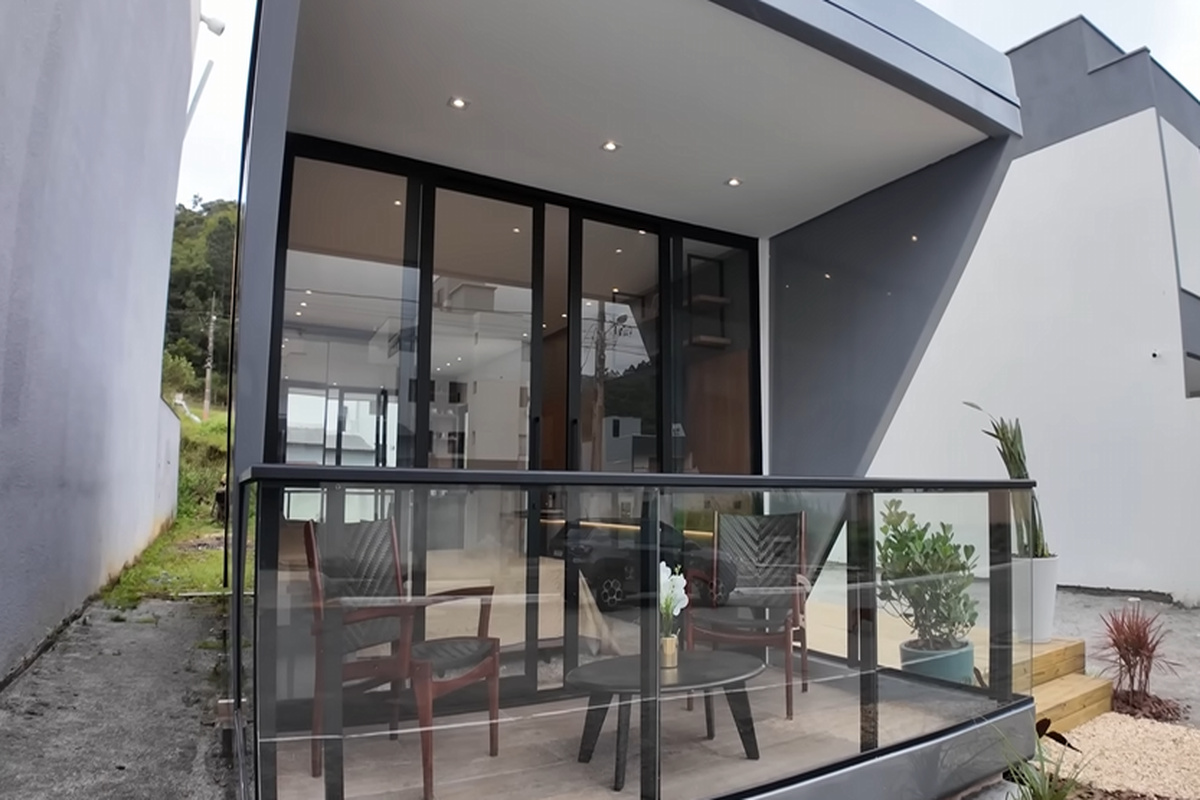


Model Produced in Itajaí Uses Six Layers of Glass Fiber, Structural Reinforcement, and High Customization for Housing or Rental
An innovative construction solution was recently presented in Santa Catarina and has since sparked interest in the regional real estate sector.
The glass fiber capsule house, manufactured by a shipyard with 11 years of experience in the nautical market in Itajaí, is set to be produced starting in 2024 as an expansion of the company’s activities.
The complete model is sold for R$ 159 thousand, as informed by the manufacturer, with an average delivery time of 30 days after order confirmation.
-
China’s Engineered Bamboo: The “Material of the Future” Stronger Than Steel and a Sustainable Wood Alternative

-
Egypt’s “New Nile”: 170 km Artificial River Aims to Turn Desert into Farmland, but Water Supply Concerns Loom
-
Unable to secure a mortgage as a self-employed single mother, she designed her own floating home from a 20-meter boat and now lives “off-grid” with her two children and solar panels on an English canal.
-
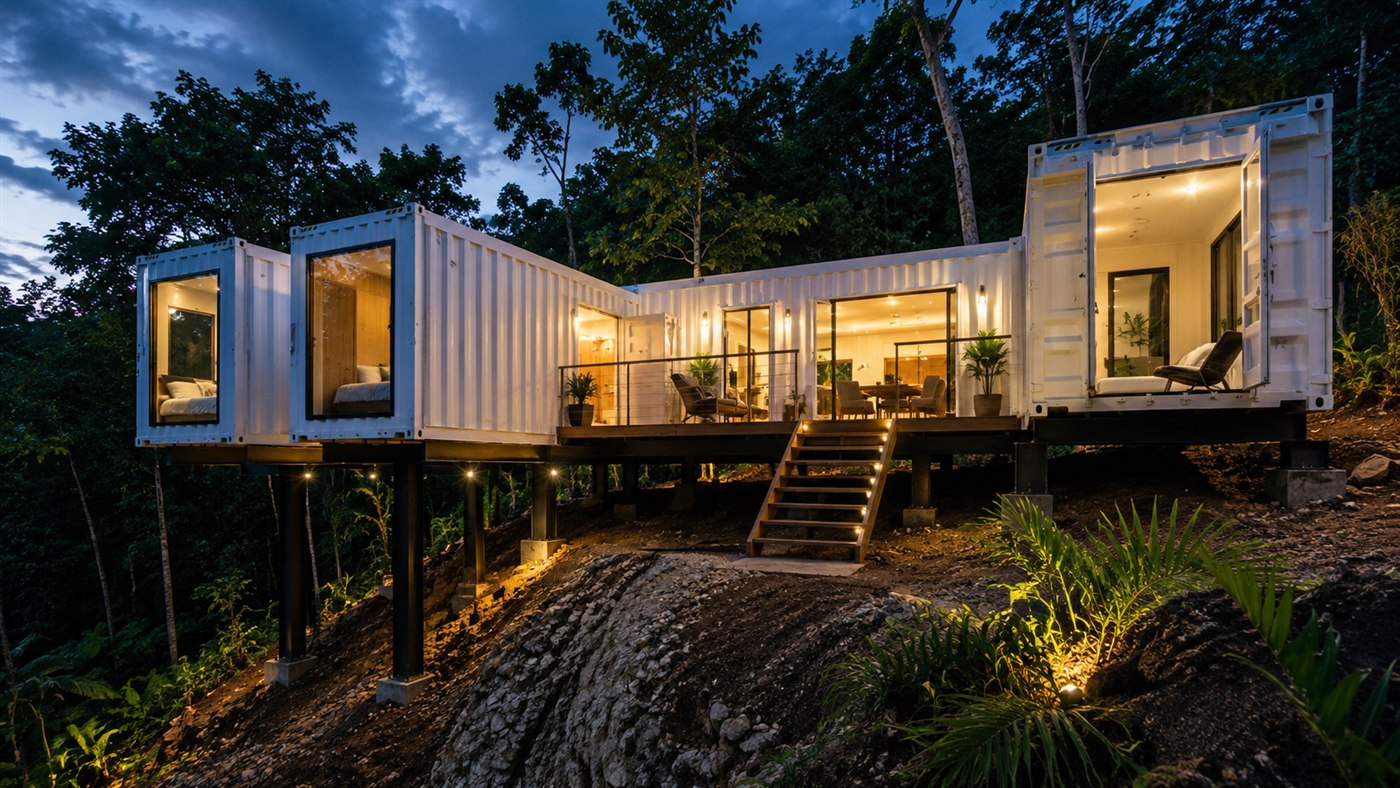
Man Transforms Rusty Shipping Container into Luxury Home with Insulated Walls, Large Windows, and Drywall Finish, Surprising Onlookers


The proposal combines nautical technology, internal customization, and simplified installation, positioning the product as an alternative to masonry, container homes, and steel frames.
Review of the Construction Model Expands Nautical Fiber Application
The unit’s structure follows the same technical standard used in boat manufacturing.
There are six layers of glass fiber applied, along with structural reinforcement in steel, internal steel framing, and thermal and acoustic insulation.
This building set replicates the method used in boats designed to withstand impacts and extreme weather variations.
According to the manufacturer, the lamination uses flame-resistant materials, which reduces fire spread.
The exterior finish receives gel coat, a material that preserves shine with simple periodic maintenance.
Simplified Installation Reduces Construction Time
The unit weighs between 3,000 kg and 3,500 kg, allowing it to be supported on six footings or installed directly on level ground, depending on soil conditions.
For operation, the customer only needs to arrange for water, electricity, sewage, and grease trap connections.
The connections are concentrated at the back, making system integration easier.
After positioning, the house can be operational in about half an hour.
As this is not a conventional construction, the process tends to be less bureaucratic, even though each municipality has its own regulations.


Internal Customization Expands Usage Possibilities
The presented version has 29 m², featuring a double bed, a table for two, a sofa, a television, a compact kitchen, and a spacious bathroom.
The layout can be adapted for tourist or residential focus.
It is possible to remove the balcony and expand the internal area or, alternatively, join two units to create a 58 m² house.
Additionally, the model allows for the installation of a rooftop with an external staircase, enhancing the living area.
The unit is already prepared for:
- Air conditioning of 12,000 or 18,000 BTUs
- Internal and external LED lighting
- Home automation
- Electric lock
- Floor heating
- System for induction or gas stove
Application in Different Regions of Brazil
The nautical fiber structure does not corrode or decay and can be used in coastal, mountainous, or urban areas.
The thermal insulation contributes to comfort in hot or cold environments.
The payment structure is initially 50% upon ordering and 50% upon delivery, with negotiation possible depending on the case.
Consolidation of the Project in the National Market
Since 2024, when the company began manufacturing capsule houses, the declared goal is to expand the product’s presence in Brazil.
The focus is on the combination of construction quality, fast delivery, and competitive pricing, maintaining a technical standard similar to that used in boats.
In this scenario, the glass fiber capsule house presents itself as a compact alternative for housing or short and long-term rentals.
Considering reduced timelines, reinforced structure, and customization possibilities, do you believe that industrialized construction models tend to gain more space in the real estate market?