Portuguese
  Spanish


In May 2026, Egypt inaugurated the New Delta Project, nicknamed “new Nile”: an artificial canal system of about 170 km that brings water to the country’s western desert and promises to transform 2.2 million feddans, about 9,000 km² of sand, into farmland. It is Egypt’s biggest bet on water security, but there is a warning about the water that sustains the project.
Egypt has just brought to life one of the planet’s greatest engineering dreams. The country inaugurated the so-called new Nile, a gigantic artificial canal that cuts through the desert to bring water to previously barren lands, as shown in the video from the engineering channel The B1M. The promise is to transform sand into plantation and strengthen the country’s water security.
The project was inaugurated by President Abdel Fattah al-Sisi on May 17, 2026, in the Egyptian western desert, according to the newspaper The National. Officially named the New Delta Project, the venture cost about 15 billion dollars and became a symbol of Egypt’s race for food and water in the middle of the desert.
The nickname “new Nile” is strong but requires caution. It is not a real new river, but rather an artificial canal that captures and distributes water through the western desert, artificially expanding Egypt’s fertile valley in a bold bet on water security.
-
Unable to secure a mortgage as a self-employed single mother, she designed her own floating home from a 20-meter boat and now lives “off-grid” with her two children and solar panels on an English canal.

-
Man Transforms Rusty Shipping Container into Luxury Home with Insulated Walls, Large Windows, and Drywall Finish, Surprising Onlookers

-
“Super Grass” Miscanthus Grows Rapidly Without Pesticides, Replacing Heating Oil in Europe and Now Used in Carbon-Capturing Concrete and Walls in World’s First “Bale House”
-
Abandoned House Renovation Fixes Decades-Long Leak in Two Days with Red Steel Roof Installation


Next, see what the new Nile is, how the water rises a hundred meters to the desert, who inaugurated it and when, how far the artificial canal goes, where the water comes from that might be running out, and why this Egyptian project has everything to do with Brazil.
How the water rises to the desert: pumps and the world’s largest treatment plant
The heart of the new Nile is not the river, but the engineering that pushes the water uphill. To bring the liquid from sea level to the desert plateau, Egypt built a system of pumping stations capable of raising the water about a hundred meters in altitude along the artificial canal.
There are thirteen pumping stations in the main section. They work in series, pushing the water through the artificial canal to the highest point of the desert, in a continuous mechanical effort that is the only way to make the new Nile work against gravity and sustain the project’s water security.
Part of the path is still made by giant pipes. To reduce evaporation in the desert heat, sections of the water run through enormous underground pipelines, protecting the precious resource that gives meaning to all of Egypt’s bet on the new Nile.
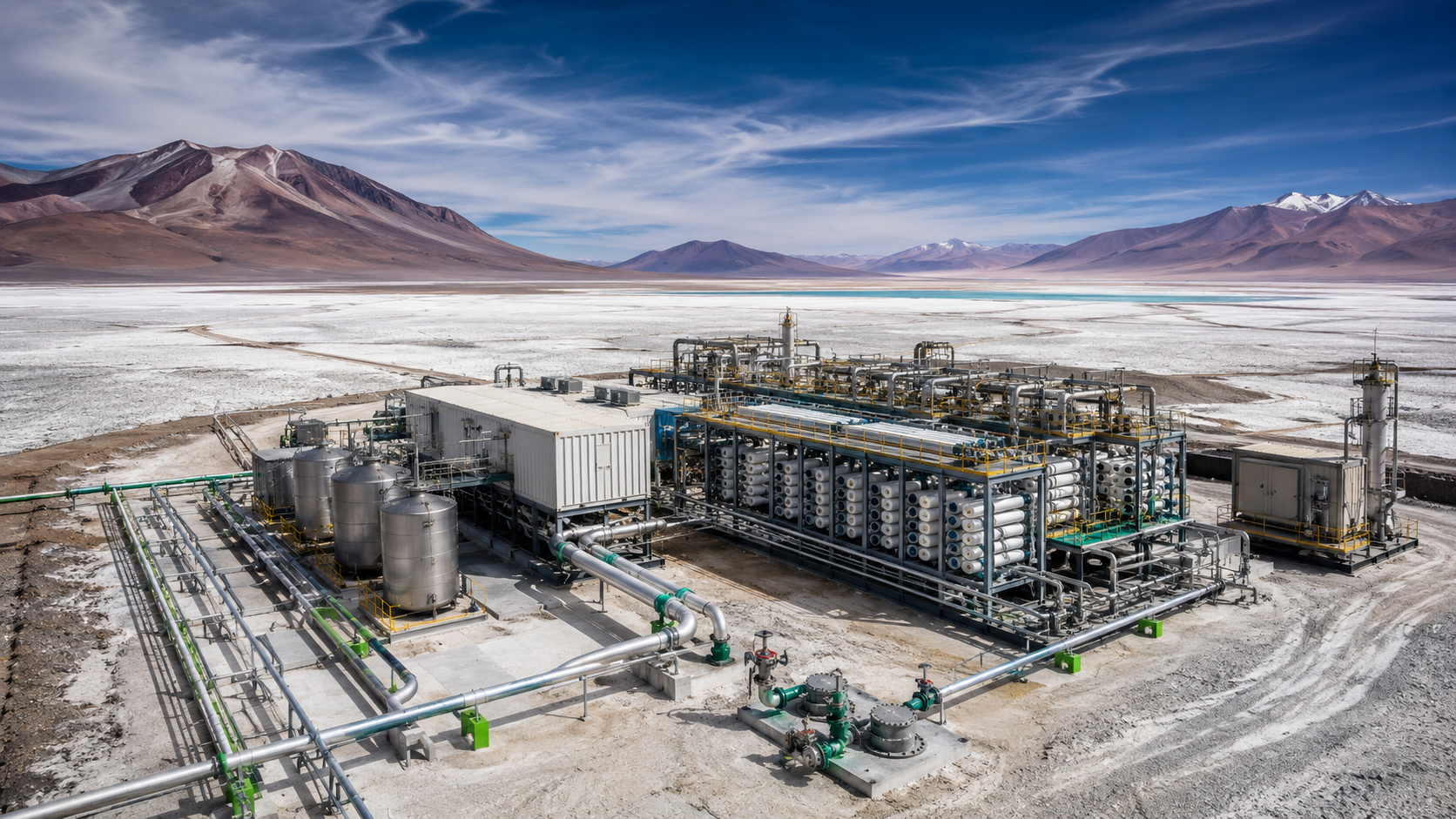
At the center of it all is a record-breaking work. The El-Hammam treatment station, connected to the new Nile, is touted as the largest water treatment station in the world, with a capacity of about 7.5 million cubic meters per day, a colossal volume designed to ensure the water security of the new agricultural frontier in the desert.
This station is what makes the artificial canal possible. Without it to clean and prepare the water, there would be no way to irrigate the western desert of Egypt, and the new Nile would be nothing more than a map dream, without the necessary water security to turn sand into farmland.
Who inaugurated and when: Egypt’s bet on the desert
The new Nile has an official date and name. The New Delta Project was announced back in 2018 by President Abdel Fattah al-Sisi and was inaugurated on May 17, 2026, marking the moment when Egypt presented to the world its new agricultural frontier in the desert.
The management of the project was entrusted to a state body. The so-called Future of Egypt Authority, linked to the government, oversees the New Delta Project and coordinates the operation of the artificial canal, in an effort treated as a national priority for water security for Egypt.
The size of the investment shows the ambition. Estimated at about 15 billion dollars, the new Nile is one of the most expensive projects ever undertaken by Egypt, reflecting the importance the country places on the idea of conquering the desert and ensuring food for its population.
The declared goal is to transform the landscape. The government of Egypt intends to use the artificial canal to irrigate 2.2 million feddans, roughly 9,000 square kilometers, expanding the country’s cultivable area by more than a third and reinforcing its long-term water security.
Behind the numbers, there is a political message. By inaugurating the new Nile, Egypt wanted to show strength and planning, turning the desert into a symbol of the future, even though, as we will see, the water security of the project raises important doubts.
170 km of artificial canal cutting through the sand
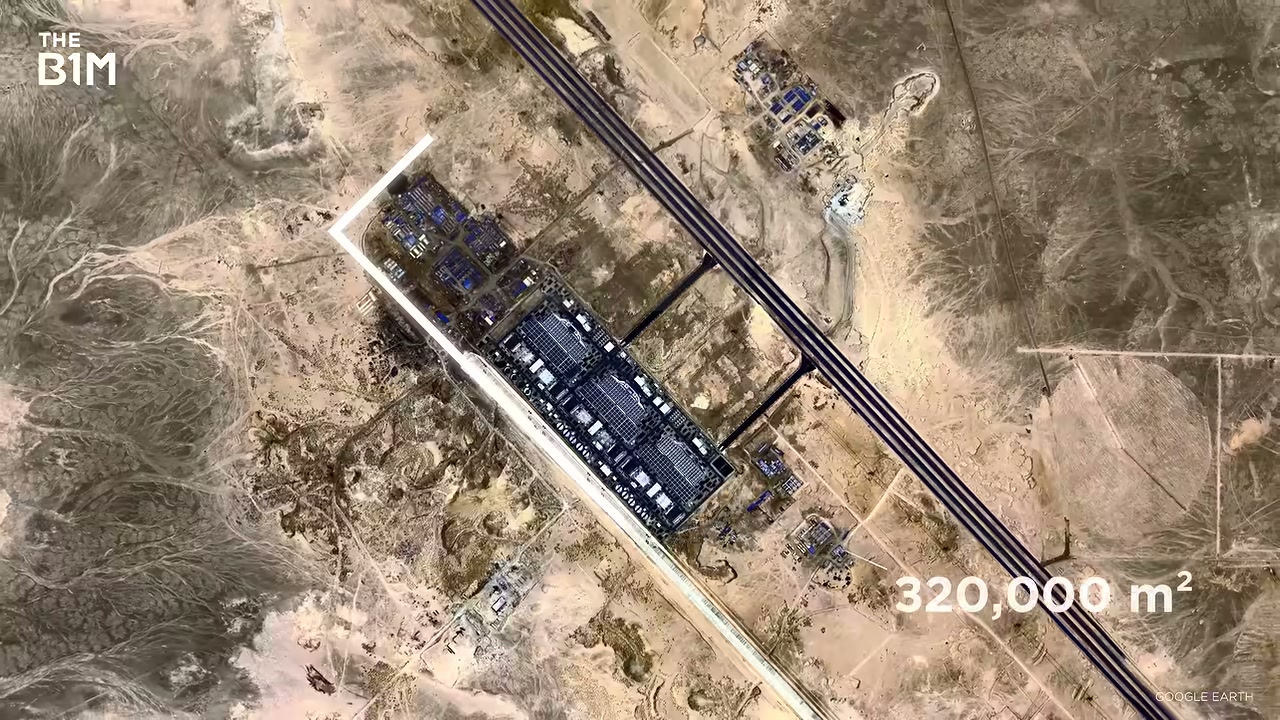
The backbone of the new Nile is a massive canal. The main stretch, known as the Al-Hammam canal, is about 170 kilometers long, carrying water through the western desert of Egypt towards new agricultural lands that rely on the project to exist.
The number has been a source of confusion. Previous versions of the project mentioned about 114 kilometers, probably referring to a specific phase or section, but the latest information on the new Nile points to the 170 kilometers of the complete artificial canal in the desert.
The system, however, is much larger than a single canal. Adding open canals and pipelines, the new Nile comprises hundreds of kilometers of water routes and thousands of kilometers of pipes, along with dozens of pumping stations scattered throughout the desert to keep the water security functioning.
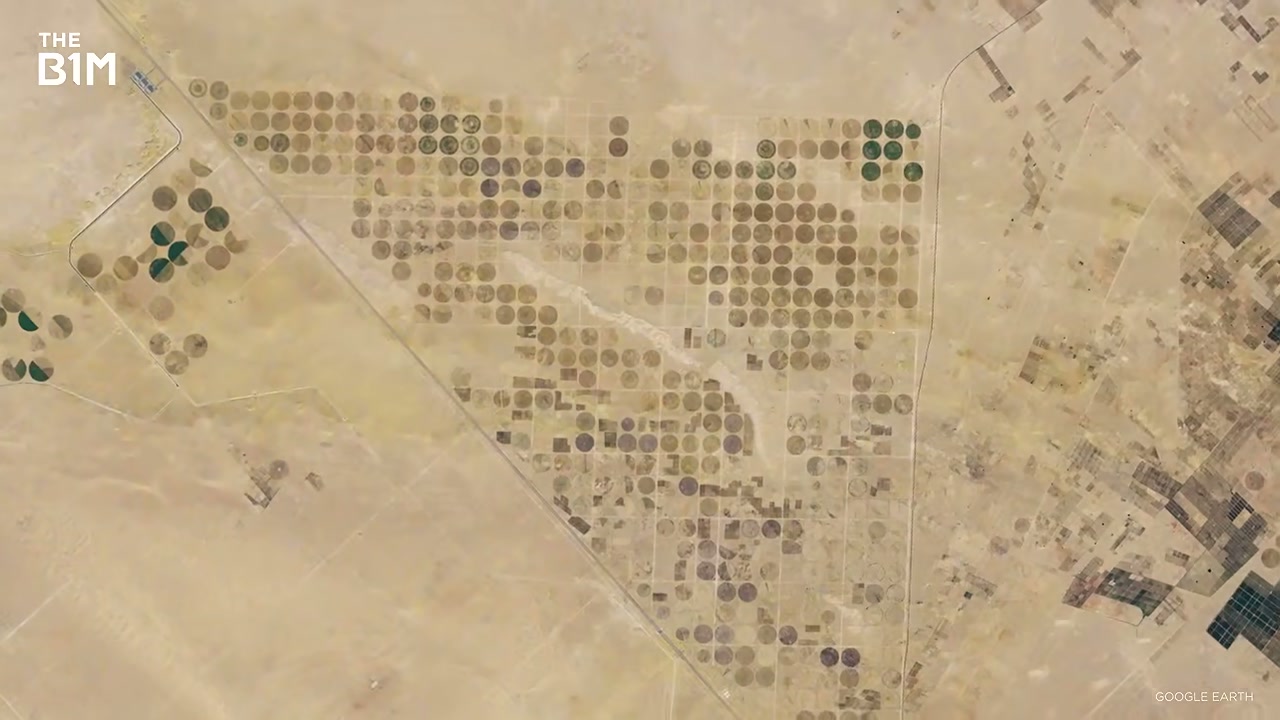
From above, the effect is impressive. Satellite images show the artificial canal cutting through the sand like a straight line and, around it, green circles of irrigated crops emerging in the middle of the desert, visible proof that the new Nile has already begun to change the face of that region of Egypt.
But the landscape hides a caveat. Despite the fields that already appear in the images, the artificial canal is not yet fully completed, and much of the green sprouting in the desert currently depends on another water source, which calls into question the long-term water security of the new Nile.
Where the water comes from, and why it may be running out
Here is the most delicate point of the new Nile. Much of the water that feeds the artificial canal does not come from the Nile River, but from two main sources: agricultural drainage water, reused and treated, and groundwater extracted from deep aquifers in the desert of Egypt.
The reuse of drainage is ingenious. Instead of letting the water used in agriculture flow into the sea, Egypt captures it, treats it at the gigantic El-Hammam station, and returns it to the artificial canal, a cycle that helps stretch every drop and sustain the water security of the new Nile.
The problem lies in the groundwater. Part of the new Nile depends on fossil aquifers, formed thousands of years ago, which are practically non-renewable, and there are warnings that this water stock in the desert is being consumed too quickly, threatening the long-term water security of the project.
If the aquifer runs dry, the “miracle” may wither. Experts consulted for the report that originated the theme point out that, without a renewable and stable source, the artificial canal may not be able to keep the crops alive, and the new Nile would risk becoming a temporary green in the desert of Egypt.
Therefore, the keyword is sustainability. Transforming the desert into farmland is possible in the short term, but maintaining it for decades requires solving where the water will come from, and it is this uncertainty that separates the new Nile from a definitive victory for Egyptian water security.
Why Egypt Needs a New Nile So Much
Egypt’s obsession with water has a historical explanation. The country relies on the Nile River for about 97% of all its water, making it extremely vulnerable to any changes in the river’s flow and reinforcing the urgency to seek water security through the new Nile.
Upstream, a dam increased the fear. The construction of the Grand Ethiopian Renaissance Dam in Ethiopia raised alarms in Egypt, which fears losing part of the Nile’s water and, therefore, accelerated bets like the artificial canal in the desert to diversify its sources.
At the same time, the population exploded. The number of inhabitants in Egypt jumped from about 60 million in the 1990s to over 120 million today, which multiplied the demand for food and water and made the new Nile a matter of survival, not vanity.
The country became hostage to imports. Egypt is one of the largest wheat importers in the world, dependent on foreign suppliers to feed its people, and transforming the desert into farmland through the artificial canal is an attempt to reduce this dependency and gain water and food security.
In this scenario, the desert ceased to be an obstacle and became hope. With little fertile land available along the Nile, Egypt looked to the vastness of sand and decided to bring water there, making the new Nile the centerpiece of its water security strategy.
The Ghost of Toshka: What if the New Nile Doesn’t Work?
The history of Egypt holds a warning. In the 1990s, the country launched the Toshka project, also called the “project of the century,” with the promise of irrigating the desert and creating a new agricultural valley, but the result fell far short of what was promised and became a symbol of frustration.
The parallel with the new Nile is inevitable. Just like Toshka, the current artificial canal promises to transform sand into abundance, and experts fear that the new project will repeat old mistakes, spending billions without delivering the expected water security and production for Egypt.
There is also doubt about who really benefits. Part of the lands irrigated by the new Nile might end up focused on export crops, such as fruits and vegetables, instead of the wheat that Egypt so desperately needs, which would weaken the argument that the desert will solve the country’s hunger.
Even so, the project has real merits. The new Nile mobilizes cutting-edge technology, generates jobs, and demonstrates engineering capability, and it might deliver at least part of what it promises, provided Egypt resolves the water bottleneck and takes the water security of the artificial canal seriously.
In the end, the new Nile is a high-risk gamble. If successful, it will redraw the agricultural map of Egypt and become a global model of desert conquest; if it fails, it will go down in history as yet another costly dream that unsustainable water security could not maintain.
After all, is the “new Nile” really a new river?
Despite the grand nickname, the answer is no. The new Nile is not a natural river emerging in the desert, but rather an artificial canal constructed by human hands to carry dammed and treated water to the new farms of Egypt.
The confusion is understandable. As the artificial canal cuts through the desert like a river and makes greenery sprout along its banks, it’s easy to imagine that Egypt has created a second Nile, but what exists there is an engineering work aimed at water security, not a spontaneous watercourse.
The difference is more than semantic. A real river renews itself with rains and springs; the new Nile, on the other hand, depends on pumps, treatment stations, and aquifers to function, which makes its water security fragile and explains why the “miracle” in the desert worries experts so much.
Calling it the “new Nile” helps sell the idea. The name evokes pride and hope in Egypt, but it’s important to remember that it is an artificial canal, and the success of the project depends on truly solving the water problem that sustains this new valley in the desert.
What the new Nile has to do with Brazil
As distant as it may seem, the new Nile dialogues with Brazil. The country is well aware of the challenges of bringing water to dry regions, and Egypt’s work in the desert closely resembles the transposition of the São Francisco River, which also uses canals and pumps to bring water to the hinterland in the name of water security.
There is also the agribusiness side. Egypt is a buyer of Brazilian grains, such as corn and wheat, and if the artificial canal makes the country more self-sufficient, this may affect, in the future, the demand for Brazilian agricultural products, linking the Egyptian desert to Brazil’s countryside.
The issue of groundwater also resonates here. Just as the new Nile depends on aquifers, Brazil has gigantic reserves, such as the Guarani Aquifer, and the debate on using this water responsibly bears direct similarities to the water security dilemma faced by Egypt.
Finally, there is the lesson about mega projects. The case of the new Nile shows that transforming the desert requires not only engineering but long-term planning, something Brazil also needs to consider in its own water projects to avoid repeating the risks of the Egyptian artificial canal.
And you, do you believe in Egypt’s “new Nile”?


The new Nile is both a feat and an enigma. By inaugurating a 170-kilometer artificial canal to bring water to the desert, Egypt demonstrated an impressive engineering capability and rekindled the dream of turning sand into food.
But the big question remains. If the water sustaining the new Nile largely comes from aquifers that may run dry, the water security of the project is threatened, and Egypt risks repeating past failures in the desert.
And you, do you believe that the new Nile will truly transform Egypt’s desert into lasting abundance, or do you think the artificial canal might become another billion-dollar project without real water security? Share your opinion in the comments and share with those interested in great engineering works