Portuguese
  Spanish


Miscanthus, a grass that grows up to 5 cm per day without needing pesticides, has become a dual bet in Europe: it already heats public buildings and entire village houses as cheap biomass and now also builds houses, whether in the world’s first bale house in Wales or in concrete blocks that capture carbon.
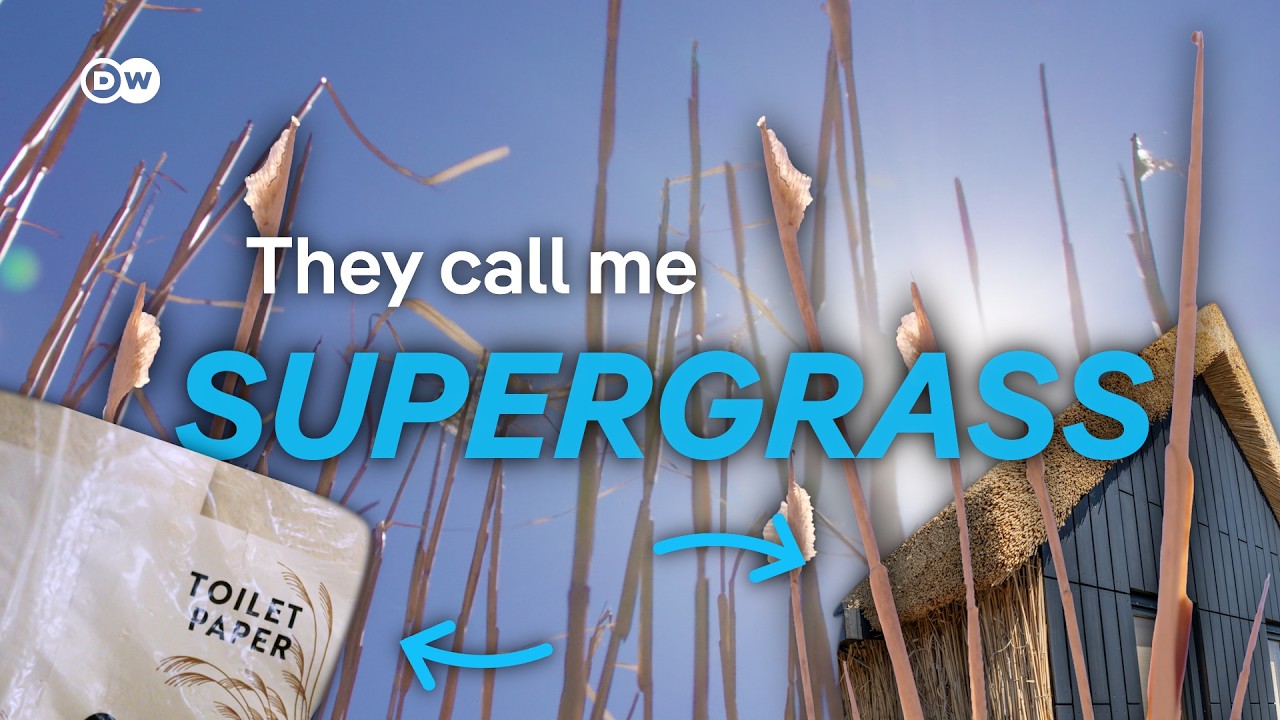
A giant grass is attracting attention in Europe for a simple reason: it does everything. The miscanthus, nicknamed “super grass,” serves both for heating cities and for erecting walls, as shown in the report by DW News. It is a plant that becomes energy and construction material at the same time.
The versatility impresses specialists. In French villages, miscanthus already replaces oil in boilers and has become a source of cheap biomass, according to Energynews, while in the UK the same plant is being tested to build more sustainable houses.
The advantage lies in the way it grows. Miscanthus can grow up to 5 centimeters per day, requires no pesticides, and is harvested every year for decades, making it a renewable and low-cost raw material, whether for burning as biomass or for turning into walls.
-
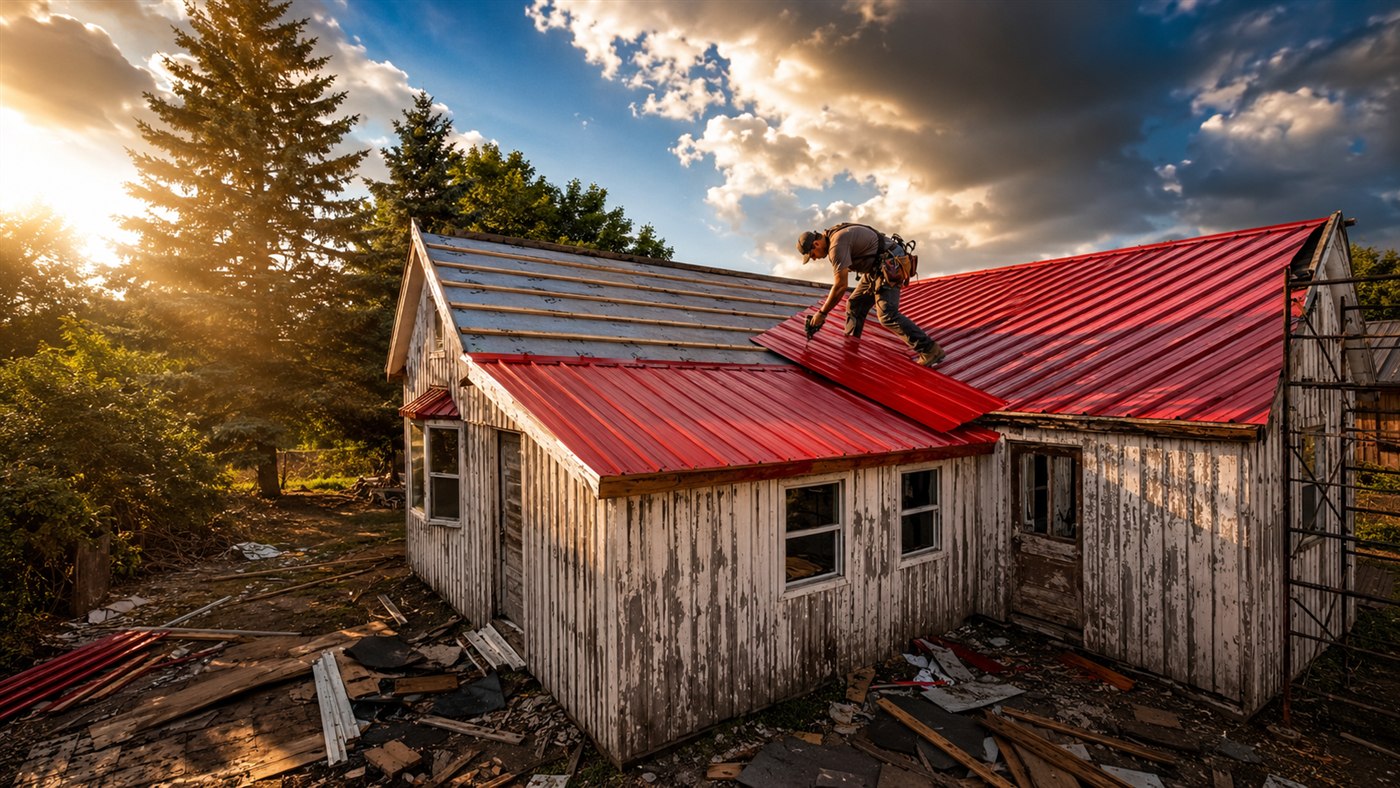
Abandoned House Renovation Fixes Decades-Long Leak in Two Days with Red Steel Roof Installation

-
Man Builds Entire House by Hand from Abandoned Pallets Found in Brazilian Forest, Complete with Round Door and Matching Doghouse
-
California Diverts 65% of Construction Waste from Landfills, Repurposing Millions of Tons into Road Base, New Asphalt, and Wood Chips
-
Japan Constructs World’s Deepest Sea Wall in the Pacific, Sinking Massive Concrete Structures for Three Decades



Next, see what miscanthus is, how it heats entire cities, how it became a construction material, and why this carbon-capturing grass might also make sense for Brazil.
What is miscanthus, the “super grass” that becomes energy and walls
Miscanthus is a perennial grass of Asian origin, also known as elephant grass or Chinese cane. It can grow over four meters tall and is notable for its rapid growth, forming dense cane fields that yield large amounts of biomass.
The great advantage is its longevity. Planted only once, miscanthus regrows and is harvested year after year, for decades, without needing replanting, which sets it apart from wood, which takes many years to grow and be cut.
It is also economical to cultivate. Once established, miscanthus requires no pesticides or fertilizers, grows on poor land, and even helps clean the soil, reducing costs and making it a low-impact crop for agriculture.
All this opened up two fronts of use. On one side, miscanthus becomes fuel for heating; on the other, raw material for construction, proving that a simple grass can solve energy and housing problems at the same time.
The scientific name already reveals the origin. Known as Miscanthus giganteus, the “super grass” came from Asia and spread across Europe as an energy crop, valued precisely for transforming sun, water, and poor soil into a lot of biomass with very little effort from the farmer.
It is worth differentiating miscanthus from other plants. Unlike corn or sugarcane, it is not harvested to become food or sugar, but rather to generate dry fiber, which serves both as heating fuel and as construction material, without competing with food production.
A plant that grows up to 5 cm per day
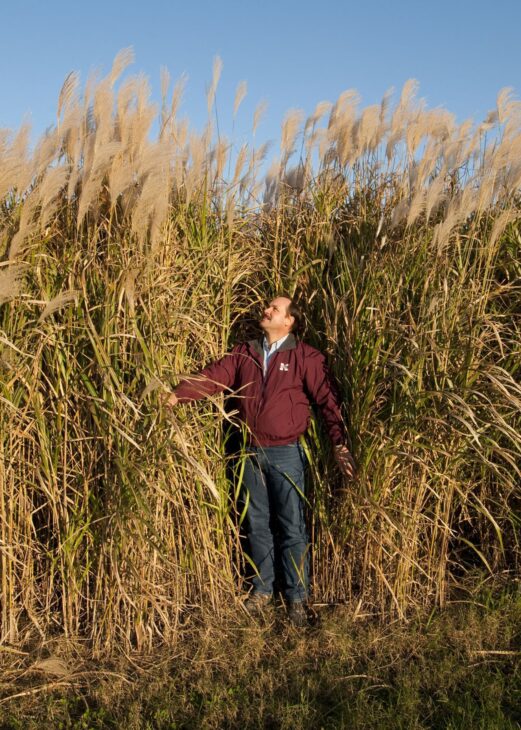
The growth speed is the great differential. In good conditions, miscanthus can grow up to 5 centimeters per day, an impressive rate that ensures a lot of biomass in a short time and allows abundant harvests every year.
This vigor has an explanation. Being a plant adapted to capture a lot of light and water, miscanthus quickly transforms these resources into stem and leaf, accumulating the material that will later be burned for heating or used in construction.
The result is a very productive crop. A single hectare of miscanthus yields tons of biomass per year, which makes it profitable for those who plant with the aim of selling the material as fuel or as input for factories.
And all this with little effort. As miscanthus requires no pesticides and little maintenance, the farmer can achieve a good harvest without the costs and labor of other crops, which helps explain the growing interest in the plant in Europe.
How miscanthus heats entire cities
In Europe, miscanthus has already moved beyond the planning stage in heating. French villages have replaced fuel oil with boilers that burn the grass, using local biomass to heat public buildings, schools, churches, and even private homes during the winter.
The economy is the main attraction. By producing their own fuel from grass planted nearby, these communities reduce their heating bill and stop relying on imported petroleum derivatives, whose price fluctuates and weighs on the budget.
The model is gaining scale. A French association dedicated to miscanthus encompasses thousands of hectares planted in the country, and more than a dozen municipalities already heat their buildings with the plant, in a movement that has doubled in size in recent years.
The numbers from France are impressive. According to information from DW, there are about 11,000 hectares of miscanthus cultivated in the country, an area that has doubled since 2017, and at least 14 municipalities already use the grass for heating schools, town halls, homes, and even castles, showing that biomass has moved from experiment to local public policy.
In some villages, the result is almost self-sufficiency. Dozens of homes are heated by a single miscanthus-powered plant, with the grass planted just a few kilometers from the boiler, reducing transportation and keeping the cost of heating low for residents.
The cycle is almost closed. The farmer plants, harvests, and sells the miscanthus; the town hall burns the biomass in the boiler; and the heat warms the city, in a local arrangement that keeps money and heating within the community itself.
From the field to the boiler: miscanthus becomes cheap biomass
Mechanized harvest of miscanthus: the same biomass that supplies neighborhood boilers also becomes bales used to build and insulate houses. Credit: Hamsterdancer / Wikimedia Commons (CC BY-SA 3.0).
The path from plant to heat is direct. Once dried, the miscanthus is harvested by machines, pressed into bales or shredded, and sent to the boiler, where it burns and releases the heat that warms the water distributed throughout the buildings.
The biomass of miscanthus is highly efficient. With a high combustion power, the grass delivers a lot of energy per kilogram, reducing the amount of material needed and lowering the cost of heating compared to other sources.
The price is competitive. In some European communities, the cost of energy generated with miscanthus is well below that of electricity, oil, or gas, making this plant’s biomass a rational choice, not just an ecological one.
There is also the environmental gain. As miscanthus reabsorbs carbon while it grows, heating with this biomass tends to have a smaller impact on the climate than burning fossil fuels, a point that is increasingly valued.
The price of energy is the decisive argument. In European communities, the cost of heat generated with miscanthus is well below that of electricity, oil, or gas, making the plant’s biomass worthwhile not only for its green side but also for the wallet of those who pay the heating bill.
The world’s first “bale house” of miscanthus
The most surprising use is in construction. In Wales, researchers built the world’s first house made with bales of miscanthus, using the grass blocks as infill for a wooden frame, a technique similar to straw bale houses.
The operation is ingenious. The miscanthus bales, the size of large bricks, are fitted into the structure and then plastered inside and out, forming thick walls with excellent thermal insulation, ideal for cold weather.
Durability is an asset. According to the project leaders, the house was designed to last about a hundred years, which dispels the idea that a construction made with plant material would be fragile or not very resistant over time.
The impact on the climate is the main highlight. Since a good part of the miscanthus mass is carbon captured from the atmosphere, building with the plant helps reduce emissions, unlike conventional houses, which tend to release a lot of carbon during construction.
Researchers see a silent revolution here. For those leading this type of project, the most transformative aspect of miscanthus is the possibility of decarbonizing the construction industry on a large scale, replacing materials that emit carbon dioxide with a grass that does the opposite and stores carbon inside the wall.
The technique is reminiscent of straw houses. The miscanthus bales serve as infill between wooden studs and are plastered on both sides, resulting in thick, breathable walls with excellent insulation, ideal for reducing heating costs inside the home.
Miscanthus concrete: blocks that capture carbon


The grass also turned into concrete. European companies have developed blocks and a type of lightweight concrete made with miscanthus fibers, plant-based construction materials that aim to replace part of traditional cement, a major culprit of emissions.
The technical performance is surprising. Miscanthus concrete is much lighter than the usual, has high thermal and acoustic insulation capacity, and in some versions, presents a negative carbon footprint, meaning it helps remove carbon dioxide from the air.
The idea is to fit into real construction. The miscanthus blocks were designed to respect the work of the bricklayer, with pieces that function like common bricks, which facilitates the adoption of the material in constructions without requiring completely new techniques.
The technical performance helps to convince. Miscanthus concrete is usually much lighter than the usual, insulates heat and sound well, and in some versions, even presents a negative carbon footprint, which attracts construction companies interested in greener projects without compromising on strength.
This is the clever trick. By combining the same plant that heats the city with a material capable of building walls and retaining carbon, miscanthus becomes a double solution, covering both energy and construction in a more sustainable way.
Why is miscanthus good for the climate?
The secret lies in carbon capture. As it grows, miscanthus absorbs carbon dioxide from the air and stores it in its fibers, which means that both burning it as biomass and using it in construction can have a smaller climate impact than fossil alternatives.
The absence of pesticides helps. Since it doesn’t require poison or fertilizer after being planted, miscanthus reduces pollution associated with farming and even improves the soil, reinforcing its profile as an environmentally friendly crop.
There is also the use of poor lands. Since miscanthus grows well in degraded areas, it can occupy lands that are not suitable for food, generating biomass and construction material without competing with food production.
Even so, balance is needed. Like any expanding crop, miscanthus requires planning to avoid becoming an uncontrolled monoculture, but its potential to unite energy, construction, and carbon capture places it among the most promising plants of the moment.
What does this have to do with Brazil
Brazil is a giant in biomass. The country already uses sugarcane bagasse and other residues to generate energy, so a plant like miscanthus, so efficient in producing material for heating, would find here a land full of experience and potential.
The favorable climate is another point. Fast-growing grasses thrive in the Brazilian heat, and miscanthus could be studied as a source of biomass and as a raw material for construction, in a country that needs cheaper and more sustainable housing.
There is a connection with family farming. Just like in Europe, planting miscanthus could generate income for small producers, who would sell the biomass for energy or to material factories, taking advantage of less fertile land without compromising food production.
Finally, there is a lesson about innovation. Seeing a simple grass warm cities, become walls, and capture carbon shows how cheap and natural solutions can help with climate, a path that Brazil, rich in plants and sun, has everything to explore.
And you, would you live in a house made of grass?
Miscanthus proves that a plant can do much more than decorate the landscape. The same grass that heats entire villages in Europe as cheap biomass now becomes house walls and concrete blocks that capture carbon, combining energy and construction in a single crop.
More than a curiosity, it is an example of a possible future. With rapid growth, no pesticides, and low climate impact, miscanthus points to a path where solving heating and housing can go hand in hand with environmental care.
And you, would you live in a house built with bales or blocks of miscanthus, knowing that the “super grass” helps hold carbon from the air? Do you think Brazil should test this plant? Share your opinion in the comments and share with those who enjoy sustainability.