Portuguese
  Spanish


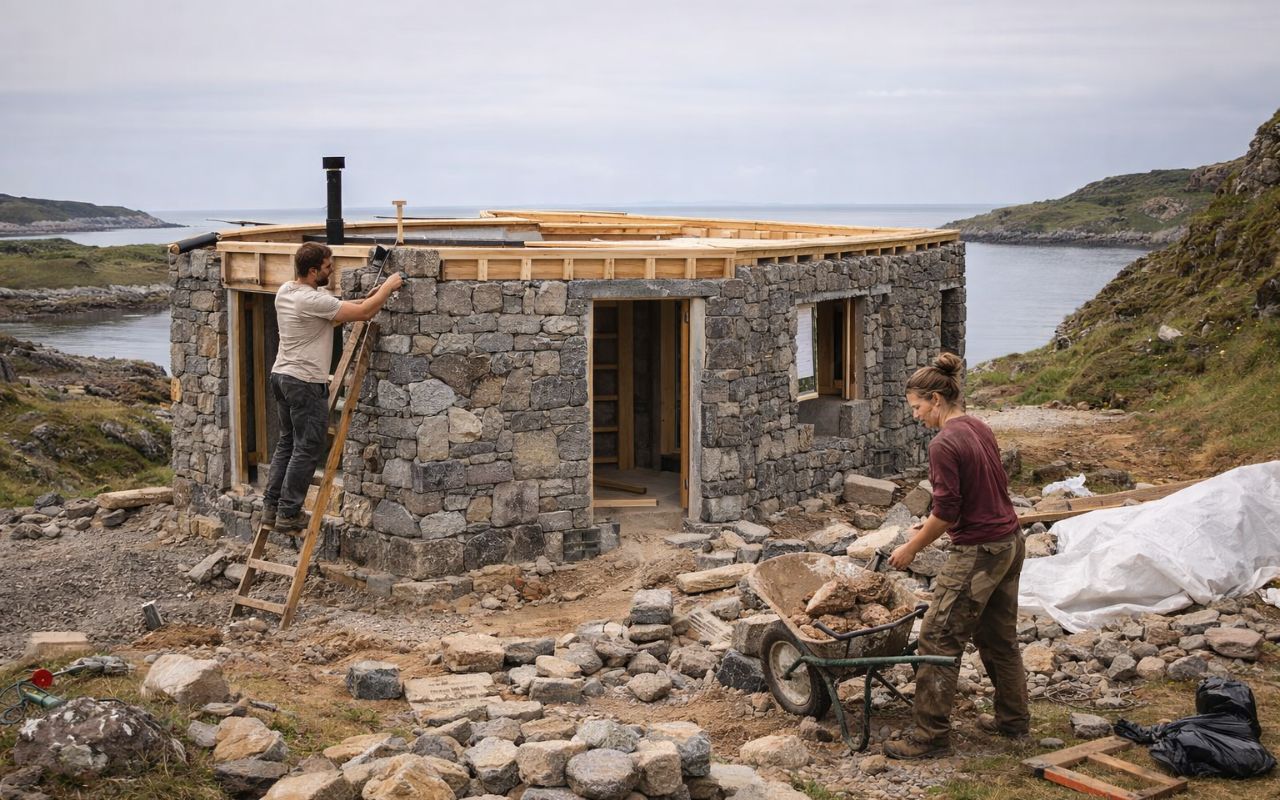


The Isolated House Caochan na Creige, in Scotland, Was Elected House of the Year 2025 by the RIBA. Get to Know the Project That Combined Vernacular Architecture, Sustainability, and Total Integration with the Landscape.
An isolated house in Scotland was elected House of the Year 2025 by the Royal Institute of British Architects (RIBA), at the ceremony that crowned the project as the best example of residential architecture of the year in the UK.
The one-bedroom residence is located in the Outer Hebrides, having been designed and built by the architects who inhabit it, combining a sustainable approach with deep integration into the natural surroundings.
The Isolated House That Won the House of the Year 2025 Award
The isolated house chosen as House of the Year 2025 is named Caochan na Creige, a name that in Gaelic means “small and tranquil by the rock.”
-
City Hall spends almost R$ 2 million on a wooden bridge only 2.5 meters wide to prevent the isolation of 5,000 people, but information about lifespan, load, and maintenance does not appear in public disclosures.

-
More than 2,100 trucks transported 16,200 cubic meters of concrete without interruption to create the foundation of the tallest skyscraper in the western United States and break a world record.

-
The man who started in construction with his own house founded a company in 1957, went through a banking crisis in 1987, and ended up connected to 16,500 houses in Houston.

-
Builders challenged experts, erected a 16-story building using only reinforced concrete when the known limit was six floors, and proved that skyscrapers would never be the same again.



Designed by Eilidh Izat and Jack Arundell, the one-bedroom house was built on rural land, flanked by rocks and overlooking the sea in the Hebrides.
The project surprised the jury with its clear response to the island’s challenging climatic conditions, its relationship with local vernacular architecture, and the efficient use of materials available in the surroundings.
Who Are the Creators?
The architects responsible for the winner of the House of the Year 2025 are Eilidh Izat and Jack Arundell, who decided to build their own residence in search of a different and more nature-connected lifestyle.
After searching for an appropriate location since 2020, they found a plot of land and began to develop the project.

Initially, they planned a larger house, but budget adjustments led the couple to redesign the project and build the residence in a handcrafted manner using their own resources, overcoming financial limitations and technical challenges.
Where Is the House of the Year 2025 and Its Unique Characteristics
The House of the Year 2025 is located in a remote area on the eastern coast, part of the Outer Hebrides in northwestern Scotland.
The region is known for strong winds, harsh weather, and wild landscapes, factors that have directly influenced the design of the house.
The residence occupies about 85 m² and creates a continuous dialogue between interior and exterior.
The exterior walls are clad with local stone (Lewisian gneiss), giving the structure a robust appearance that integrates into the terrain.
Large windows frame views of the sea and the valley, enhancing the sense of connection with the natural landscape.
How the House Was Built and the Meaning of the Design
The construction process of the isolated house now recognized as House of the Year was handcrafted and connected to the local community.

The architects worked with materials extracted from nearby and collaborated with local artisans to complete the project.
Internally, the use of natural materials such as Scottish larch wood and plaster walls provides a cozy environment, despite the simplicity of the layout.
Each space, although compact, was designed to respond to the harsh climate and offer thermal and visual comfort to the residents.
Why This House Was Chosen House of the Year 2025
The judges of the RIBA described the winner of the House of the Year 2025 as a building that balances site sensitivity, sustainability, and formal clarity.
According to David Kohn, chair of this year’s jury, the project “Caochan na Creige addressed all the issues — challenging climatic conditions, dialogue with vernacular architecture, and a tight budget — with a rare combination of sensitivity and boldness.”
The selection criteria also considered the commitment to the natural context and how the building respects and interacts with the rocky and exposed terrain.

The victory of the isolated house in Scotland as House of the Year 2025 represents more than an aesthetic award. It ignites a broader debate about rural architecture, sustainability, and the relationship between housing and the environment.
Projects like this emphasize the importance of architectural solutions that respond to local conditions and promote more sustainable lifestyles, even in remote contexts.
Moreover, the recognition has elevated the profile of building approaches that value regional materials, craftsmanship techniques, and respect for local traditions — principles that can inspire future generations of architects.
Context of the Award and International Visibility
The House of the Year award, presented annually by the Royal Institute of British Architects, is part of an international architectural calendar that celebrates innovative houses and residences throughout the UK.
The selection of candidates is widely covered by the media and showcased on television, which amplifies the impact of the awarded works in the public debate about housing and design.
Since its inception, the award has highlighted projects that combine aesthetic excellence, functionality, and contextual response, reinforcing the importance of residential architecture in urban and rural development.
With information from Revista Casa e Jardim.