





 Portuguese
  English
  Spanish
  3 min of reading
  0 comments


Researchers in Shenzhen Create Revolutionary Cassette That Uses DNA Instead of Magnetic Tape, With Capacity of 36 Petabytes — Equivalent to Seven Billion Songs, But Still at Prohibitive Cost.
The traditional cassette tape, launched in 1962, marked generations in the 1970s and 1980s. It allowed users to record music, create homemade compilations, and listen to songs on portable devices like the Walkman. However, it also had technical issues: the tape would get stuck in the recorder, lose sound quality, and sometimes required a pen to rewind it. With the advancement of CDs, MP3s, and streaming, the tape became a nostalgic object, a reminder of an analog era. Now, however, scientists in China propose a surprising leap: the DNA-based cassette.
The Chinese Revolution: DNA as a Storage Medium
Researchers in Shenzhen have developed a technology that replaces magnetic tape with synthetic DNA as a recording medium. The new cassette does not store minutes of audio, but rather petabytes of data. Its capacity reaches 36 petabytes, equivalent to seven billion songs — a collection impossible to fit into any conventional digital device.
Unlike digital media, which records data in zeros and ones, the DNA cassette uses the four nitrogenous bases of the genetic code:
-
The government opens the budget to pay pensions and ends up targeting precisely the FAB’s Gripen fighter jet; the reason for the R$ 800 million block reveals a fragility that has haunted the country’s defense projects for decades.

-
A potato-shaped object over a mountain and orbs multiplying in the sky are among the 72 new files from the Department of Defense that do not prove extraterrestrial life.
-
Family struggling with the electricity bill at the end of the month finds an air conditioner that consumes little and costs only R$ 21 per month; LG device cools the room 40% faster and also comes with a detail that grabs attention.
-
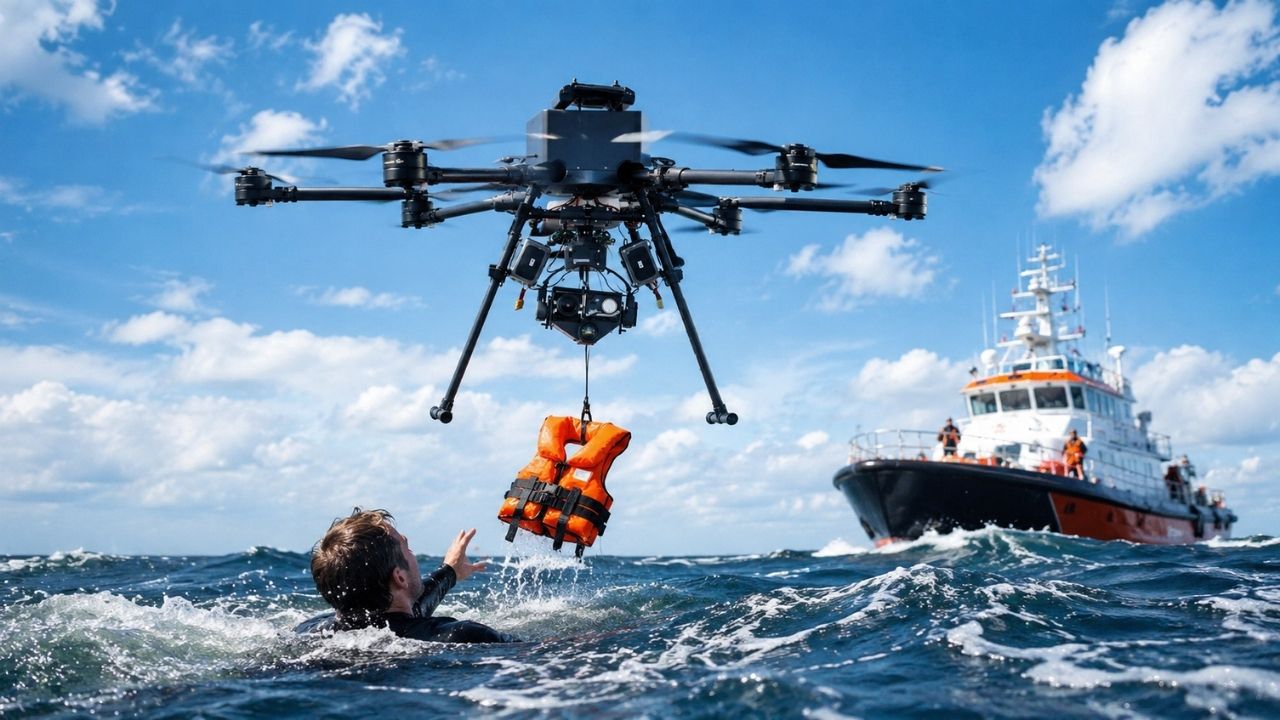
A 2.4-meter drone created in Denmark could change sea rescues by locating castaways with more than 80% success, landing on ships in seconds, and delivering life vests before cold and exhaustion reduce survival chances.


- Adenine (A)
- Guanine (G)
- Cytosine (C)
- Thymine (T)
This system creates an unprecedented density of information.
The Amazing Density of DNA
To understand the potential, simply look to nature:
- The DNA of a human cell can store about 1.5 gigabytes of data, equivalent to two CDs of music.
- One gram of DNA has a capacity of up to 450 exabytes, which would correspond to 1.8 billion modern smartphones.
This density explains why DNA is seen as the ultimate medium for the future of data storage.
Advantages Over Current Media
While hard disks, SSDs, and even the cloud have limits on scale and durability, DNA offers:
- High Durability: Information can be preserved for centuries without loss.
- Extreme Miniaturization: Enormous libraries could fit in a small capsule of DNA.
- Biological Security: The material is stable and replicable.
In practice, it would be possible to store the entire catalog of movies, music, and documents on the planet in just a few grams of DNA.
The Price Is Still the Obstacle
Despite the advancement, the technology will not reach the public anytime soon. The process of synthesizing and reading DNA is still extremely expensive and slow. The study itself acknowledges that at this moment, the DNA cassette is merely an experimental prototype.
But there are historical parallels. Just as happened with conventional cassette tapes — which were initially expensive and later became popular — the same could occur with DNA.
Experts believe that with increasing demand and the evolution of laboratory techniques, costs will drop rapidly.
Nostalgia with Innovation
The choice to name the project “cassette tape” is not accidental. The scientists aimed to associate the nostalgia of the 1980s with a futuristic view of technology. It’s as if the tape, once a symbol of portable music, returns in 2025 to hold the digital memory of humanity.
If it ever reaches the market, the DNA cassette could be used for:
- Long-term Archives, such as historical and scientific records;
- Green Data Centers, with less environmental impact than traditional data centers;
- Cultural Preservation, ensuring that music, films, and digital works do not get lost.
Until then, the technology will still be confined to laboratories and academic research. But the mere fact of transforming the code of life into information media shows that the future of storage is just beginning.






Be the first to react!