





 Portuguese
  English
  Spanish
  5 min of reading
  0 comments


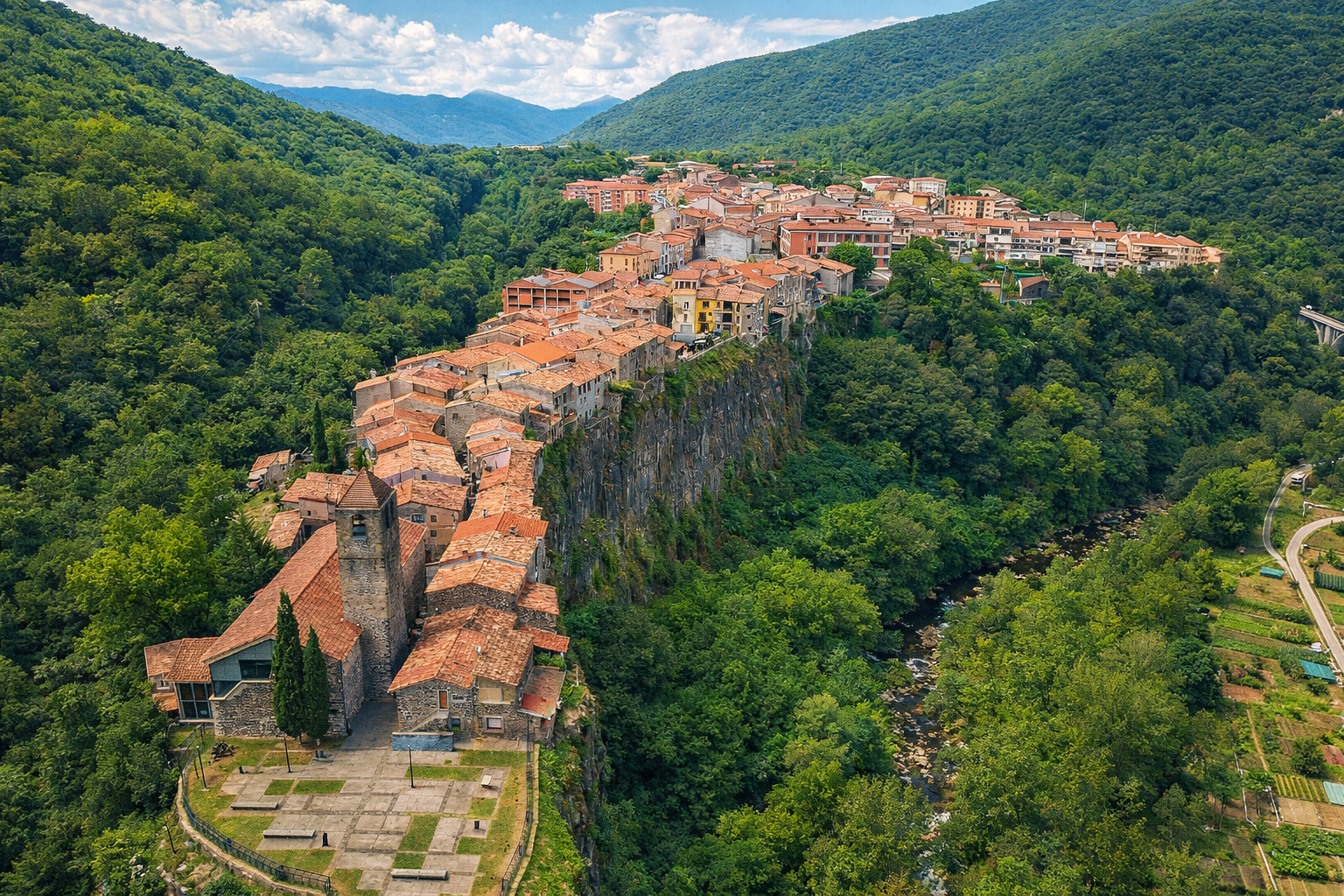
Castellfollit de la Roca, in Catalonia, rises over a 50-meter basalt cliff, forming a unique village between rivers, an extreme example of vertical human occupation in Europe.
In official tourism records of Catalonia and Spain updated throughout the 2020s, the small locality of Castellfollit de la Roca, located in the La Garrotxa region in northeastern Spain, is described as one of the most unusual urban formations in Europe. The reason is directly linked to its geological base: the village was built on a basalt cliff over 50 meters high and nearly 1 kilometer long, resulting from ancient flows of solidified lava.
This rock structure is not just a geographical detail, but the central element that defines the entire configuration of the city. The houses and buildings seem literally fitted into the edge of the rock, creating the impression that the village is suspended over the void.
The cliff rises between the Fluvià and Toronell rivers, which have carved the land over thousands of years, leaving the volcanic formation exposed and isolated. This natural process eventually created an elevated platform that, centuries later, would be occupied by human constructions.
-
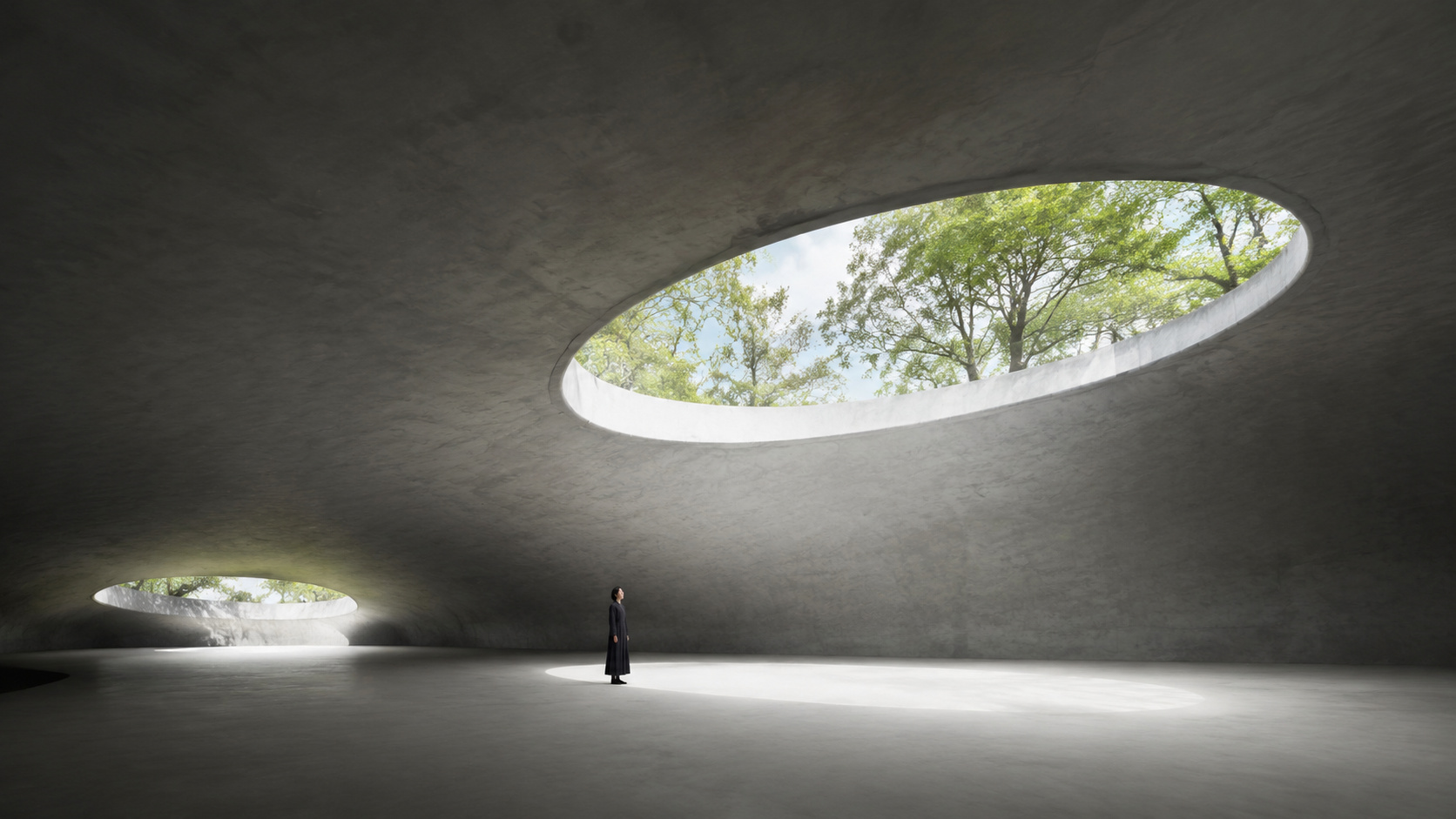
In Japan, a 40 by 60-meter concrete museum without pillars rises like a floating drop, allowing wind, light, and rain inside the space and surprising architects and engineers with the delicacy of the structure.

-
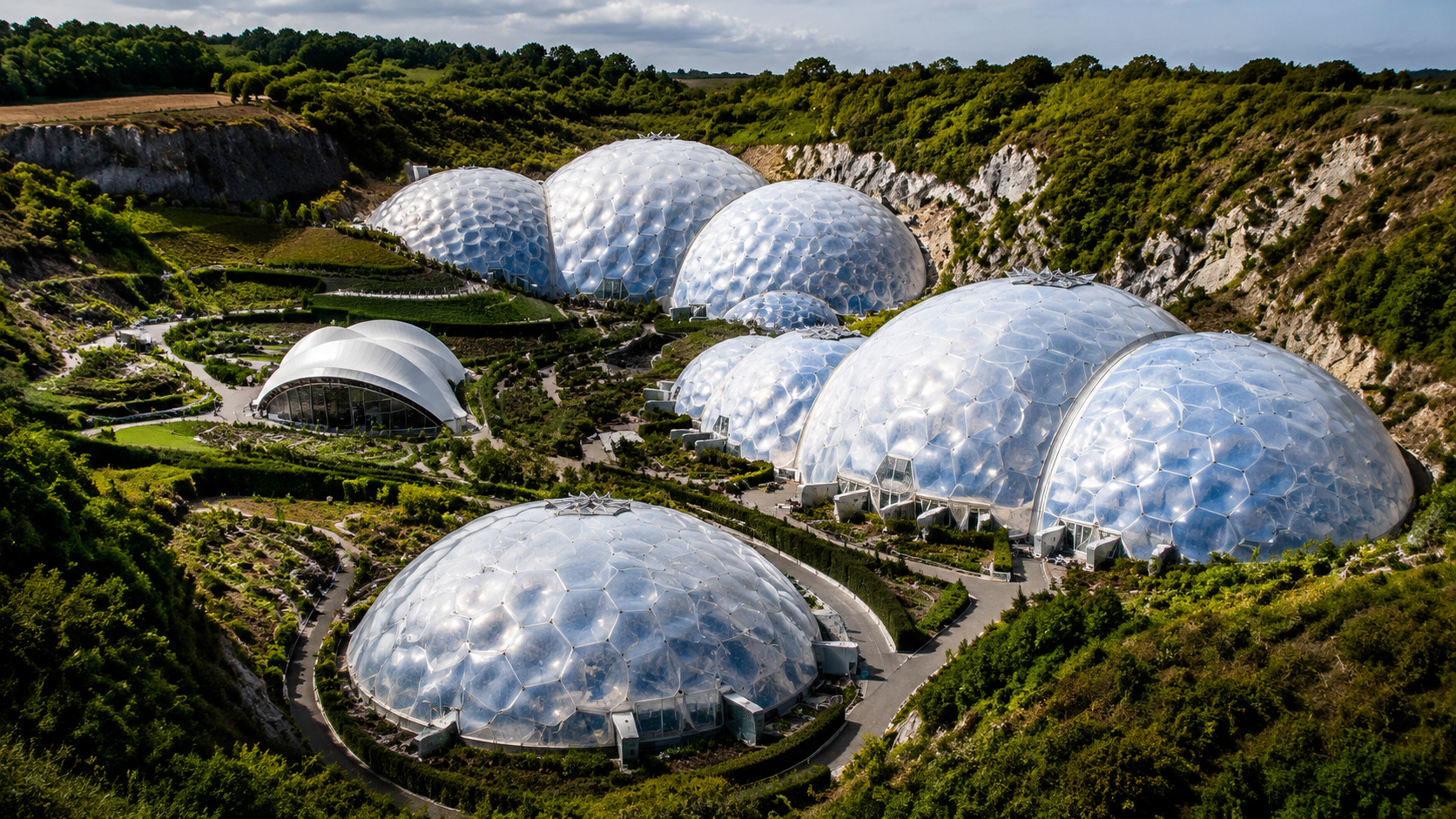
While traditional constructions rely on tons of concrete to support weight, in England an abandoned site was converted into transparent hexagonal domes, combining lightweight engineering and mine repurposing, transforming the landscape and local tourism.
-
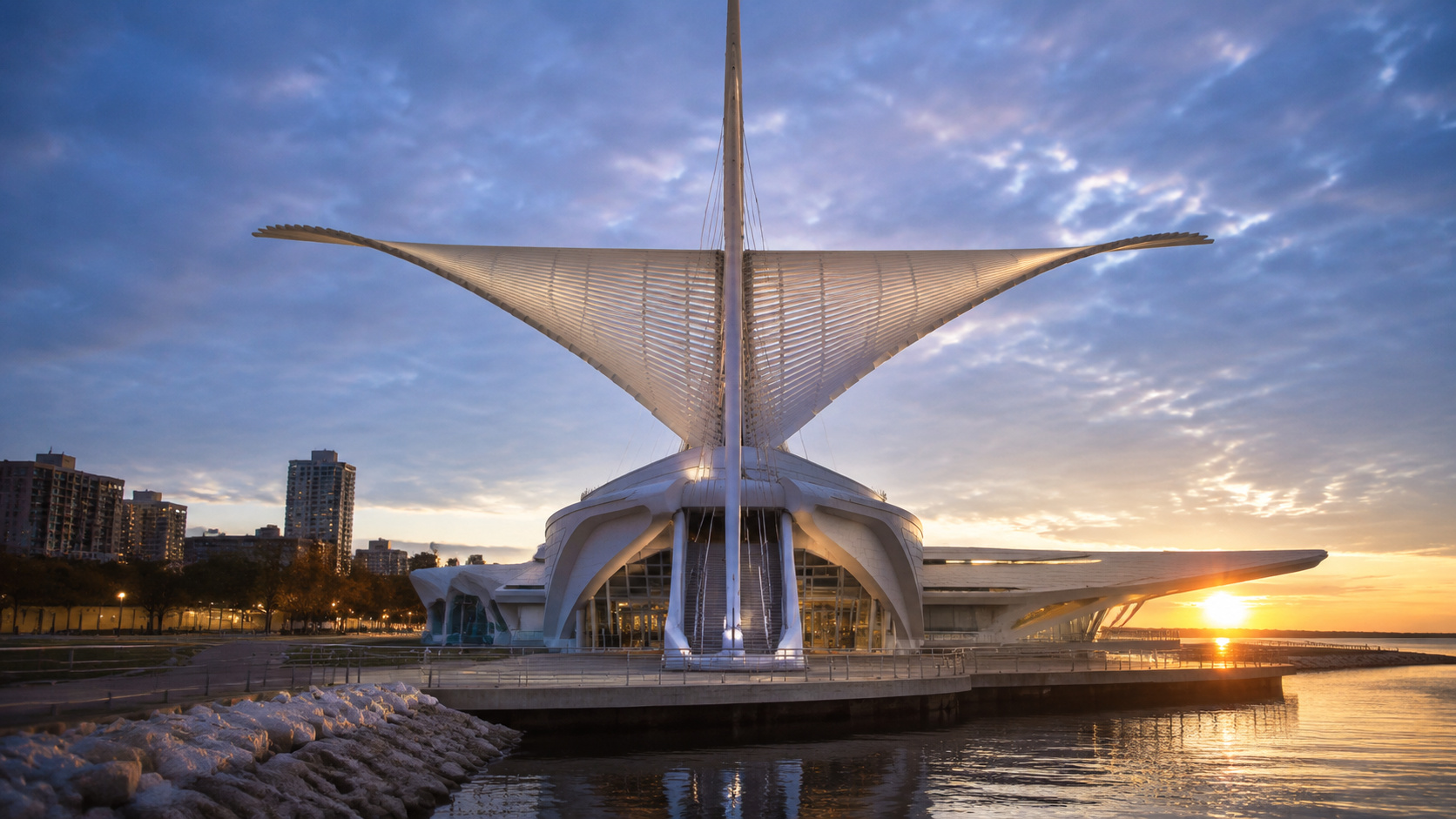
While historical buildings rely on artificial lighting, a museum in Wisconsin uses 66-meter movable wings to control natural light and create the effect of a giant bird over its glass hall.
-
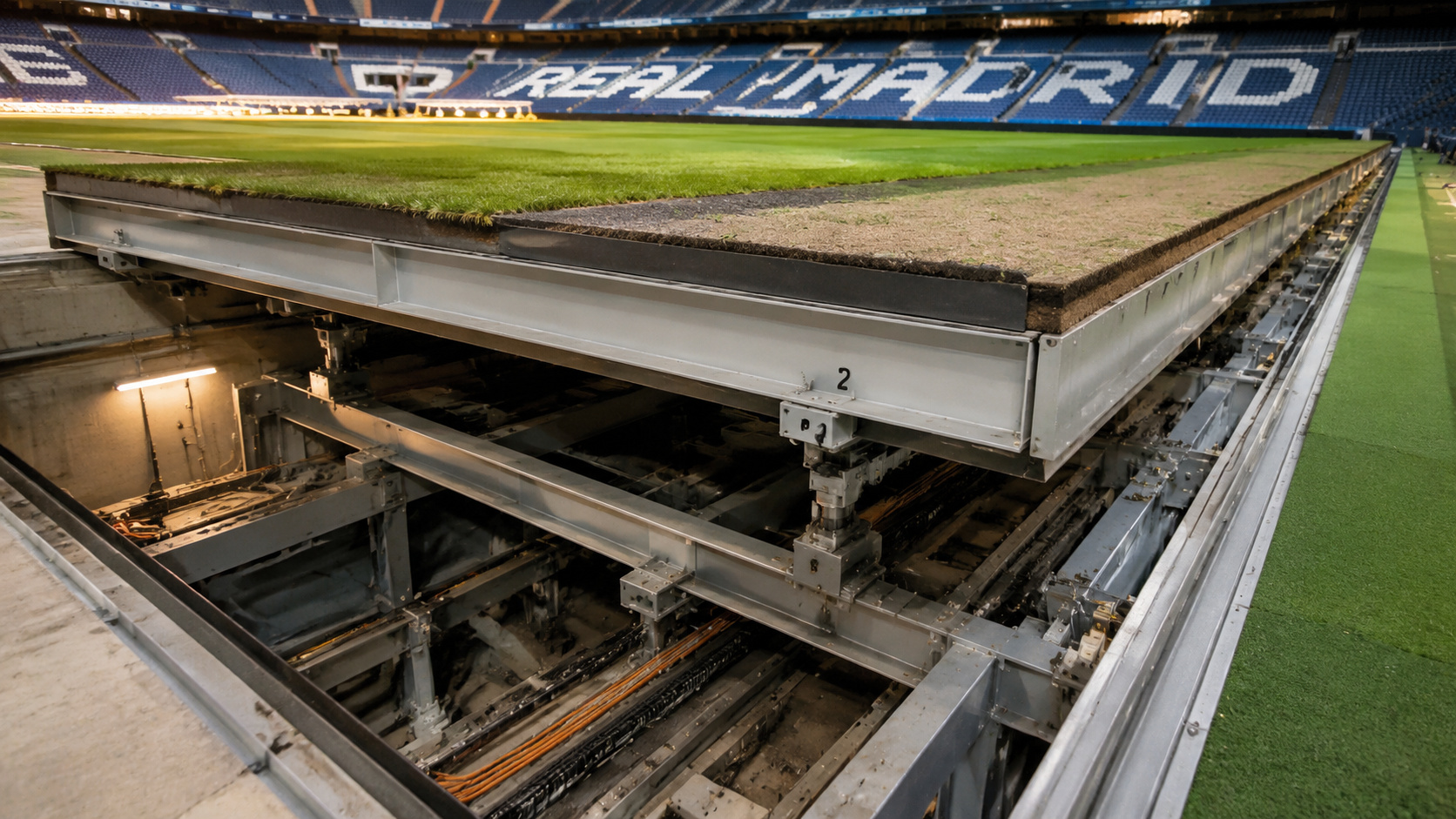
While Brazilian stadiums take weeks to change the turf, the Santiago Bernabéu in Madrid stores six trays of 1,500 tons in less than five hours and transforms the field into a stage, increasing revenue and event capacity.
Basalt cliff over 50 meters high supports the entire urban structure of the village
The physical support of Castellfollit de la Roca is a cliff formed by basalt rock, a typical volcanic origin material. Basalt forms when iron and magnesium-rich lava cools rapidly, creating a dense and durable rock.
In the La Garrotxa region, this formation is associated with an active volcanic field in the geological past. Ancient eruptions produced lava flows that accumulated and were subsequently sculpted by the action of water.

The height of over 50 meters and the length of nearly 1 kilometer make this cliff one of the most striking natural structures ever used as a base for urban occupation in Europe, especially considering its volcanic origin.
Moreover, the composition of basalt offers sufficient stability to support constructions over time, although the extreme position of the buildings remains a structural risk factor.
Village developed linearly over a narrow crest of volcanic rock
Unlike cities that expand in multiple directions, Castellfollit de la Roca exhibits linear growth, conditioned by the limited width of the basalt crest. This characteristic creates a compact occupation, where houses are built side by side, streets are narrow, and urban space is highly limited.
The lack of lateral space forces verticalization and maximum utilization of the available land, which further intensifies the feeling that the village is compressed against the rock. This type of urban configuration is rare, as it depends on very specific geological conditions to exist.
Location between the Fluvià and Toronell rivers reinforces the natural isolation of the formation
The geographical position of the village is another determining factor. Castellfollit de la Roca is situated exactly between two watercourses: the Fluvià and Toronell rivers.
Over thousands of years, these rivers have eroded the surrounding land, deepening valleys and isolating the rock formation. This process has made the cliff even more prominent in relation to its surroundings.
The result is an elevated structure surrounded by steep slopes, creating a kind of rocky island in the middle of the terrain, which contributed both to historical defense and to the visual uniqueness of the city.
Volcanic origin of the La Garrotxa region explains unique geological formation
The region where Castellfollit de la Roca is located is part of the Garrotxa Volcanic Zone, one of the most important volcanic areas of the Iberian Peninsula. This zone houses dozens of volcanic cones and extensive fields of solidified lava. Volcanic activity occurred mainly during the Quaternary period, shaping the current landscape.

The lava flows that formed the cliff went through different cooling phases, creating overlapping layers of basalt, which were later exposed by river erosion. This geological history explains why the region has such unusual formations suitable for this type of occupation.
Buildings seem suspended over the void and create one of the most striking urban landscapes in Europe
One of the most striking features of Castellfollit de la Roca is how the buildings are positioned on the edge of the cliff. From certain angles, especially seen from the valley below, the houses appear to be projected directly over the void, with no apparent safety margin.
This visual effect transforms the village into one of the most impressive urban landscapes in Europe, often highlighted in photographic records and studies on unusual land occupation. The combination of extreme geology and human occupation creates a scenario that challenges traditional perceptions of urbanism.
Urban structure reflects human adaptation to extreme geographical conditions
The existence of Castellfollit de la Roca demonstrates how human communities can adapt to geographically unfavorable conditions. Over the centuries, the residents have adjusted their constructions to fit the available space, respecting the limitations imposed by the terrain.
The city was not designed in an idealized way, but rather gradually shaped in response to the characteristics of the environment, making it a clear example of urban adaptation to extreme natural conditions.
Basalt offers structural resistance, but the position of the houses requires constant monitoring
Although basalt is a resistant rock, the position of the buildings on the edge of the cliff requires constant attention. Factors such as continuous erosion, water infiltration, and climate variations can impact the stability of the structure over time.


The combination of resistant material and extreme location creates a delicate balance, where safety depends on both geology and human maintenance, especially in areas where the constructions are closer to the edge.
Castellfollit de la Roca has become a reference in urban occupation over extreme natural formations
The uniqueness of the village makes it frequently cited in studies on urban geography and land occupation. Few examples in the world combine so evidently an extreme geological base with continuous human occupation.
The city represents a rare case where geology not only influences but completely determines the urban form, creating a pattern that would be difficult to replicate in other contexts.
Would you live in a city built on a cliff of solidified lava? Leave your opinion in the comments.





Be the first to react!