Portuguese
  Spanish


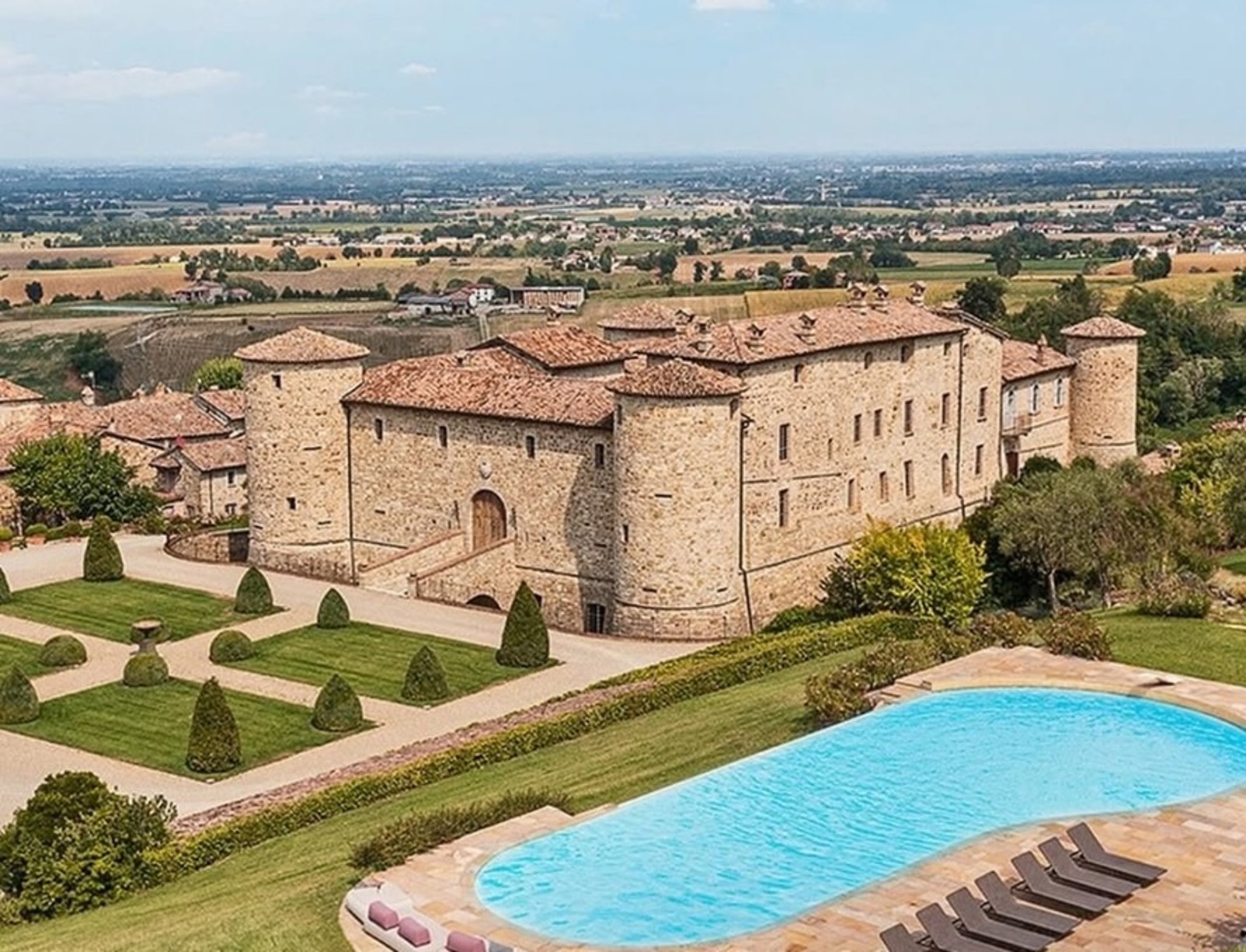


Built in the 13th Century and Totally Restored, This Medieval Castle in Piacenza, Northern Italy, Combines Historical Architecture with Modern Luxury. With 15 Rooms, Spa and Panoramic Pool, It Is for Sale for R$ 115.8 Million
A medieval castle located in Piacenza, Italy, is for sale for 21.5 million dollars — the equivalent of about R$ 115.8 million. Built in the 13th century, the property has been fully restored, preserving its original square layout and the four circular towers that surround it. Around a spacious internal courtyard, the buildings maintain the charm of the time with modern touches.
The castle occupies a plot of 81 hectares and has 3,994 square meters of built area. There are a total of 15 rooms and 16 bathrooms, distributed in environments that combine history, comfort, and sophistication.
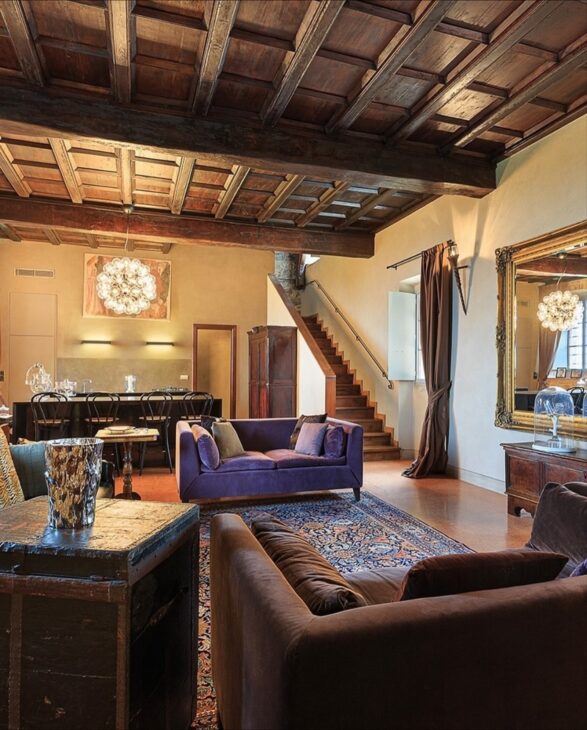
Elegant Interiors and Leisure Areas
The ground floor houses spacious living rooms, an office, and a library. The open-style kitchen is equipped with a central island, wall stove, and oven, as well as direct access to service areas, facilitating events and large-scale meals.
-
How to Prevent Brown Recluse Spider Bites: Common Hiding Spots and Free Tips to Reduce Risks

-
Natto: The Unusual Japanese Superfood Gaining Popularity on Social Media and Driving Record Exports
-
Brazilian Mayor Goes Undercover as Homeless for 24 Hours to Assess Public Services

-
15-Year-Old Entrepreneur Malu Lira Publishes 20 Children’s Books on Financial Education, Earns $500,000, and Expands Her Project to the Amazon Rainforest




In the basement, there are wine cellars, a room with a fireplace and billiards, as well as a full spa with a gym, Turkish bath, sauna, hot tub, and covered garage for nine vehicles.
Secret Rooms and Master Suite
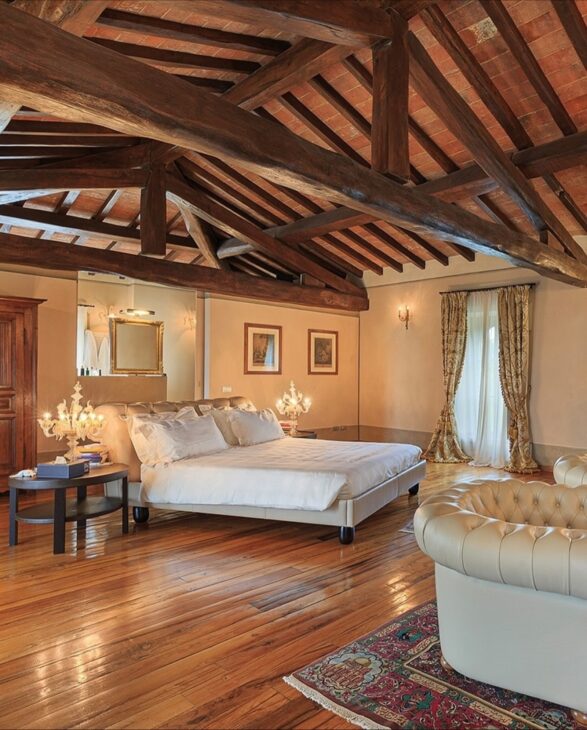
On the first floor, some rooms hide secret passages that lead to game rooms and the cinema. Other suites have direct access to the spa, providing convenience and privacy.
The second floor houses the master suite, featuring a stone fireplace, walk-in closet, bathroom with shower and bathtub, as well as a staircase leading to the attic.
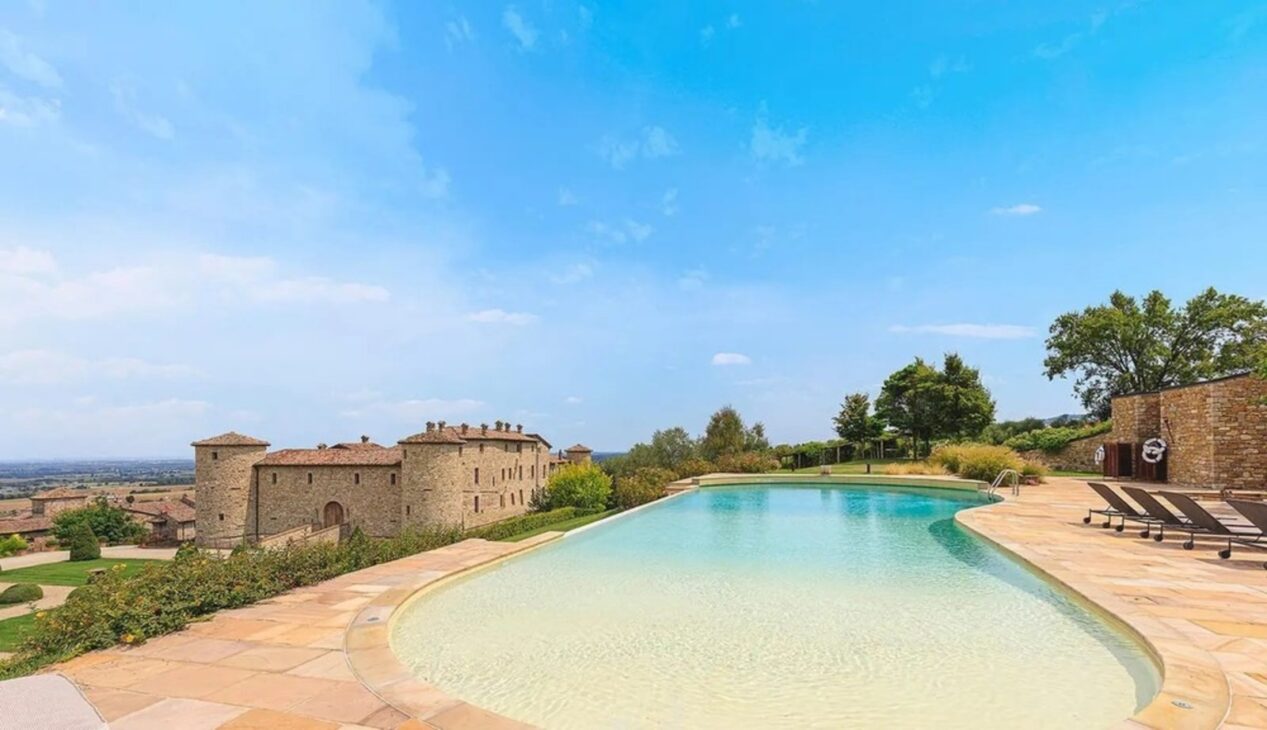
Nature and Panoramic View at the Castle
On the outside, the castle offers a panoramic pool, terraces, spacious gardens, and wooded areas with olive groves, orchards, and a private forest — a historical retreat surrounded by nature and elegance.
With information from Casa Vogue.
You May Also Like: The Most Famous Castle in the World Inspired Disney, Sheltered the “Mad King” and Also Served as a Nazi Base — Discover This Colossus in Germany
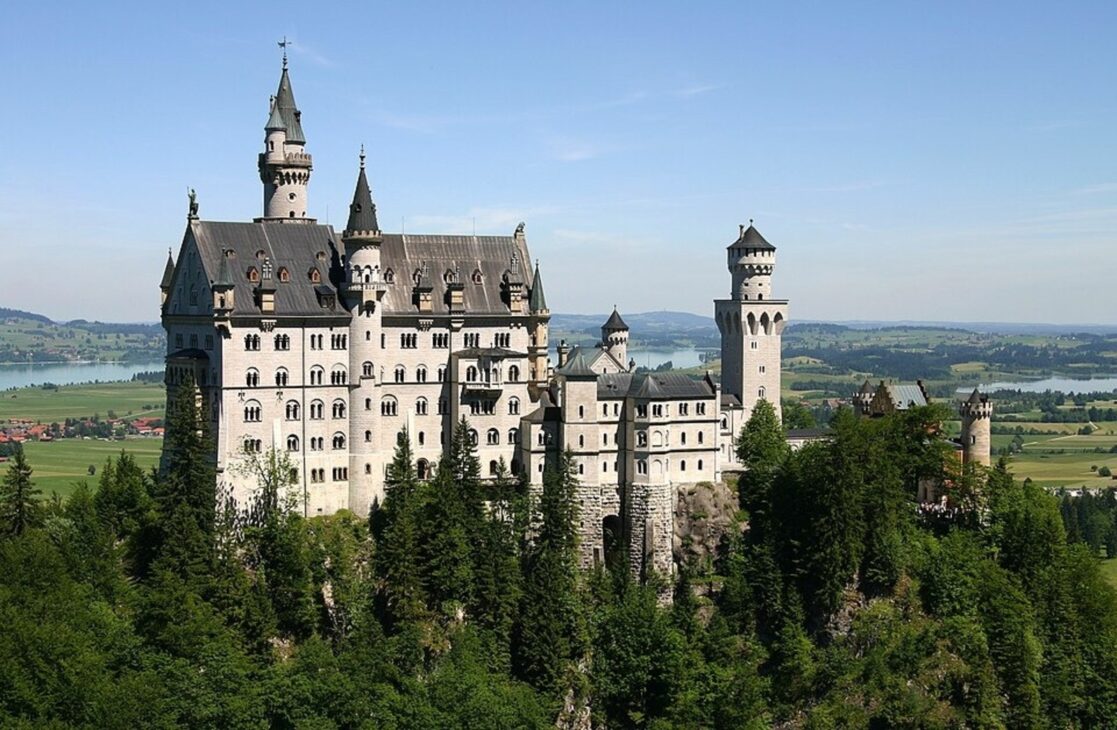
Germany hosts hundreds of castles that witness different periods of European history. Among them, none are as famous as Neuschwanstein Castle, located near the towns of Schwangau and Füssen in southwest Bavaria.
Its enchanted appearance, the past surrounded by legends, and the connection with the “mad king” Ludwig II made it one of the most visited monuments in Europe — and even a direct inspiration for Disney’s Cinderella Castle.
The Extravagant Dream of a King
Ludwig II of Bavaria ascended to the throne at 18 years old, in 1864. Son of King Maximilian II and Princess Maria of Prussia, he soon stood out not for his political skills but for his fascination with art and architecture.
Called the “Fairy Tale King” by some and the “Mad King” by others, he dedicated much of his life to building grand castles.
The most emblematic of them, Neuschwanstein, was born from his love for German mythology and the music of Richard Wagner.
In 1867, after visiting castles in Germany and France, Ludwig envisioned a structure that reflected the medieval romantic spirit. He hired architects and set designers, but he himself reviewed every detail of the project.
The result was a mix of styles — Gothic, Romanesque, and Byzantine — erected on the ruins of two ancient fortresses.
The work, which lasted almost two decades, employed hundreds of workers and became the main source of income for the region.
Debts, Isolation, and Decline
In 1884, the king finally moved into the castle. However, the friend and main inspiration for the project, Wagner, had already died.
The construction consumed 3.2 million marks, leading Ludwig II to incur debts of 14 million. Even so, he refused to stop the works.
Critics accused him of using public money, which was not true. Nevertheless, the growing isolation and exorbitant spending fueled rumors about his sanity.
Pressed by creditors, the king threatened to kill himself when new credit requests were denied.
In 1886, Bavarian ministers decided to remove him from power. A medical commission led by psychiatrist Bernhard von Gudden declared Ludwig II incapable of ruling.
Two days later, he was taken to Berg Castle, on the shores of Lake Starnberg, for treatment.
The Mystery in the Lake
The outcome was tragic. The day after his removal, the king and the psychiatrist went for a walk and never returned.
Both were found dead in the shallow waters of the lake, with part of their bodies still above the surface.
The official report indicated drowning but found no water in their lungs — a detail that raised doubts. Theories suggest anything from a heart attack to murder during an attempted escape.
The fact is that Ludwig II lived only 172 days in Neuschwanstein, without seeing his work completed.
The Castle Open to the Public
After his death, the regent Prince Luitpold ordered the castle to be opened for visitation. The decision saved the state’s finances: the money collected paid off all debts in a few years.
When World War I began, tourism was suspended, and with Germany’s defeat, the Bavarian monarchy came to an end.
The castle, however, survived intact — and would gain another historical role in the following decades.
Nazi Refuge for Stolen Art
During World War II, the Nazis turned Neuschwanstein into a hideout for artworks looted throughout Europe.
Its location, near the border with Austria and away from major bombing targets, made it ideal.
More than 20,000 pieces were stored there, from paintings to sculptures and documents. The scheme was only revealed thanks to French curator Rose Valland, who, infiltrated among the Germans, secretly recorded the fate of the works.
Her information allowed the Allies to reach the castle in 1945 and recover the collection.
Neuschwanstein Castle: World Symbol and UNESCO Heritage
Decades later, Neuschwanstein continued to fascinate the public. Walt Disney was inspired by its architecture to create Cinderella’s castle and the studio’s logo.
Today, the monument receives more than a million visitors per year and was recently recognized by UNESCO as a world cultural heritage site.
What started as a daydream of an isolated king transformed into one of the most iconic postcards of Germany — a castle that blends art, tragedy, mystery, and history.
With information from Aventuras na História.