






 Portuguese
  Spanish
  3 min of reading
  0 comments


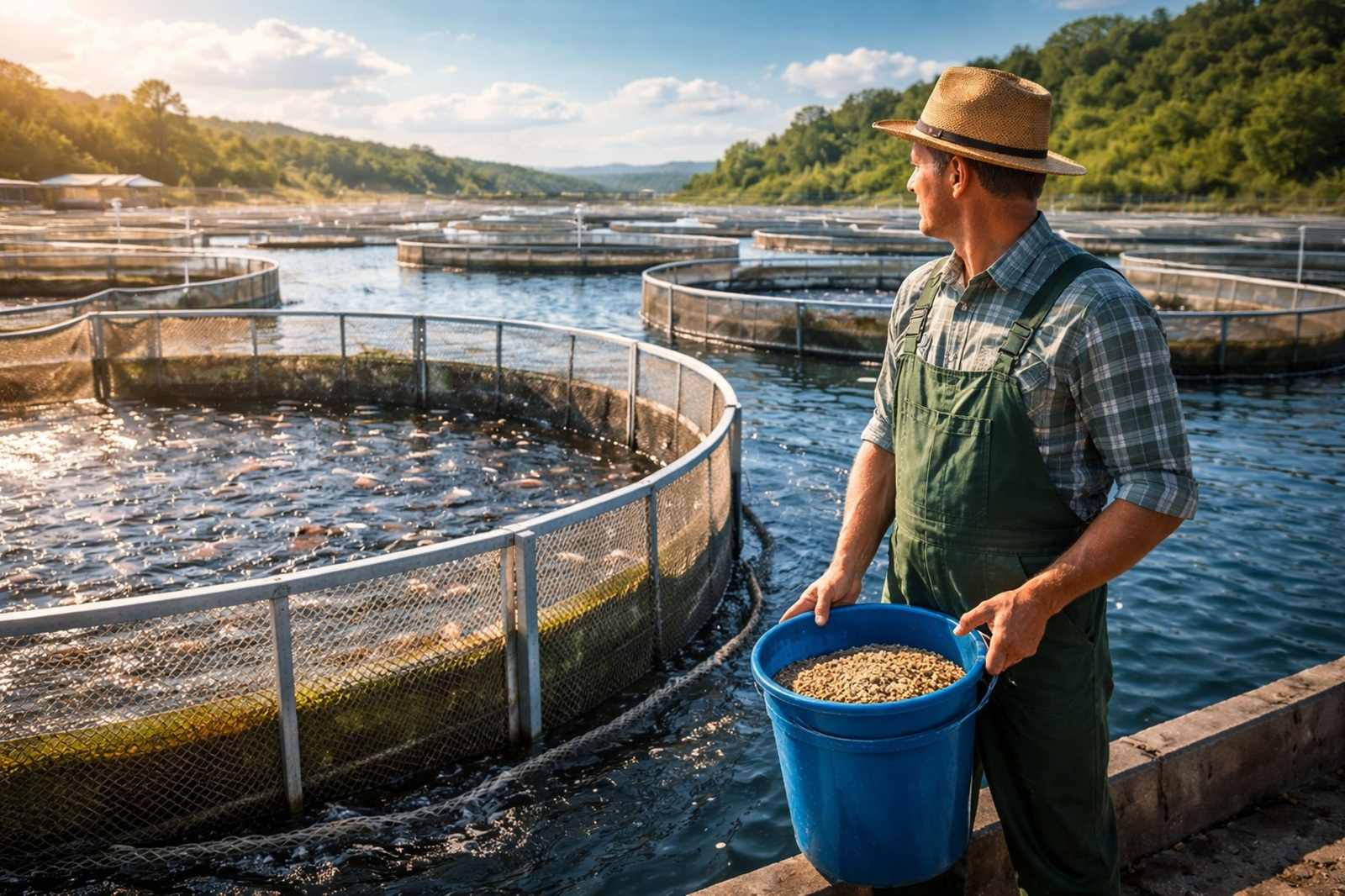
Bill Approved by the CCJ Recognizes Aquaculturists as Rural Producers, Eliminates RGP Requirement, Simplifies Environmental Licensing, Redefines Ownership of Cultivated Fish, and Moves to Senate for Review
The Constitutional and Justice Commission of the Chamber of Deputies approved a bill that equates aquaculture with agricultural activity, ensuring access to agricultural policies, exempting the General Register of Fishing Activity, and simplifying environmental licenses, with a direct impact on credit, regulation, and food production.
The Constitutional and Justice and Citizenship Commission approved the proposal that recognizes aquaculturists as rural producers, allowing access to agricultural policy benefits, including differentiated credit lines, in addition to eliminating the requirement for the General Register of Fishing Activity, according to the Chamber of News Agency.
The approved text also establishes that the cultivated fish will be considered the property of the aquaculturist, no longer classified as natural resources, a measure aimed at increasing food supply and providing legal security to production activity.
-
Foreign tree planted to combat drought invades more than 1 million hectares of the Caatinga, encroaches on riparian forests, and turns an old solution for the semi-arid region into a silent threat to biodiversity.

-
Invasive weed that withstands extreme heat advances with climate change, threatens crops on several continents, and raises a global alert about a silent plant capable of dominating soils, suffocating native species, and reshaping entire ecosystems.
-
While other coffees escape the American tariff hike, Brazilian instant coffee is excluded, raising an alert in the sector and may become up to 37.5% more expensive in the United States.
-
Degraded lands could become São Paulo’s new asset to expand planted forests, strengthen wood, cellulose, and biomaterials, as well as keep the state competitive in the international market.




The proposal also exempts small and medium-sized aquaculture production or low-impact potential from environmental licensing, maintaining subsequent oversight and the requirement for proof of the information declared by producers.
In cases where the exemption does not apply, the bill provides for simplified and self-declared environmental licensing, a model that reduces bureaucratic steps but maintains the possibility of control and verification by the competent authorities, as reported by the Chamber of News Agency.
New Text Approved by the CCJ Alters Scope of the Original Bill
The approval occurred through a substitute recommended by the rapporteur in the CCJ, Deputy José Rocha, from União-BA, a text that had already been accepted in the Agriculture Commission for Bill 4162/24, authored by Deputy Sergio Souza, from MDB-PR.
The original text limited the exemption from the RGP to fishermen operating on private properties and differentiated aquaculture in public goods from that conducted in private areas, a separation that was removed in the final approved text.
Consequently, the bill no longer distinguishes between production locations, treating aquaculture activity in a unified manner within the legal framework, amending provisions of the National Policy for Sustainable Development of Aquaculture and Fisheries.
The text also allows environmental remediation aquaculture to have an economic purpose, an activity that currently occurs only without a profit objective, expanding productive possibilities related to restocking.
Changes Reduce Bureaucracy and Affect Vessels
Another approved point eliminates the requirement for specific registration with the Ministry of Fishing for vessels used in aquaculture, providing for a specific norm to define rules adapted to the particularities of the activity.
Justifying the bill, Sergio Souza stated that current legislation treats aquaculture in public areas, which depends on state concession, and production in private tanks identically, which, according to him, creates unnecessary obstacles.
Breeding of Ornamental Fish Under Specific Rules
The proposal authorizes the breeding of ornamental fish of endangered species or under special protection for environmental replenishment and commercialization, provided that strict and controlled technical conditions are observed.
Only third-generation animals, F2, or later, from previously authorized scientific research programs may be used, preventing the direct removal of specimens from nature for commercial sale.
Since it is being processed conclusively, the bill will proceed to the Senate, unless a request for a vote in the Chamber’s Plenary is made, and it will still need approval from deputies and senators to become law, according to the Chamber of News Agency.








-

1 person reacted to this.