






 Portuguese
  Spanish
  3 min of reading
  0 comments


State has 2.3 million hectares suitable for new forest plantations, according to Florestar São Paulo, and sees room to grow with wood, cellulose, biomaterials, and exports
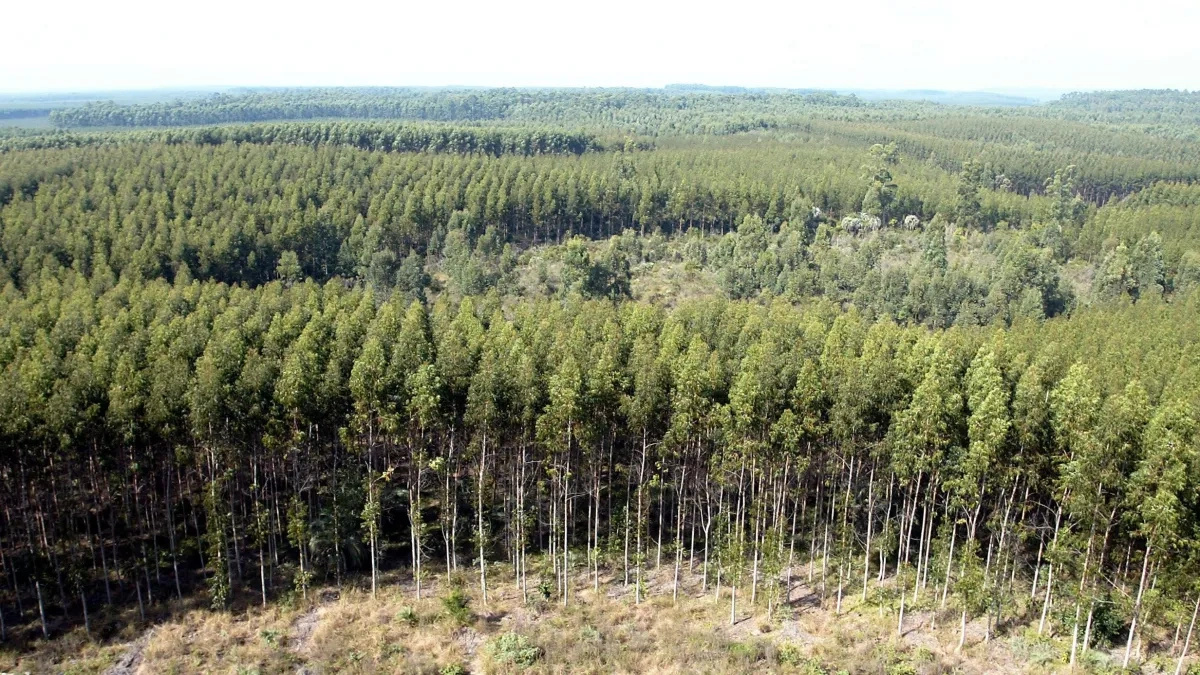
São Paulo can practically triple its area of planted forests by using degraded lands or those with low agricultural aptitude. With this, the state would increase production without encroaching on native vegetation.
The executive director of Florestar São Paulo, Fernanda Abilio, presented this assessment in an interview with CNN Agro, published on June 18, 2026. According to her, the state combines productivity, infrastructure, industry, and consumer market.
Currently, São Paulo has about 1.3 million hectares of planted forests. Eucalyptus occupies 77% of this area. This scenario shows an already consolidated productive base.
-
Iran and Russia announce that they are working on creating a grain exchange for BRICS countries, with support from Moscow, one of the world’s largest grain producers, and call on central banks to simplify payments to boost agricultural trade.

-
Even without an official rural area, Florianópolis maintains family farming in Ratones, Ingleses, and Ribeirão, producing cassava, honey, oysters, and organic products, transforming farms into schools and rural tourism, but faces an uncomfortable question: how long can the countryside withstand within a growing capital?

-
The Brazilian wood at US$5,000 per cubic meter: jacarandá-da-bahia has generated fortunes abroad for over 300 years, became a symbol of global luxury, and today survives as one of the most threatened trees of the Atlantic Forest.
-
Peter Andrews was reported by his neighbors, lost the farm to the bank, and saw his marriage fall apart, but the method that the government rejected for 30 years was recognized by the UN as one of the five agricultural models.




Potential lies in already degraded areas
According to Florestar São Paulo, the state gathers about 2.3 million hectares of degraded areas or those with low agricultural aptitude. These lands can receive new forest plantations.
The expansion should occur mainly in already anthropized areas. In practice, the sector would not need to open new areas or remove native vegetation.
This potential can strengthen the production of:
- wood;
- cellulose;
- paper;
- pine resins;
- wood panels;
- biomass for energy;
- biomaterials.
São Paulo combines productivity, industry, and logistics
São Paulo occupies the third national position in cultivated area, behind Mato Grosso do Sul and Minas Gerais. Even so, the state stands out for its productivity, infrastructure, and industrial value addition.
Fernanda Abilio states that the São Paulo differential lies in the combination of productivity, consolidated industry, logistics, and consumer market.
The presence of the main clients in the sector also favors the state. The proximity to the Port of Santos reinforces this advantage for foreign trade.

Sector moves billions and grows in the state
The São Paulo forestry sector moves approximately R$ 5 billion per year. The activity represents about 13% of the gross value of Brazilian forestry production.
In recent years, the segment has grown by about 19%. The heated demand, exports, productivity gains, and greater industrialization of wood have driven this progress.
Brazil ranks among the largest forestry producers and exporters in the world. In this market, China and the United States are among the main destinations.
Exports reinforce the weight of São Paulo agribusiness
Forestry products occupy the third position in the São Paulo agribusiness export agenda. São Paulo exports about US$ 3 billion per year in this segment.
This volume represents approximately 19% of the national exports in the sector. The result keeps the state in a relevant position in the Brazilian forestry chain.
The export agenda goes beyond cellulose. The state also sells paper, resins, panels, biomass, and other higher value-added industrialized products.
Forestry hubs consolidate the production chain
Regions like Botucatu and Itapetininga have already consolidated themselves as important forestry hubs. These areas concentrate nurseries, planting, harvesting, transportation, and industrial processing.
The integrated structure strengthens São Paulo’s presence in the forest-based bioeconomy. This progress also increases the state’s weight in renewable products.
According to Florestar São Paulo, local conditions enable continuous investments. Therefore, São Paulo can expand its forestry production focusing on already degraded areas, exports, and higher value-added products.




Be the first to react!