






 Portuguese
  Spanish
  3 min of reading
  1 comment


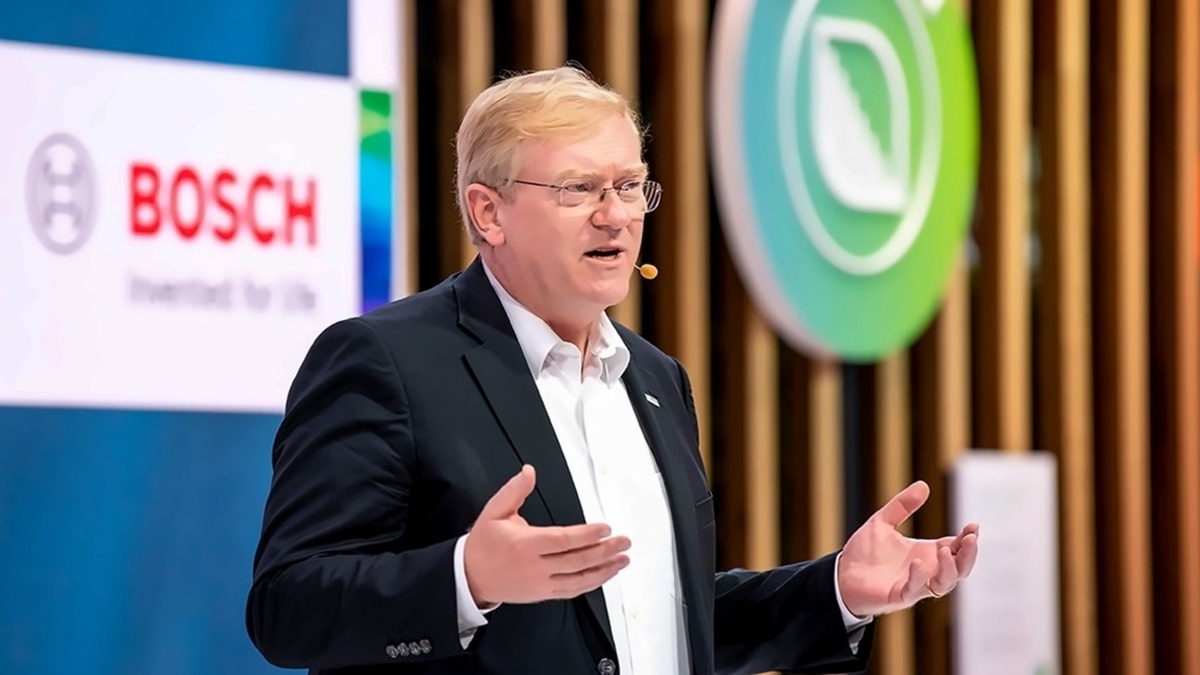


Statements By Stefan Hartung, CEO Of Bosch, Reignite The Debate About The 40-Hour Workweek By Relating Global Competitiveness, Comparison With China, Need For Flexibility In Project Peaks, Forecast Of Profit Decline In 2025, Difficult Industrial Scenario In 2026, Job Cuts And EU Regulatory Tensions Until 2035
In an interview with the newspaper DIE ZEIT, Bosch CEO Stefan Hartung questioned whether the 40-hour workweek is sufficient to compete globally, citing flexibility in project peaks, pressures from international competition, and a context of costs, declining profits, and European regulatory adjustments.
Questioning The 40-Hour Workweek
Hartung reopened the debate by asking if “40 hours is sufficient in any situation to keep pace with the world“.
The formulation arose from a comparison with China, highlighting perceived differences in work intensity in global competition environments.
-
Survivor of 1966 SS Daniel J. Morrell Shipwreck in Lake Huron Recounts 38-Hour Ordeal in Extreme Cold

-
The Greatest Hoax in World Cup History? The Film That Denied Brazil’s 1958 Victory and Exposed How Fake Evidence Can Seem Convincing on TV
-
Fake South Korean Online Stores Offer Shopping Thrill Without Spending Money or Receiving Products
-
The War of Jenkins’ Ear: How a Severed Ear Sparked One of the 18th Century’s Most Unusual Conflicts


According to the executive, the question does not represent a widespread request to extend the workweek.
The emphasis was on the ability to respond quickly to variable demands, maintaining competitiveness in critical moments, without permanently altering the weekly standard.
Flexibility And Project Peaks
The CEO advocated for greater organizational freedom during peak phases. “We need more freedom in our work schedule to be as agile as possible during the peak phases of projects,” he stated, associating flexibility with efficient execution.
In his speech, Hartung mentioned “996” as a contrast to illustrate the intensity of international competition.
The citation served to contextualize the debate, while the central question remained focused on the sufficiency of 40 hours in certain situations.
Criticisms, Internal Adjustments And Financial Context
The comparison generated internal and external criticisms, especially because Bosch also adopted adjustments in the opposite direction.
Regional vehicles pointed out reductions in work hours for certain groups as a measure to avoid layoffs in specific centers and units.
At the beginning of January, Reuters reported that Hartung anticipated a decline in profits in 2025 and a “difficult” year in 2026, impacted by tariffs and restructuring costs. The group maintains plans for cuts totaling tens of thousands, with an approximate reference of 22,000 layoffs.
European Regulation And Public Confrontation
Months earlier, Hartung criticized the European regulatory timeline for 2035, calling the ban on internal combustion engines “a European invention.” The statement related industrial competitiveness to a regulatory framework considered stricter than in other markets.
He argued that intermediary technologies, such as plug-in hybrids and range extenders, maintain potential and demand in China. He advocated for a transition driven by incentives, not prohibitions, to avoid competitive disadvantages and preserve technological options.
Reactions And Change Of Approach In The EU
The allegation fueled opposing positions. Advocates of technological neutrality supported renewable fuels and transition solutions. Critics warned of risks to future employment and climate response, pointing to excessive reliance on alternatives.
The controversy gained momentum on the eve of the political shift at the end of 2025, when the European Commission proposed reducing the “zero emissions” target for 2035 to a 90% reduction in CO₂, opening up space for not fully electric vehicles and amplifying the visibility of Hartung’s messages.
Source: EEV.





Ué, se vc quer sua fábrica aberta 16-20h por dia em momentos de pico contrate mais funcionários e faça um shift. Mas contratar mais vocês não vão né…pnc de vcs bilionários