Portuguese
  Spanish


Gerdau President Warns About Impacts of Chinese Competition in the Brazilian Steel Market and Calls for Urgent Government Measures to Protect Jobs, Local Production, and Ensure Equal Competitive Conditions.
The CEO of Gerdau, Gustavo Werneck, stated that the Brazilian steel industry is facing “unfair competition from China” and demanded that the federal government implement trade defense measures to restore equal competitive conditions.
The statement was made in an interview this Friday (8) on the Passando a Limpo program on Radio Jornal.
According to him, the influx of subsidized products has put pressure on prices, threatened jobs, and reduced investments in the country.
-
Brazilian City Makes Remarkable Leap, Becomes 4th Wealthiest in the Country with GDP of R$ 134.1 Billion

-
Controversial 6-day Workweek Elimination in Brazil Faces Economic Criticism Over Productivity Claims

-
Itaú to Refund Customers After 14 Years of Unauthorized Credit Card Charges; Agreement Includes No Interest or Adjustments, Deadline by 2028, with Potential Impact of Up to $6.5 Billion

-
Brazilian Company Grows from Bartering Soap for Food to Producing 30 Million Units Monthly, Challenges Global Giants with $100 Million Revenue and Expands into Premium Cosmetics



“We do not need any type of protection or government favors. What we have asked is for the government to establish equal conditions for us to compete,” said Werneck.
For the executive, the scenario requires an urgent response from Brazilian authorities.
Why Gerdau Talks About Unfair Competition from China
The executive argues that unfair competition from China stems from subsidies and a global excess of productive capacity.
He cited the case of rebar, a material used in civil construction.
According to Werneck, the Brazilian demand is around 4 million tons, while China is said to have installed capacity of approximately 400 million tons.
“Only 1% of China’s installed capacity would be enough to meet all Brazilian demand,” he stated.
In his view, this asymmetry distorts internal prices and weakens the local industry.

The discussion is not new but gains intensity as imports of steel from China increase their market share, pressuring margins and the utilization of domestic mills.
How does this movement affect jobs and productive investment?
Werneck argues that factories are forced to reduce shifts, delay projects, and reassess strategies.
Impact on the Brazilian Steel Market
Unfair competition from China has chain effects, according to the CEO.
Construction companies and distributors negotiate based on global reference prices, while the local industry bears energy, tax, and logistics costs in Brazil.
In this context, imports of steel from China would arrive with prices that national companies consider incompatible with normal market conditions.
For the end consumer, the temporary drop in prices may seem positive.
But what happens when domestic competition shrinks?
Werneck warns that, without minimum balances, the country is likely to lose productive capacity, technology, and skilled jobs.
What Are Trade Defense Mechanisms
The executive called for the application of “legal trade defense mechanisms approved by the WTO.”
These tools include anti-dumping measures (when there is sale below fair value), countervailing duties (against deemed improper subsidies), and safeguards (when there is a sudden increase in imports causing or threatening serious harm to the domestic industry).
They are instruments provided for in multilateral rules to correct distortions, through technical investigation and defined deadlines.
Werneck stated that, “from our point of view, there is a lack of decision-making. All elements are on the table.”
His assessment is that imports of steel from China need to be analyzed rigorously so that, if distortions are confirmed, appropriate measures are adopted.
What measures are the responsibility of companies and which ones belong to the state?
According to WTO procedures, it is up to the government to open investigations and decide on the eventual application of the measures after hearing all parties.
Operations in the United States and the Reading of Deglobalization
In addition to the effect of imports of steel from China in Brazil, Werneck addressed the international environment.
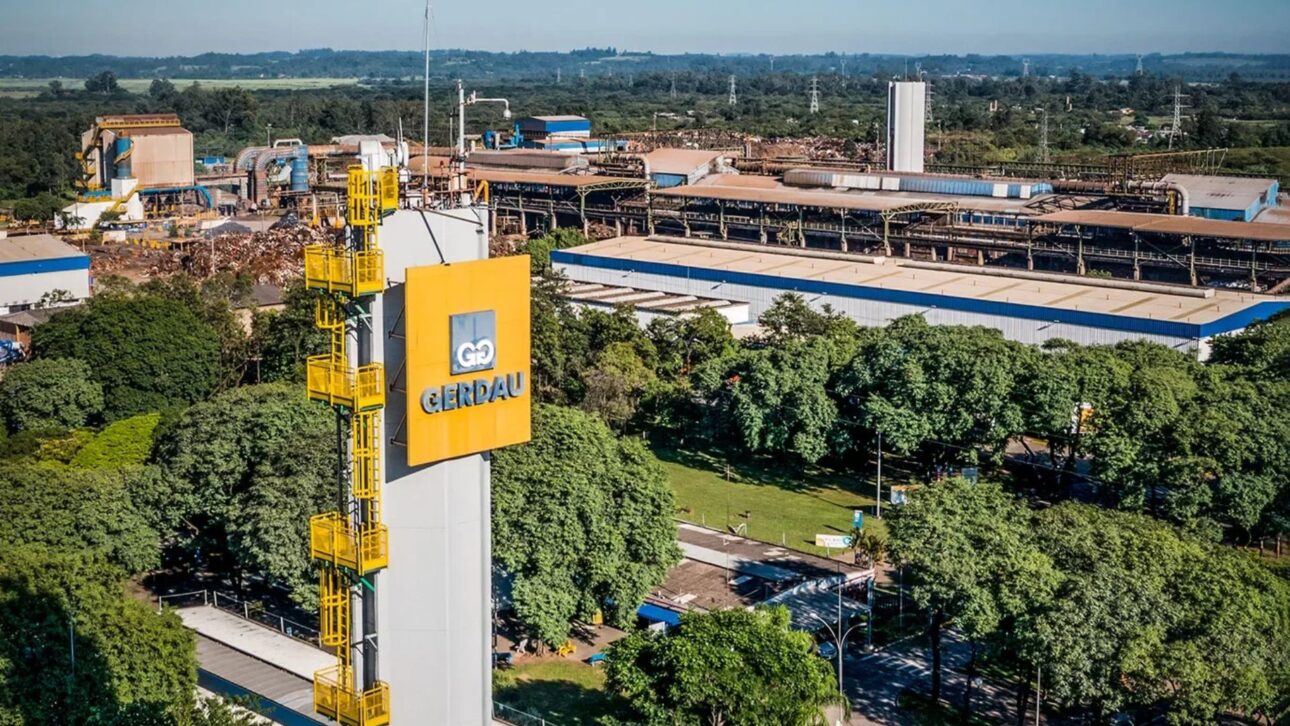
He stated that Gerdau has been operating for nearly 40 years in the United States as a local company and that “more than 60% of Gerdau’s results come from there.”
According to the executive, the company decided to diversify geographies and “no longer believes in the ease of exporting” in light of what he called deglobalization and industrial policies adopted in large economies.
“We operate as an American company,” he said.
For him, the reindustrialization of the United States has favored operations located within its own territory, reducing uncertainties common to international trade flows.
This strategy, he argues, mitigates domestic shocks while Brazil discusses unfair competition from China and responses from the public authority.
Employment, Cuts, and Business Environment
Werneck also commented on the recent announcement of 1,500 job cuts.
The measure, according to him, is not related to international tariffs, but to the business environment in Brazil.
He stated that the company remains committed to the country, although with “a lot of caution” regarding costs and uncertainties.
“Under no circumstances will we stop investing in Brazil, but the business environment has been deteriorating over time,” he stated.
This perspective places unfair competition from China as part of a broader picture involving structural costs, regulatory security, and credibility of the rules.
Without predictability, industrial plans undergo revisions, and timelines are extended.
The practical consequence is known: fewer machines running, fewer orders, and added pressure on jobs.
Relations with the US and BRICS
Asked about geopolitics and trade, the CEO defended a balanced posture from the Brazilian government in relations with the United States and the BRICS bloc — the acronym originally formed by Brazil, Russia, India, China, and South Africa.
“We do not believe that political convictions should be an impediment to trade relations. It is not possible to have no intense trade relationship with the United States,” he said.
This statement seeks to separate political alignments from economic decisions and emphasizes the need for predictability in trade rules.
In this context, imports of steel from China and local content requirements in developed markets are variables that the Brazilian industry needs to closely monitor.
How to calibrate domestic incentives without violating international commitments?
The debate encompasses productivity, infrastructure, energy, financing, and, once again, the application of trade defense mechanisms when there is a technical basis.
Historical Bond with Pernambuco
In the end, Werneck reminded of Gerdau’s presence in Pernambuco, where the company invested about R$ 250 million in recent years.
According to him, the purchase in 1969 of a venture from the Brennand group marked the expansion beyond Rio Grande do Sul.
“In 1973, we began producing nails here in the city of Recife,” he recalled.
The history was mentioned to illustrate the company’s long-term vision in the country, despite current turbulences and the shock stemming from unfair competition from China.
In your opinion, should Brazil prioritize immediate trade defense measures against imports of steel from China or invest first in reforms to reduce internal industry costs?