






 Portuguese
  Spanish


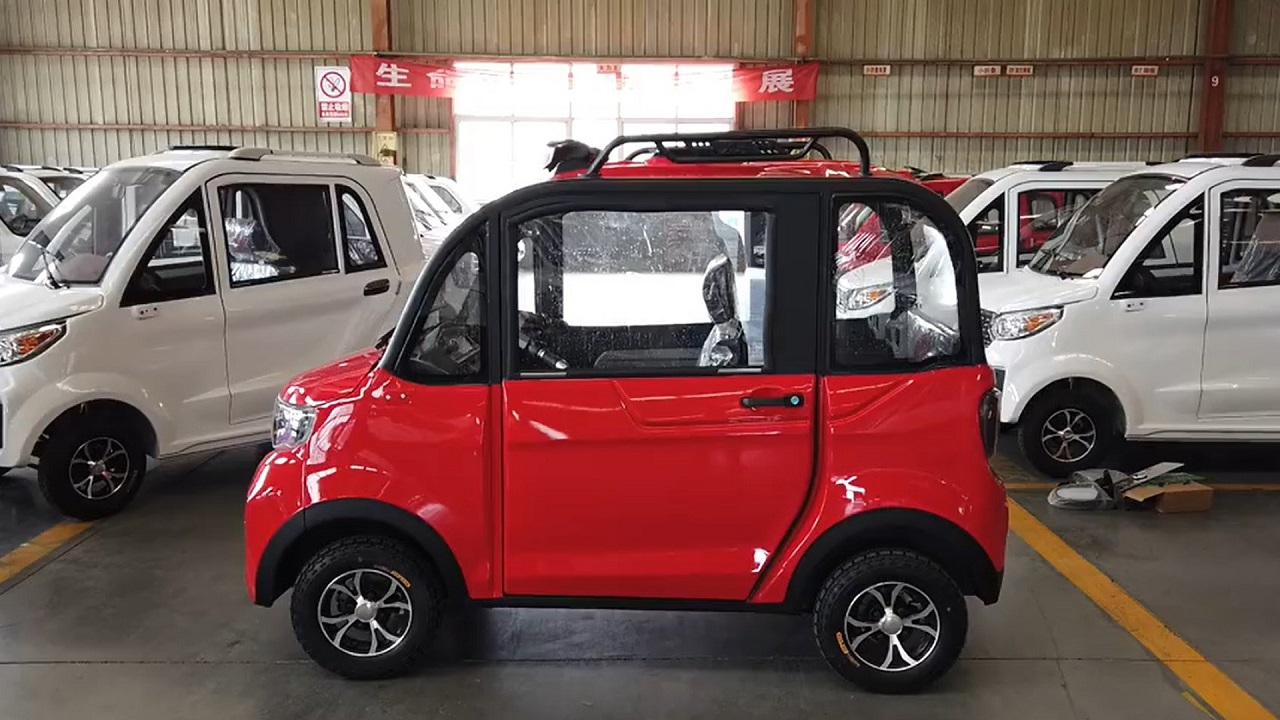


China Once Again Leads the Way in Energy Transition and Now Brings the Cheapest Electric Car in the World Called ChangLi S1-Pro Costing Less than R$ 8 Thousand.
China currently has the largest automobile market in the world and is also the largest manufacturer of electric vehicles globally, offering models for almost every taste. While in Brazil, consumers are shocked by the prices of new and even used cars, the situation is very different in China. The prices of these models in the Asian country are much more accessible. Proof of this is the new model S1-Pro from manufacturer ChangLi, the cheapest electric car in the world.
Meet the ChangLi S1-Pro and What It Offers to the Market
Chang Li, a brand of Chinese Changzhou Xili Vehicle, with years of experience in manufacturing tricycles and quadricycles, will not be in the prestigious lineup of companies like Airways, which is already operating in Portugal or BYD, which is arriving through Caetano Tec this month.
Its cheapest electric car in the world is not officially considered a car, as it falls under the quadricycle segment, measuring only 2.4 meters in length.
-
Iconic Orange Double-Decker Bus, a Dutch Fan Favorite for Over 20 Years, Arrives in Texas for the World Cup After Touring Brazil, England, Qatar, and More

-
$100 Million Hypercar Collection, Including Ferrari LaFerrari and McLaren Speedtail, Found Abandoned at Los Angeles Airport
-
Hyundai ix35 2019: A Forgotten SUV with 2.0 Engine and 650 km Range Costs Less Than a New Kwid in Brazil
-
Harley-Davidson Enters Urban Electric Era with LiveWire S4 Honcho Minibikes: Lightweight, Affordable, 85 km Range, Priced Around $5,000





It can also only carry up to 3 people, including the driver. Even so, the ChangLi S1-Pro is recognized as the cheapest in its segment and is used in the same way as any automobile.
In its country of origin, the electric vehicle can even be used as an urban transportation means instead of taxis. The S1-Pro was developed to be an urban model and has a range of 50 km, which in China is more than enough.
The cheapest electric car in the world is far from being a technically advanced machine, with only 1.5 horsepower, capable of reaching 50 km/h.
Cheapest Electric Car in the World Has a One-Month Waiting List
Its price may vary according to the desired quantity by the buyer. On the sales site Alibaba, for example, a company wishing to buy more than 24 units will pay only 903 euros, which in direct conversion is almost R$ 7 thousand.
Those planning to purchase the model through the official page of the manufacturer will have to spend US$ 9 thousand, equivalent to almost R$ 50 thousand. Thus, on Alibaba it would be cheaper than several electric scooters sold in Brazil.
The cheapest electric car in the world has a relatively quick delivery time, with a one-month waiting list.
The ChangLi S1-Pro can come with a regular steering wheel or with a steering mechanism resembling that of a motorcycle. Among the options, the vehicle can be purchased with extra lighting or even a roof bar to transport loads with some ease. Its charging time varies between seven and ten hours.
Advantages of the ChangLi S1-Pro
Given the current Brazilian economic crisis, it is common for consumers to seek more affordable options, and in this way, the ChangLi model can be a great alternative. Since the model is not officially considered a car, it does not need to pay the fees and taxes traditionally included in vehicles.
Moreover, by choosing the S1-Pro, consumers can help in preserving the environment since the model is powered by electricity, not using fossil fuels. This is an alternative that is gaining more and more ground in other countries, especially those seeking to reduce pollution in their urban areas.


