






 Portuguese
  Spanish


An agricultural building manufactured in 1955 gained a new function by being converted into a compact house, with custom solutions to make the most of every centimeter, integrate furniture into the circular shape, and create comfort in just 31 m²
Architect Christoph Kaiser transformed an old corrugated steel grain silo, manufactured in 1955, into a micro-house of about 31.6 m² in Arizona. The project, called Silo House, is located in the Garfield Historic District in Downtown Phoenix and was registered by Kaiserworks as a compact residence made from a repurposed agricultural structure.
The most striking feature is its size. According to Kaiserworks and ArchDaily, the silo is 18 feet in diameter and has 340 square feet of living space. In a space smaller than many studio apartments, Kaiser created a kitchen, living room, bathroom, sleeping loft, storage areas, and direct connection to a private garden.
A 1950s agricultural silo became a house in downtown Phoenix
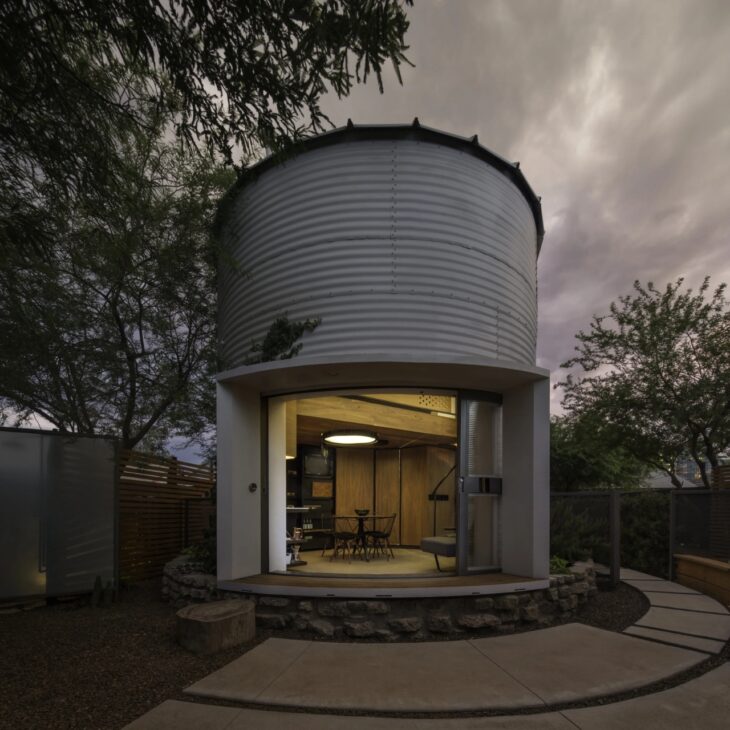
The story began unexpectedly. According to Architectural Digest, Christoph Kaiser found a disassembled set of silo parts and, upon reassembling the structure, began to see it as a potential home.
-
Egypt Partners with China to Build 2 GW Wind Turbine Factory and 2,000 MW Wind Farm in Gulf of Suez, Aiming to Export Across Africa

-
Family of Six Leaves Georgia to Live in a $300,000 Cold War-Era Underground Bunker Since 2020: Unlikely 557 m² Home with 60 cm Concrete Walls
-
Self-taught Brazilian Mechanic Builds 10-Ton Aluminum Sailboat in Backyard, Now Navigates the Brazilian Coast at 50
-
Santa Catarina Launches $1.4 Billion, 145-Kilometer Highway Project with Six Lanes and Speeds Up to 120 km/h




My Modern Met reports that the silo was purchased from a Kansas farmer and transported to Arizona on the back of a pickup truck. Then, the metal structure was reassembled and adapted to accommodate doors, windows, thermal insulation, and interior finishes.
The result is striking because it mixes two different worlds. On the outside, the house still resembles a rural structure, made to store grains. Inside, it became an urban dwelling planned down to the last centimeter, installed in Phoenix, a city marked by Arizona’s hot and desert climate.
The challenge was to transform a small cylinder into a functional house
The main difficulty of the project was in the format. A silo is not made to accommodate walls, common furniture, and straight divisions. It is circular, narrow, and vertical.
Kaiserworks’ solution was to concentrate a large part of the house’s functions in a walnut wood and black steel volume, organized over two levels and positioned on the south side of the silo. This left the center of the house more open and increased the sense of space.
Instead of fighting against the circular shape, the project began to use this curve as part of the architecture. The kitchen, storage, staircase, sofa, and other elements were designed to follow the internal design of the structure.
In 31 m², the house gained a kitchen, bathroom, living room, and mezzanine
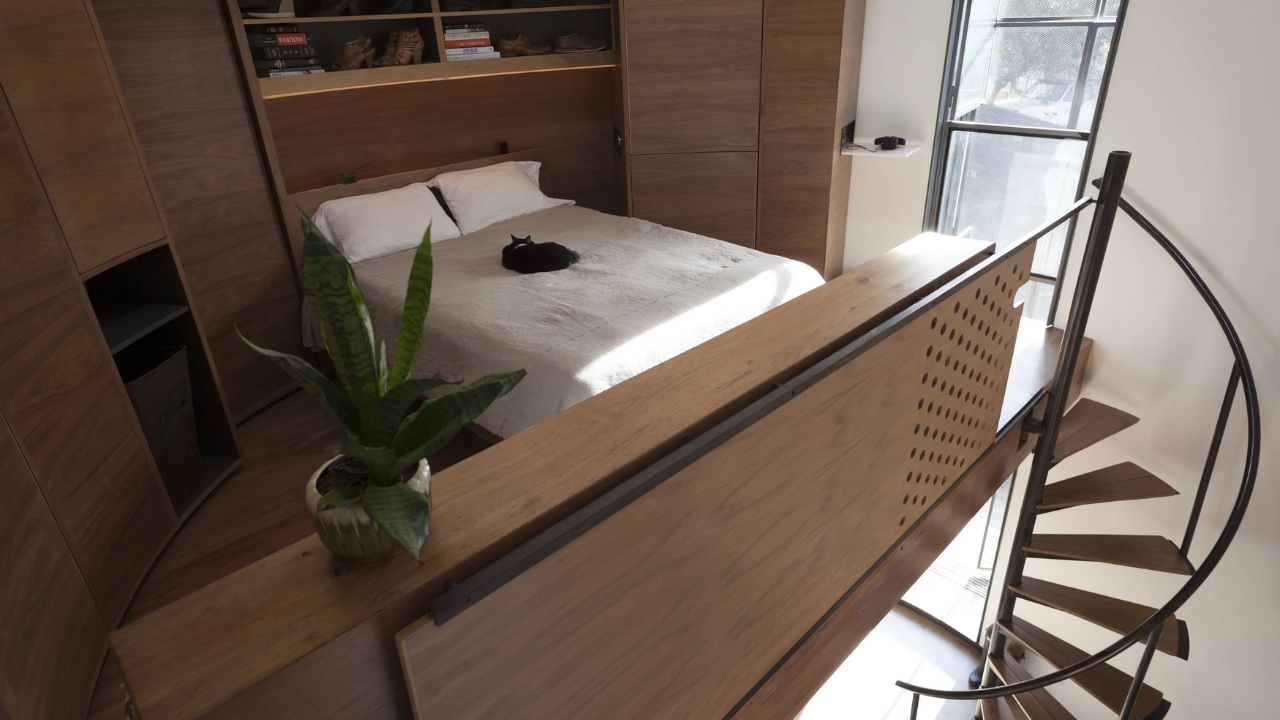
The Silo House has a kitchen and dining area on the ground floor, as well as a compact bathroom integrated into the functional volume. The living room received a curved sofa, suitable for the shape of the metal wall, and the sleeping area was positioned in a mezzanine.
According to Dwell, the silo has a 26-foot-high ceiling and a 17-foot operable vertical window. This opening helps to increase the entry of natural light and creates a visual connection with the surrounding city.
The mezzanine takes advantage of the structure’s height and prevents the sleeping area from occupying space on the main floor. The logic is simple but efficient: when the floor plan is small, the house needs to grow in organization, not in square meters.
Reused materials helped give identity to the project
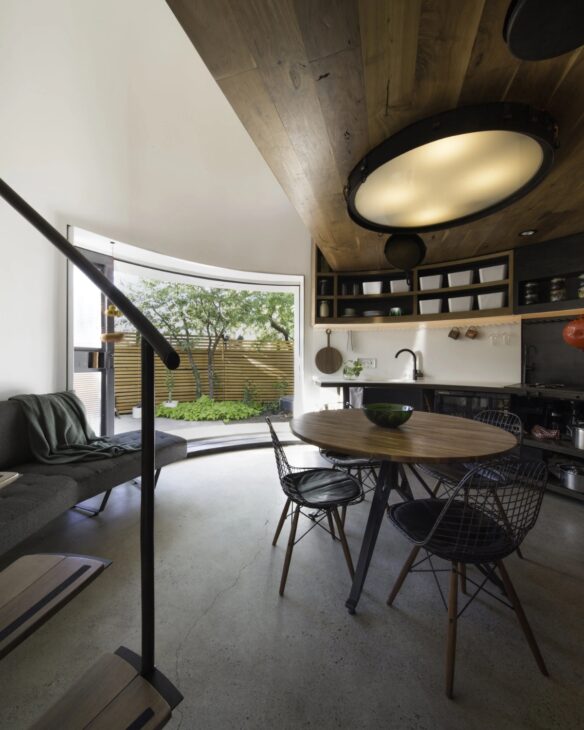
The reuse was not limited to the silo. My Modern Met reports that Kaiser used about $350 in reclaimed walnut boards, purchased from Craigslist, to compose part of the interior finishes.
ArchDaily lists wood and steel as the main materials of the project and attributes to Christoph Kaiser not only the architectural design but also the construction, landscaping, lighting, interior, and carpentry.
Almost everything was custom-made. This helps explain why the house seems larger than it really is. In a circular space of 340 square feet, common furniture could waste area. The planned pieces transformed edges, curves, and height into a solution.
In the heat of Arizona, the project needed to consider ventilation and insulation
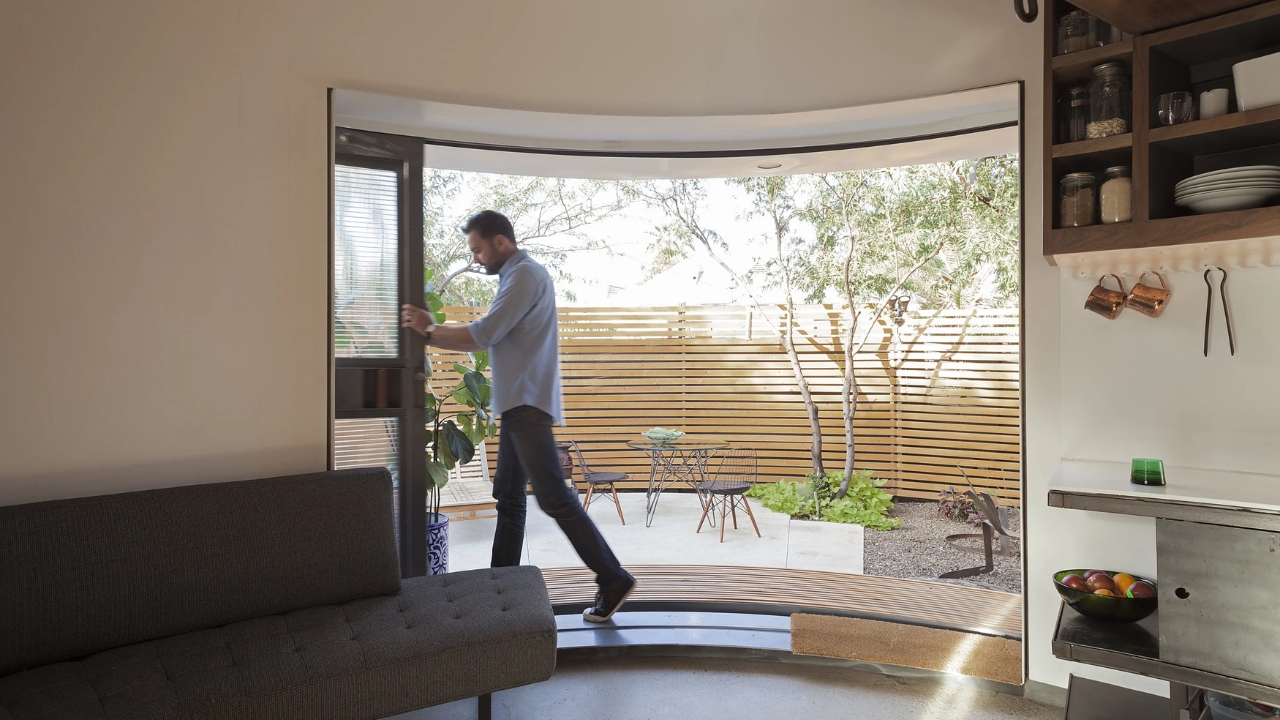
Living inside a metal silo in Phoenix required attention to the climate. The outer shell was painted white to reflect part of the solar radiation, an important detail in a region of intense heat.
Kaiserworks reports that the project uses underground air ducts to reduce mechanical noise from the climate control system and work together with passive ventilation. The operable oculus at the top also helps with air circulation.
My Modern Met and Inhabitat also mention the use of 10 inches of spray foam insulation between the metal structure and the residential interior. Without this type of solution, a steel silo in the Arizona climate could become uncomfortable.
The garden reinforces the idea of an urban refuge
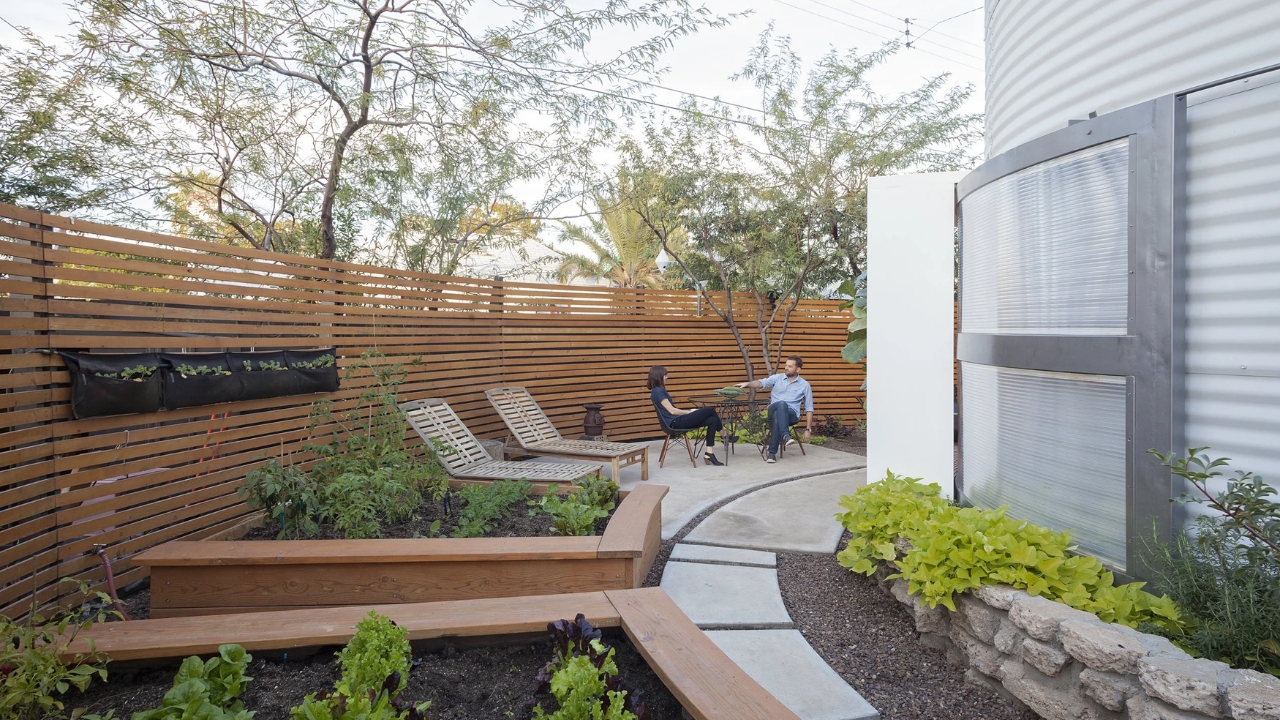
Although the project is in an urban area, the house was designed with a more reserved relationship with the exterior. ArchDaily explains that the neighborhood context led to a more introspective strategy, with a private garden and controlled views of the Phoenix skyline.
Architectural Digest shows that the courtyard includes seating areas, an outdoor table, a herb garden, kumquat trees, an outdoor shower, and a water feature created to soften the presence of urban noise.
This aspect changes the perception of the house. It is not just a curious object made inside a silo. It is an attempt to create comfort, shade, privacy, and domestic life in a small space within a hot city.
Cost estimate shows that the idea required time and direct work
LoveProperty estimates that the final cost of the conversion was between $80,000 and $100,000. The same source states that Kaiser worked on the project during nights and weekends, with occasional help from friends and neighbors, over a period of about 18 months.
There are small differences between sources regarding the project’s date. ArchDaily records the Silo House as a 2014 work, while other reports indicate completion around a similar period. For the reader, the most important aspect is the impact of the proposal: a 1955 agricultural structure gained a new function decades later.
The Silo House shows that the discussion about compact housing does not depend solely on reducing area. It depends on design, reuse, climate adaptation, and spatial intelligence. In the case of Christoph Kaiser, an old metal cylinder stopped storing grains and began to reveal a bigger question: how many forgotten spaces could still become homes if viewed with more imagination?


