Portuguese
  Spanish



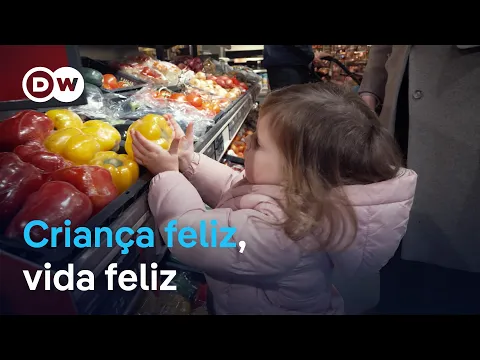
The Innocenti Report Card 19, published by UNICEF in May 2025, placed the Netherlands at the top of the child well-being ranking in 43 wealthy countries. DW Brasil showed the inside routine of a Dutch family and what is behind the result.
The Netherlands has the highest life satisfaction rate among adolescents and children in the world. 87% of Dutch 15-year-olds report being satisfied with their lives, the highest percentage among the 43 OECD and European Union countries evaluated by the Innocenti Report Card 19, a UNICEF report released in May 2025. Denmark and France complete the podium. At the bottom of the list are Chile, Turkey, and Mexico. The question that the report forced the world to reflect on is simple to formulate and complicated to answer. What do the Dutch do differently?
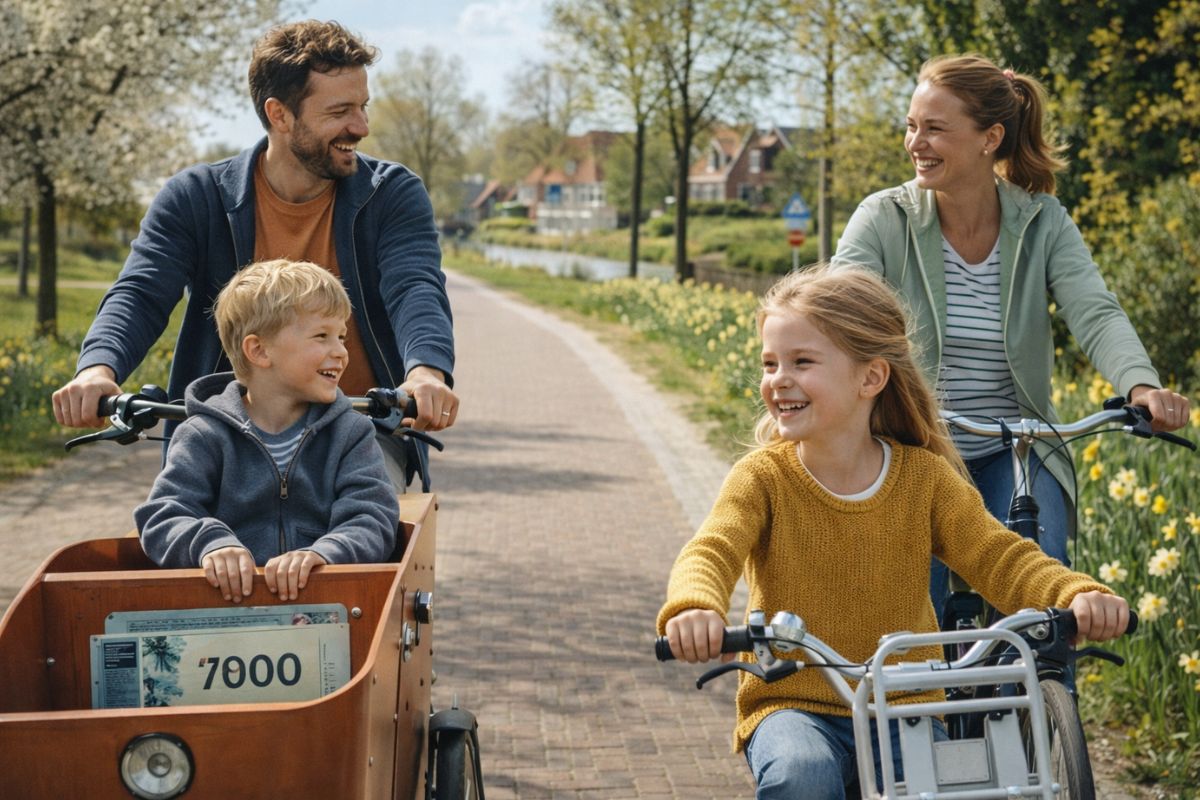
The DW Brasil report entered the home of a family in Amsterdam to try to find out. Louna, three years old, Flynn, one year old, and parents Marlot van der Stoel and Felix den Ottolander showed a routine that contrasts with the traditional model of strict discipline-based upbringing, extracurricular activities, and pressure for performance. The Dutch formula is based on three pillars: independence from an early age, outdoor time, and close family ties.
What do Dutch parents do that others do not?

The family day starts together. Shared breakfast has become an essential ritual for most Dutch families. It doesn’t matter if the parents have commitments at night or work trips. The first hour of the morning is sacred. It is during this time that children learn to dress themselves, have breakfast independently, and put on their coats. Autonomy begins at two years old.
-
12-year-old girl develops a virtual receptionist with artificial intelligence for small businesses and demonstrates how the combination of creativity, programming, and automation can boost productivity, reduce repetitive tasks, and expand access to digital transformation.

-
A rock weighing almost 500 tons seems to defy gravity for over 11,000 years in Finland and remains balanced on a tiny base without collapsing or moving.
-
At 76 years old, a retired man reveals a subterranean labyrinth he dug by hand for 30 years under his own garden, descending 6 meters into sand dunes, erecting 1.5-meter concrete walls with calculations from his mathematician wife, and transforming a “crazy” idea into a hidden cave with a bridge and waterfall.

-
Seen from space, an astronaut captures in Canada a geometric carpet of crops drawn over the backdrop of a ghost lake that disappeared 12,000 years ago, was once larger than all the Great Lakes combined, and left a scar of fertile mud that still sustains agriculture.



In the Netherlands, nearly 80% of children under three attend daycare, double the average in the European Union. Daycares are private and expensive, which creates discomfort among middle-class families, but the system functions as an extension of socialization. The child learns to interact, play, and resolve small conflicts before learning to read.
Dutch parents also have the right to parental leave that extends until the child turns eight. Many, like Felix, choose to take one fixed day a week dedicated to their children instead of taking several consecutive months off.
Bicycles enter a child’s life early. 36% of the Dutch population uses the bicycle as their main means of transportation, and it is a tradition to receive the first bicycle on their third birthday. Learning to ride is not just logistics. It is a rite of confidence that parents pass on to their children. If she can balance, she can do other things on her own as well.
What does science say about the Dutch model?

The UNICEF Innocenti Report Card 19 is one of the most respected studies in the field of child well-being. It compares data from 2018 and 2022 and analyzes three dimensions: mental health, physical health, and academic and social skills.
The Netherlands ranked among the top in all three dimensions simultaneously, which is rare. Countries like Japan and South Korea have high academic performance but score poorly in mental health. Bulgaria, Croatia, and Hungary have good mental health but rank low in physical health.
The explanation that researchers point to has less to do with money and more with the childhood model that society adopts. Countries with less wealth, such as Portugal and Spain, ranked 4th and 7th respectively, surpassing wealthier nations. It is not GDP that makes a child happy. It is the social arrangement that provides time, space, and autonomy for them to be children.
The report also raised a global alarm. Since the COVID-19 pandemic, children in wealthy countries are less satisfied with life, more prone to overweight, and experiencing declining school performance. The Netherlands also recorded a slight decline. In 2018, satisfaction was at 90%. In 2022, it fell to 87%. Even with this decline, it remains the highest rate in the world.
And in Brazil, how are our children?

Brazil is not in the ranking because it is not part of the OECD, but national data tells a harsh story. The National School Health Survey (PeNSE 2024), released by IBGE in March 2026, showed that 18.5% of Brazilian adolescents aged 13 to 17 believe that life is not worth living always or most of the time.
Among girls, this percentage rises to 25%. More than half of Brazilian teenage girls feel irritated, nervous, or moody about anything. 41% of girls feel sad always or most of the time, compared to 16.7% of boys.
Satisfaction with one’s body image fell from 66.5% in 2019 to 58% in 2024, according to the same survey by IBGE. Among girls, more than one-third report being dissatisfied with their appearance. IBGE interviewed 118,099 adolescents in 4,167 public and private schools across the country.
The contrast with the Netherlands is brutal. While 87% of Dutch adolescents are satisfied with life, in Brazil one in five young people sees no meaning in living. Gabriela Mora from UNICEF Brazil points to gender violence, online harassment, menstrual poverty, and unattainable aesthetic standards as factors explaining the national scenario. The country still had 1.65 million children and adolescents in child labor situations in 2024, according to the PNAD Contínua from IBGE.
Childhood, in the end, is a social project. The Netherlands chose the path of autonomy, outdoor activities, and family time. Brazil is still debating the basics.
And in your home, what parenting model is present? Do you give your children autonomy from an early age or do you prefer a more structured upbringing? Share in the comments what worked (or didn’t work) for you.