Portuguese
  Spanish


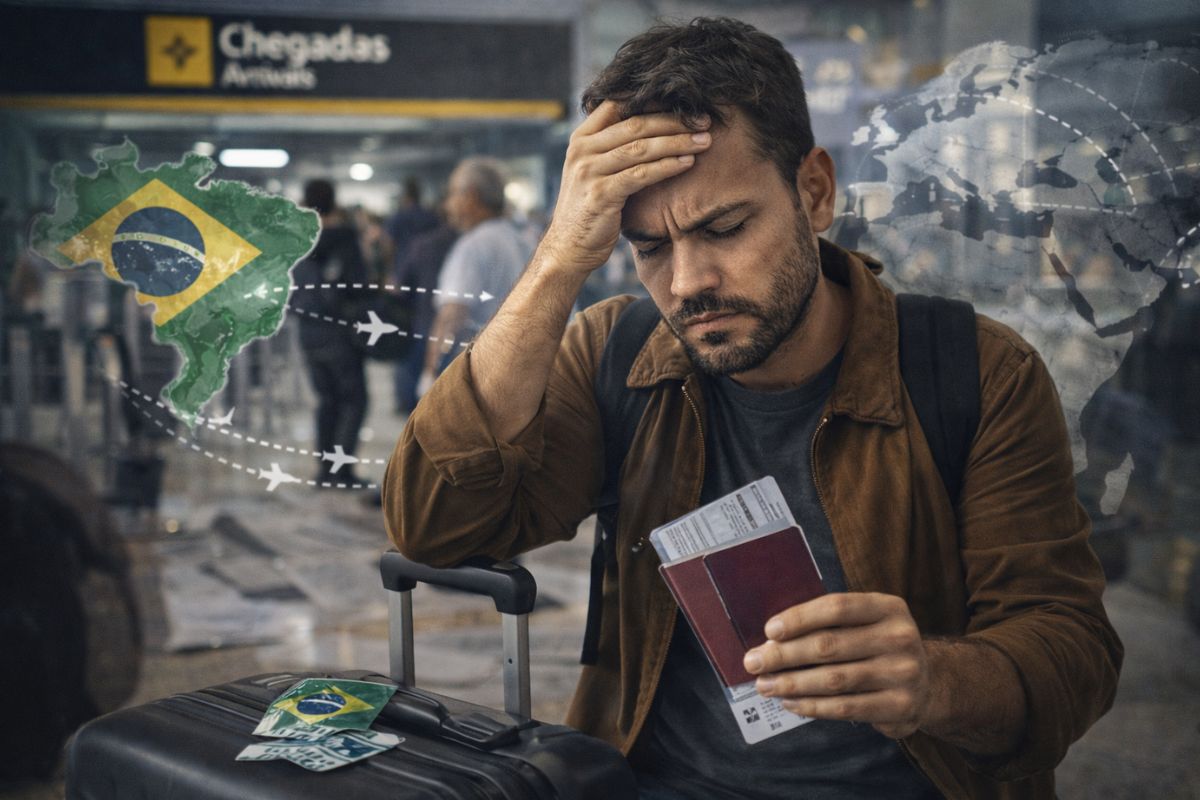

The intercultural psychologist Andrea Sebben calls the “return wound” the shock that Brazilians feel when returning to the country after years living abroad, a phenomenon that gained strength with the increase in deportations from the United States and became a topic on DW Brasil
Returning to Brazil after years living abroad is, for many, more difficult than emigration itself. The feeling of estrangement in one’s own country, frustration with unmet expectations, and the silent shock of no longer recognizing oneself among their own have been named in the scientific literature: return syndrome, reverse culture shock, or, as the intercultural psychologist Andrea Sebben prefers to call it, the return wound. This phenomenon was a recent topic on DW Brasil and gained traction as a discussion precisely at the moment when the United States deported 2,785 Brazilians in 2025, a 69.8% increase compared to 2024, according to official data from the Itamaraty released by Veja.
The Ministry of Foreign Affairs published an online guide in 2025 specifically to guide Brazilians returning home. The document acknowledges that the flow of return has been increasing for two main reasons: the global tightening of anti-immigration policies and the improvement of the internal job market. But there is no ready-made recipe for readjustment.
Why can returning home be worse than leaving?
The contradiction is cruel. A person leaves Brazil knowing exactly what they are leaving behind, but not knowing what they will find. They return thinking they know what to expect and discover that they no longer recognize it. This is what intercultural psychology calls migratory ambivalence: the desire to gain without losing, to achieve without giving up.
-
12-year-old girl develops a virtual receptionist with artificial intelligence for small businesses and demonstrates how the combination of creativity, programming, and automation can boost productivity, reduce repetitive tasks, and expand access to digital transformation.

-
A rock weighing almost 500 tons seems to defy gravity for over 11,000 years in Finland and remains balanced on a tiny base without collapsing or moving.
-
At 76 years old, a retired man reveals a subterranean labyrinth he dug by hand for 30 years under his own garden, descending 6 meters into sand dunes, erecting 1.5-meter concrete walls with calculations from his mathematician wife, and transforming a “crazy” idea into a hidden cave with a bridge and waterfall.

-
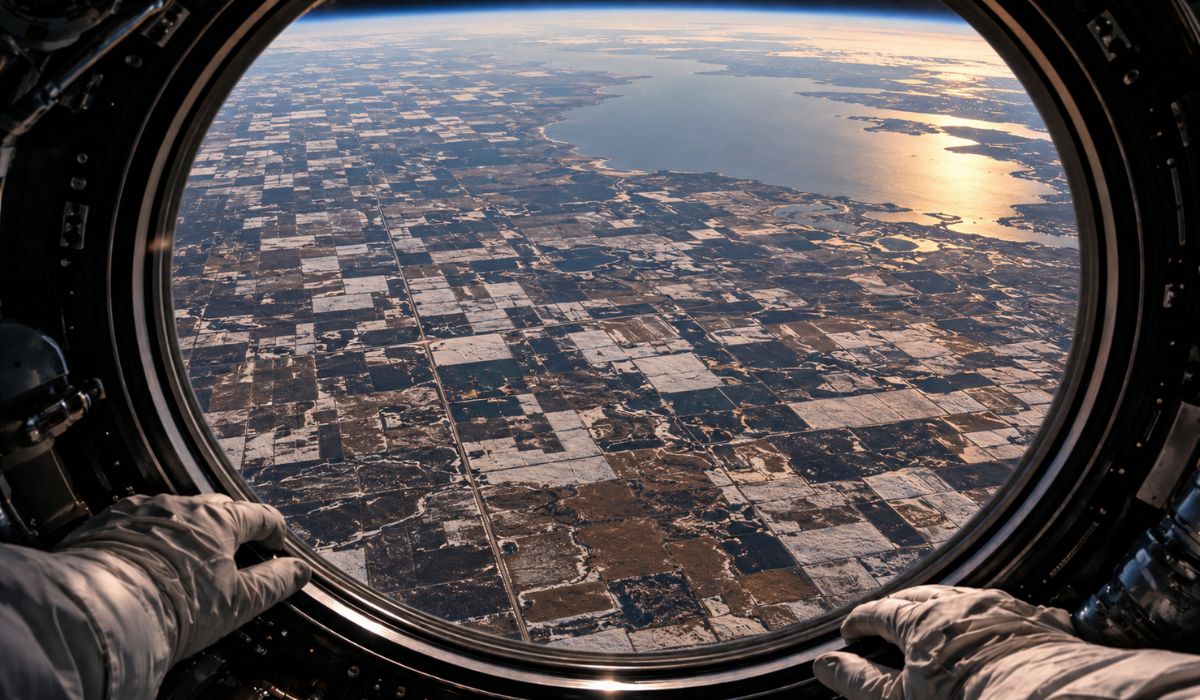
Seen from space, an astronaut captures in Canada a geometric carpet of crops drawn over the backdrop of a ghost lake that disappeared 12,000 years ago, was once larger than all the Great Lakes combined, and left a scar of fertile mud that still sustains agriculture.


Andrea Sebben interviewed 500 Brazilians who lived abroad and returned. Most described the return as worse or very different from what they had imagined. According to her, those who live abroad break away from the reality of Brazil and begin to relate to their country of origin in an imaginary way. Memories replace concrete data. When the person returns, they encounter a Brazil that does not match the memory they held.
The return migration is not a small phenomenon. Data from the 2010 Census by IBGE, compiled by the Observatory of International Migrations, showed that 65.6% of all immigrants residing in Brazil were actually Brazilians returning from abroad — 455,335 people. The Federal Revenue received about 144,000 declarations of definitive departure from the country in the last decade, and the Brazilian community abroad reached 4.99 million people in 2023, according to estimates from the Itamaraty. If it were a state, it would be the 13th most populous in Brazil.
What has science already discovered about this invisible shock?
The syndrome was identified during World War I, when European doctors noticed that displaced military personnel and civilians faced a specific psychological shock upon returning. In Brazil, studies advanced in the 1980s with neuropsychiatrist Décio Nakagawa, who followed decasseguis workers returning from Japan. Depression, anxiety, and the feeling of not belonging anywhere were recurring symptoms.
Psychologists describe the process as a U-shaped curve. First comes the euphoria of reunion, the relief of arrival, the smell of childhood food. Then comes dissatisfaction: the traffic, the informality, the social codes that the person no longer reads easily. Only later, with time, the line rises again and balance returns. Sebben argues that the minimum period to make any decision about re-emigration would be over seven months, precisely because readjustment is not linear.
Who can cross the migratory grief?


Maucir Nascimento, author of the book The Return of Those Who Left, shares one of these crossings. He lived in Australia for ten years and returned in 2018. He settled in the interior of São Paulo with his wife and two children. According to him, the secret was planning, self-knowledge, and avoiding the idealizations that circulate on social media.
On the opposite side is the case of Aline Milene Machado, a micro-entrepreneur who spent ten years in Germany and returned to Florianópolis in 2025. The first thought was that of someone arriving home. Seven months later, the traffic, the routine, and the clash between memory and reality won. She returned to Germany.
The opposite cases illustrate the same principle. Migration, whether returning or departing, happens more internally than externally. Those who prepare beforehand, create an honest list of pros and cons, and understand why they want to return tend to navigate the process better. Those who expect to find the home they left behind often encounter one that no longer exists.
The Brazil that the person abandoned continued moving without them. And they have changed as well.
And you, have you ever lived outside Brazil or know someone who returned after years abroad? How was the readjustment? Share here in the comments.