






 Portuguese
  Spanish


China Accelerates Coal-to-Gas and Chemical Conversion, Investing Billions to Reduce Energy Imports and Strengthen Its Strategic National Security
In an industrial complex in northwest China, Ningxia Baofeng Energy is carrying out a process that is gaining more and more traction in the country. The company converts millions of tons of coal per year into chemicals used in plastic manufacturing.
The project received an investment of 48 billion yuan, about US$ 6.7 billion, establishing itself as one of the largest in the sector.
This movement aligns with a clear strategy from Beijing. The goal is to reduce dependence on energy imports that could be interrupted in the event of conflict.
-
Petrobras to Double Natural Gas Supply in Northeastern Brazil with New Investment

-
Petrobras Approves $1.2 Billion Refinery in Brazil to Produce Aviation Fuel and Diesel from Plants
-
Petrobras Secures $2.2 Billion Contract to Build and Operate Four Support Vessels for Brazil’s Offshore Oil Fields
-
Oil production grows in Rio, but reserve replacement raises a warning sign


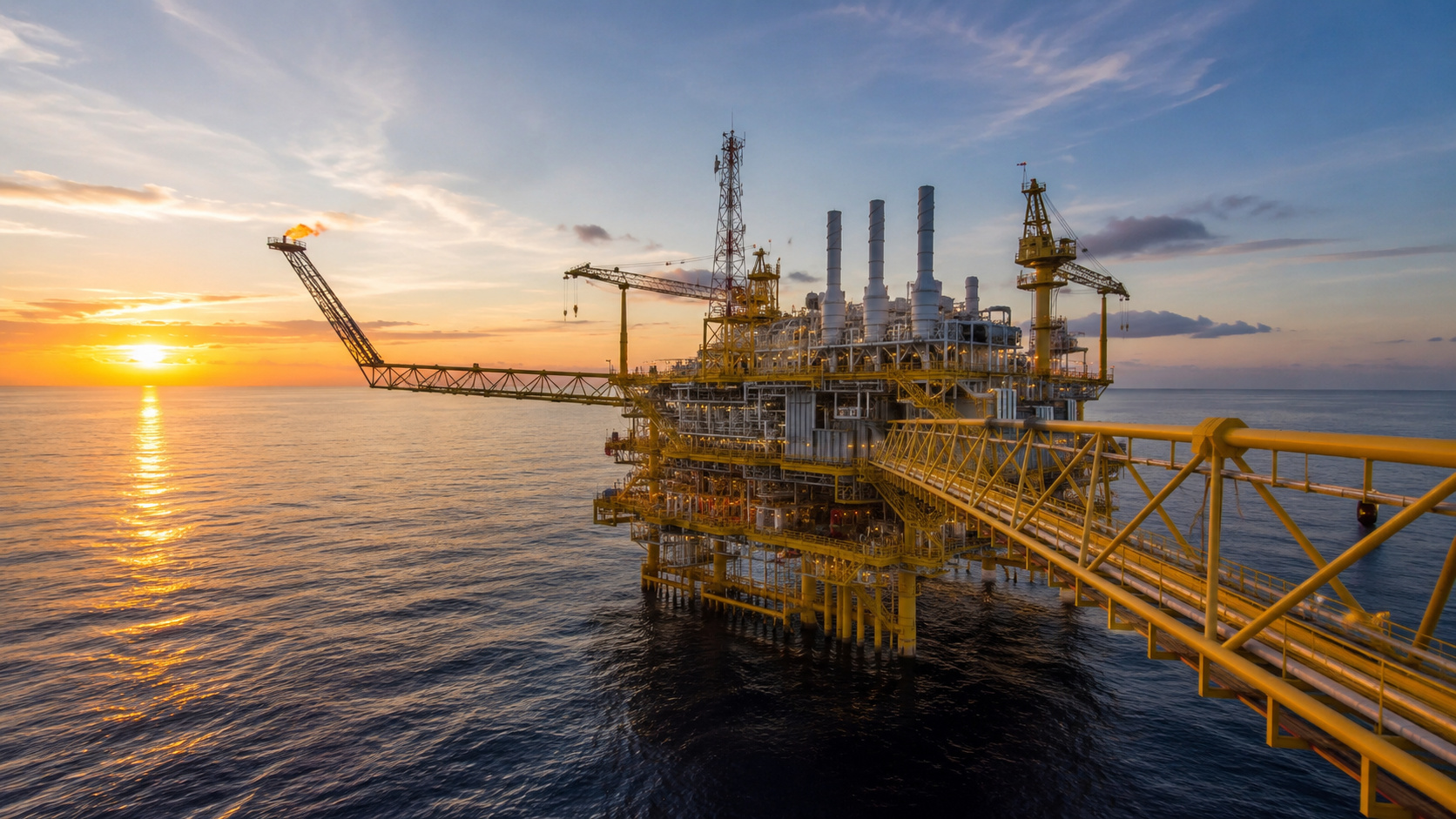
Cheap coal and strong state support drive the expansion.
Accelerated Growth
In the last year, the sector transformed 276 million tons of coal into oil, gas, and chemicals, according to the China National Petroleum and Chemical Planning Institute. This volume is almost equivalent to the entire annual coal use in Europe.
If all ongoing projects advance, installed capacity will double in five years. Sinolink Securities estimates that most new plants will focus on producing synthetic natural gas and liquid fuels.
Strategic Motivations
According to Lauri Myllyvirta, co-founder of the Centre for Research on Energy and Clean Air, the initiative serves two main purposes.
It protects China from potential maritime blockades and brings investment to less developed regions of the country.
Moreover, state-owned enterprises have a politically defined mission, which reduces obstacles related to the cost of capital.
For Myllyvirta, this advantage ensures the viability of projects that would not thrive in other countries.
Coal: Decline and Recovery
The existence and expansion of this sector reflect the importance of energy security for Beijing.
Outside China, only coal-rich and relatively isolated countries, such as Germany and South Africa, have implemented the technology on a large scale.
In India and Indonesia, despite large coal reserves, the model has not taken off. According to Jianjun Tu, director of the consultancy Agora Energy China, the difficulty lies in making the process economically sustainable.
In China itself, growth has been uneven. Profitability depended for a long time on high oil prices.
The expansion of the 2010s, for example, lost momentum after the sharp drop in prices in 2014.
In recent years, however, prices above US$ 70 per barrel and cheap coal have helped create a favorable scenario.
Geopolitical Environment
Tensions with the United States have also influenced the sector. Since the Donald Trump administration, Beijing has heightened concerns about dependence on energy imports. This has further strengthened investments in local projects.
According to analysts, the area with the most rapid growth is the conversion of coal to gas.
Expanding Capacity
Current construction is four times larger than recorded in the last decade, according to an analysis by Reuters based on data from various Chinese institutions.
This will increase annual capacity to 19.5 billion cubic meters, roughly equivalent to about a fifth of China’s LNG imports in 2023.
The majority of new plants are concentrated in the northwest of the country, a region abundant in coal. There, 12 billion cubic meters of annual capacity are already under construction, with another 10 billion expected.
Economic Advantages
The gas produced from coal costs almost one-third less than imported LNG. The average price is below 2 yuan per cubic meter, compared to 2.87 yuan for the imported product, excluding transportation and regasification.
For analyst Sun Yang of Oilchem, the expectation is that synthetic gas will replace a significant portion of imports in the future.
The recent drop in coal prices, which reached the lowest level in four years, also favored the production of derived chemical products.
Positive Margins
By the end of July, coal-based olefins secured margins of 800 to 900 yuan per ton.
Meanwhile, olefins obtained from oil, naphtha, or propane recorded losses of 200 yuan per ton, according to Oilchem.
This scenario reinforces the competitiveness of coal-to-chemicals conversion in the country.
Coal to Gas: Industrial Process
At Baofeng’s facility in Ordos, Inner Mongolia, coal is heated to about 1,300 degrees Celsius.
The process generates synthetic gas, which is then transformed into methanol and, ultimately, into olefins.
These olefins are essential for plastic production. However, the company chose not to comment on its current results.
With information from Invest News.


