





 Portuguese
  English
  Spanish
  4 min of reading
  0 comments


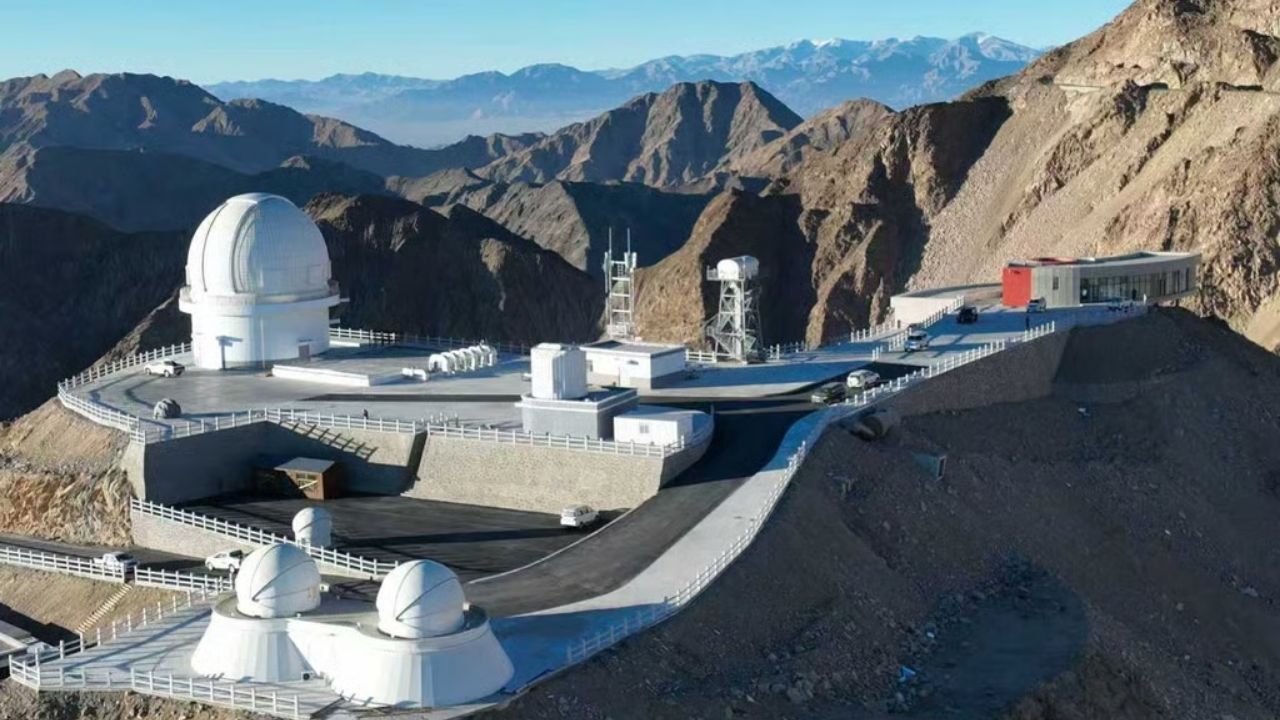
In Saishiteng, in the province of Qinghai, in northwest China, scientists are installing telescopes ranging from 6.5 to 14.5 meters that are expected to form the largest astronomical base on the planet and surpass Mauna Kea in Hawaii in light capture by the mid-2030s, according to the Chinese national observatory in Beijing.
The China is building, on the high Tibetan plateau, some of the most powerful optical telescopes on Earth. According to scientists involved in the project, the construction is expected to transform the country into the headquarters of the world’s largest astronomy base by the mid-2030s, according to a report by the South China Morning Post (SCMP).
The chosen location is Saishiteng Mountain, in the province of Qinghai, in the northwest of the country, where observation domes already dot the summit. The promise is bold: the set of instruments is expected to surpass the legendary Mauna Kea in Hawaii, considered for decades the jewel of ground-based astronomical observation.
The giant telescopes that China is erecting
At the heart of the project are two large pieces of equipment. The Saishiteng telescopes will have diameters between 6.5 and 14.5 meters and will work in conjunction with dozens of smaller instruments, forming an observation complex of unprecedented scale for the country. According to Deng Licai, chief scientist of the site planning at the National Astronomical Observatories of China (NAOC) in Beijing, this set is already coming off the drawing board.
-
Nvidia built the infrastructure of artificial intelligence and became the largest company in the world, but Jensen Huang now needs to defend his throne against Huawei, Google’s TPUs, chip startups, and customers who want to escape dependence on more expensive GPUs.

-
NASA captures Typhoon Jangmi with a giant eye spinning in space, winds of 130 km/h, and huge clouds advancing over Japan in images that impress with the storm’s strength.
-
Hidden beneath the dense vegetation of Mexico, a Maya settlement reveals 80 structures, a colorful mural, a monumental plaza, and structures up to 14 meters tall that may be just the beginning of an even larger ancient city.

-
Brazil has 130,000 diesel buses, but electric ones still face challenges outside São Paulo: fleet grows by 170%, city concentrates more than 80% of the vehicles, and costs of up to R$ 3 million expose financing and infrastructure bottlenecks in Brazilian public transportation.



The construction is underway on several fronts. The preparation of the land, the polishing of the mirrors, and the development of the instruments have already begun for the two main telescopes of the complex. The idea is that, combined with auxiliary equipment, they will give China a capacity to capture starlight like no other place on the planet has today.
The competition with Mauna Kea, the jewel of Hawaii
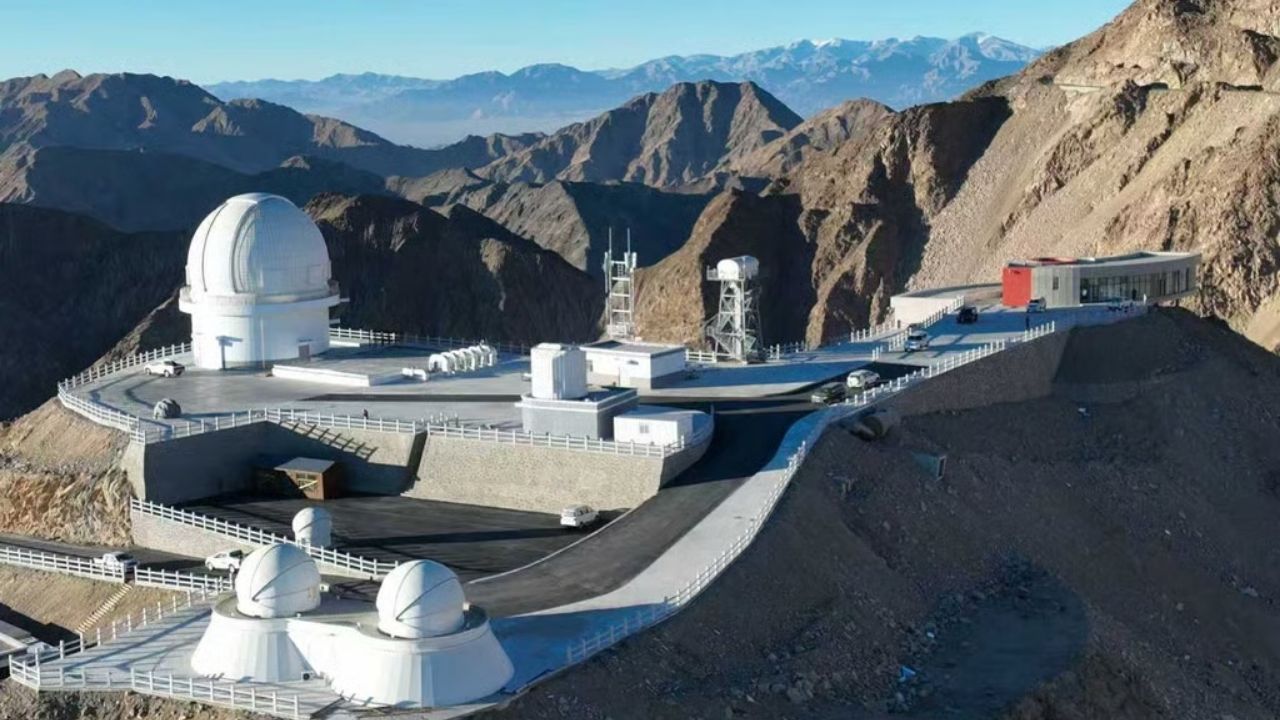
The benchmark to beat is Mauna Kea, in Hawaii. The Hawaiian summit has long been considered the crown jewel of ground-based astronomy, housing the twin Keck telescopes, each 10 meters, as well as the Subaru, 8.2 meters, and the Gemini North, 8.1 meters. It is against this team of giants that China positions itself.
Scientists bet that the combined light-gathering power of the Saishiteng telescopes will surpass that of Mauna Kea by the mid-2030s. Deng Licai stated on Wednesday that this collective capacity should exceed that of the Hawaiian set, marking a turning point in the leadership of terrestrial optical observation.
Two projects, two paths: public and private money
The two main telescopes follow different funding models. The largest is the Large Optical Telescope (LOT), 14.5 meters, budgeted at 2.5 billion yuan (about US$ 369 million), funded by the government and led by NAOC. It is the heart of the new base and what should drive observation capacity to the world top.
The second is the MUltiplexed Survey Telescope (MUST), 6.5 meters, with a budget of 1.5 billion yuan, mainly supported by private capital and led by a team from Tsinghua University. Both telescopes have the same deadline goal: to achieve the so-called “first light,” the moment when equipment captures its first image and enters practical use, by 2030.
Why the Tibetan plateau and Saishiteng mountain
The choice of location is no accident. High, dry, and remote regions like the Tibetan plateau offer cleaner and darker skies, ideal for optical astronomy. In Saishiteng, in Qinghai province, the altitude and isolation conditions help the telescopes see farther, with less interference from the atmosphere and light pollution.
The summit already shows signs of what’s to come. Observation domes dot the top of the mountain, and the site planning work, coordinated by NAOC, has been preparing the area to receive the large equipment. It is this combination of privileged geography and heavy investment that supports the ambition to transform Saishiteng into the largest astronomical base in the world.
What’s at stake: the scientific race and the deep universe
More than an engineering feat, the project is a strategic move. By bringing together telescopes of this magnitude, China firmly enters the elite of ground-based optical astronomy, a field where the United States and Europe have dominated for decades. The ability to capture more light means seeing more distant and older objects, paving the way for discoveries about the depths of the universe.
If the deadlines are confirmed, the country will compete on equal footing with the most ambitious observations of modern science. Leadership in light capture would give Chinese researchers cutting-edge access to phenomena that help understand the formation of galaxies, the evolution of stars, and the very history of the cosmos.
The Tibetan Plateau as a New Window to the Universe
The effort by China in Saishiteng shows how astronomy has also become an arena of prestige and scientific power. Building the world’s largest telescopes on the roof of the planet is a way of saying that the country intends to be at the forefront of the next major discoveries about the universe.
Now we want to know your opinion. Do you believe that China will indeed surpass Mauna Kea and take the lead in sky observation, or will the United States and Europe remain ahead? Do you think this type of investment in science is worth it?
Comment below what you think, tell us what fascinates you most about the study of the universe, and share this article with those who love astronomy and space exploration.






Be the first to react!