Portuguese
  Spanish


Nvidia dominates the artificial intelligence infrastructure, but the leadership built by Jensen Huang has started to face pressure from Huawei, Google’s TPUs, startups, and major clients. A report by Exame published on May 27, 2026, shows trillion-dollar demand, dependence on GPUs, and competition for cheaper alternatives.
Nvidia has reached the center of the global artificial intelligence infrastructure, and during GTC 2026 in San Jose, Jensen Huang presented the company as an essential piece of the new industrial phase of AI. The coverage was published by Exame on May 27, 2026, with an update on the same day.
What is at stake is the company’s stay at the top, after transforming GPUs into the basis for data centers, robotics, cloud, and AI models. At the same time, clients like Amazon, Microsoft, Google, and Meta seek to reduce dependence, while Huawei, chip startups, and Google’s TPUs advance in the market.
Nvidia transformed chips into artificial intelligence infrastructure
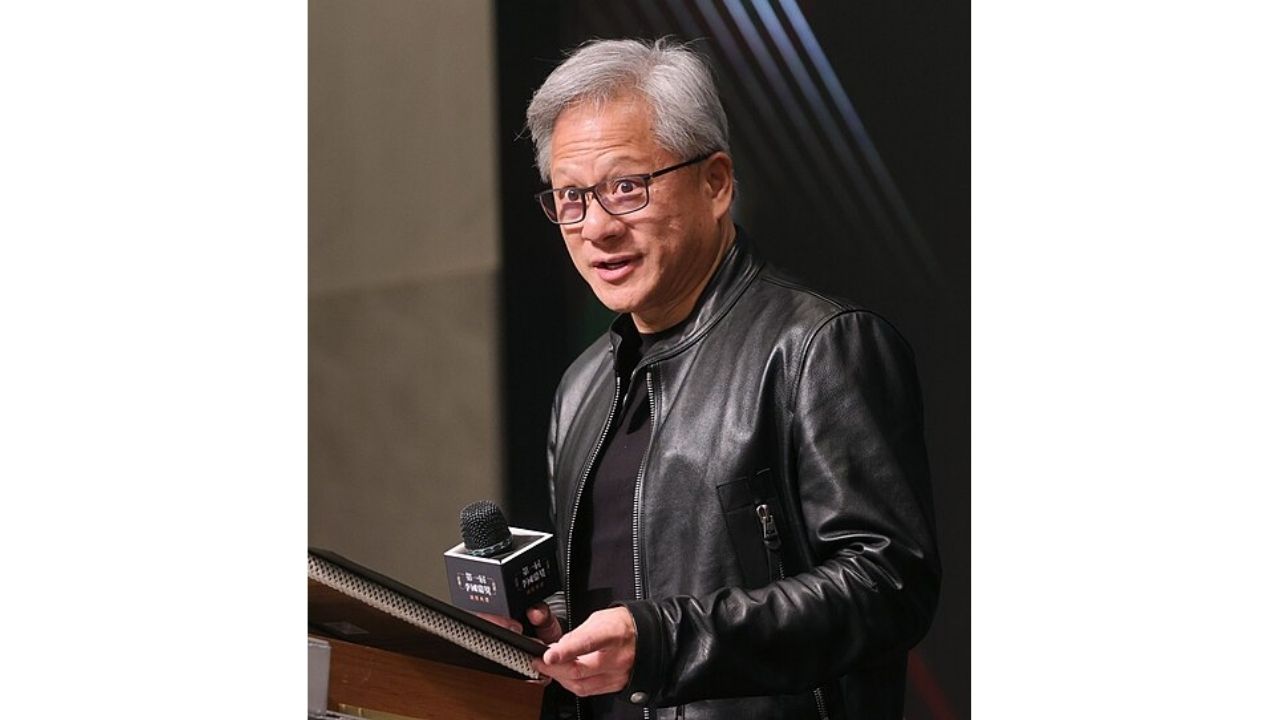
Nvidia did not reach the top just by selling advanced boards. The company built a strategic position by making its GPUs fundamental for the training and operation of large-scale artificial intelligence systems.
-
AI Security System in Brazil Aims to Cut False Alarms by Differentiating Pets from Intruders, Enhancing 24/7 Monitoring for Homes and Businesses

-
Archaeologists Discover 1,500-Year-Old Byzantine Mosaic with Greek Biblical Inscription in Israel, Uncover Ruins of 10 Buildings Near Kiryat Gat
-
Ohio Carpenter Finds 308-Gram Meteorite the Size of a Baseball After Dreaming of Its Location

-
Chinese Student Builds Humanoid Robot for $2,100 at Age 20, Now Leads Robotics Startup in China



What once seemed like niche technology has become critical infrastructure. Data centers, generative models, robots, cloud platforms, and technology companies have come to rely on chips capable of processing enormous volumes of data with speed and efficiency.
At GTC 2026, Jensen Huang defended precisely this thesis: artificial intelligence would cease to be just a software layer to become a new industrial infrastructure. This movement explains why Nvidia has come to be regarded as one of the most important companies in the global economy.
The company also carries a history of early bets. First, it grew with graphics chips for gaming. Then, it entered the automotive sector, gained relevance in bitcoin mining, and with the explosion of ChatGPT, it became central to the AI cycle.
Jensen Huang projects trillion-dollar demand for new chips
During the event, Huang stated that the demand for Blackwell and Vera Rubin, the company’s advanced chip and system families, could reach at least $1 trillion by 2027. A year earlier, Nvidia itself foresaw something close to $500 billion.
This leap helps explain the market’s enthusiasm. According to Exame, the company earned $216 billion last year, with a 65% growth, and approached $5.4 trillion in market value over the last three years.
The scale of the numbers shows how Nvidia became a financial symbol of the AI race. It’s not just about selling chips, but providing the technical foundation for companies that want to train models, operate assistants, automate processes, and create digital products.
At the same time, this leadership increased the company’s exposure. The greater the dominance, the greater the pressure from clients, rivals, and governments to reduce concentration, lower costs, and create alternatives to the dependency on more expensive GPUs.
Robots and data centers expand the stage of the dispute

The GTC 2026 also showed that Nvidia wants to go beyond servers. Huang shared the stage with Olaf, a Disney character in a robot version developed in partnership with the company, to demonstrate advances in AI-driven physical robotics.
The same logic appeared in references to humanoids like Figure 03, from the startup Figure. The message was clear: artificial intelligence is starting to move off the screens and take shape in the physical world.
For Nvidia, this expansion could open new markets. If robots, autonomous cars, factories, and data centers start to demand increasingly powerful chips, the company tries to remain at the center of the value chain.
But this ambition also increases the number of competitors. The more sectors depend on AI, the more companies seek to create their own processors, specific architectures, and cheaper solutions for tasks that do not always require Nvidia’s maximum performance.
Large Clients Want to Reduce Dependence on GPUs
The most sensitive point for Nvidia is the concentration of clients. Amazon, Microsoft, Google, and Meta appear as essential chip buyers, while companies like Oracle, Tesla, and SpaceX are also among the major interested parties in AI infrastructure.
These clients need Nvidia, but they also want to depend less on it. Amazon and Meta are already advancing in the development of their own processors, aiming to reduce costs and increase efficiency in specific tasks.
This movement does not topple the leader at once, but it can compress margins in the medium term. If part of the demand shifts to internal chips or cheaper solutions, Nvidia can remain dominant but with less absolute control over the market.
The risk is more structural than immediate. The company still leads in advanced technology but faces an inevitable question: how long will the largest clients continue to pay high prices for GPUs if they can find sufficient alternatives for part of their operations?
Google, Startups, and New Chips Pressure the Market
Alphabet, the owner of Google, has also come to be seen as a significant threat due to its diversification. Besides Search, YouTube, Google Cloud, Waymo, and Gemini, the company is advancing with its internally developed TPU chips for training AI models.
According to Exame, estimates from Citizens indicate that Google’s TPUs could generate $3 billion in infrastructure revenue in 2026 and $25 billion in 2027. This advancement shows that the competition is not limited to traditional chip manufacturers.
Startups have also entered the game. The demand for inference, the stage where AI responds to commands and queries, has opened up space for architectures different from those used in heavy model training.
According to PitchBook cited by Exame, startups in the sector raised $17 billion in 2025, more than the sum of the previous two years. Groq, valued at $7 billion, appears as an example of a company trying to occupy part of this market.
China Became the Most Uncomfortable Challenge for Huang
China represents a different pressure. The United States’ restrictions on the export of advanced chips have reduced Nvidia’s access to one of the largest markets in the world and, at the same time, stimulated local alternatives.
Huawei appears as the main piece of this reaction. According to Exame, a cluster with 10,000 Ascend 910C chips went into operation in Shenzhen in March 2026, reaching about 60% of the performance of Nvidia’s chips.
Even lagging in the most advanced processors, China has scale, internal demand, and state support. This combination can accelerate a self-sufficient AI ecosystem, less dependent on American products.
The risk for Nvidia is not just selling less to China. It is witnessing the birth of a parallel market, with local chips, servers, accelerators, and solutions capable of meeting a significant portion of Chinese demand without resorting to the company’s GPUs.
Huawei, Cambricon, and Moore Threads gain ground in the Chinese market
The Chinese competition does not rely solely on Huawei. Exame also mentions Cambricon and Moore Threads, which together with Huawei would already account for almost 41% of the Chinese AI server market.
Nvidia would still maintain about 55% of this market, but with a declining share. This reduction shows that the company’s global dominance does not prevent regional advances when there are political restrictions, state investment, and strategic interest in technological autonomy.
The Chinese market could become the first major test of the global dependency on Nvidia’s GPUs. If domestic alternatives are good enough for some applications, the company loses not only revenue but also influence over the technical standard of AI.
According to the report, Kinea projects that China could dominate the global second-tier chip market within three years. This scenario does not eliminate Nvidia’s leadership at the top but increases competition in the intermediate layers.
Brazil appears as a smaller but strategic piece on the board
The report also shows that Brazil is trying to find space in this race. At GTC, Nvidia cited WideLabs and NeoSpace as examples of Brazilian companies in an AI ecosystem still in formation.
Company executives assessed that the country has the conditions to become a regional hub in energy, infrastructure, and talent. However, the obstacles remain familiar: uncertain regulation, delayed incentives, and stalled long-term decisions.
The Redata, an incentive regime for data centers, appears as a point of attention. The definition of the rules could unlock investments in AI infrastructure in Latin America, at a time of intense competition for computational capacity.
Exame also cited a forecast of stalled projects that could reach R$ 1 trillion by 2030, in addition to Tecto Data Centers’ plan to invest US$ 2 billion in Brazil by 2028. These are figures that show how the AI race also depends on energy, territory, and regulation.
Nvidia’s leadership remains strong but less comfortable
On Wall Street, confidence in Nvidia remains, but with less ease than in previous years. Morgan Stanley sees the Vera Rubin line, expected for the second half of 2026, as the next cycle catalyst.
Bank of America projects more than $400 billion in free cash flow between 2026 and 2027. Still, investors have started to pay more attention to companies less dependent on a single growth engine.
Nvidia remains at the top, but now needs to prove it can stay there. The technological leadership is still significant, but clients are seeking alternatives, China is advancing, startups are gaining capital, and Google is strengthening its own chips.
Jensen Huang’s throne, therefore, is not threatened by a single rival. The challenge comes from multiple sides at once: geopolitics, client concentration, GPU costs, new architectures, and the pressure for efficiency in a market that grew too fast.
The AI empire now needs to defend its own walls
Nvidia built the infrastructure of artificial intelligence and became an almost mandatory reference for companies wanting to train and operate advanced models. But the same success that put the company at the top also made its position visible, expensive, and contested.
The race now is not just for more powerful chips. It’s for independence, lower cost, energy efficiency, control over the supply chain, and the ability to operate AI at scale without relying on a single supplier.
Jensen Huang still leads the game, but no longer plays alone. Huawei, Google, Amazon, Meta, startups, and national governments are trying to redesign the market that Nvidia helped create.
And you, do you think Nvidia will continue to dominate the AI infrastructure for many years, or will the dependence on expensive GPUs open space for cheaper rivals? Leave your opinion in the comments.