






 Portuguese
  Spanish


The aircraft carrier Luanniao appears in reports by Chinese state media about the Nantianmen Project, described as an aerospace science fiction concept. The platform would be 242 meters, 684 meters in wingspan, 120 thousand tons, and 88 Xuannyu fighters, but remains in a conceptual stage.
The Luanniao, an aerospace aircraft carrier concept linked to the Nantianmen Project, gained attention after being detailed by Chinese state media in 2026. The proposal describes a platform of 242 meters, 684 meters in wingspan, and 120 thousand tons, capable of carrying 88 Xuannyu fighters.
According to a video published by the channel Aero Por Trás da Aviação, the project involves China, state media, Xinhua, CCTV News, and defense analysts, but should be treated with caution. The available information presents Nantianmen as a Chinese intellectual property of aerospace science fiction, not as a military equipment under construction or with confirmed operation.
Chinese project seems straight out of science fiction but has entered the military debate
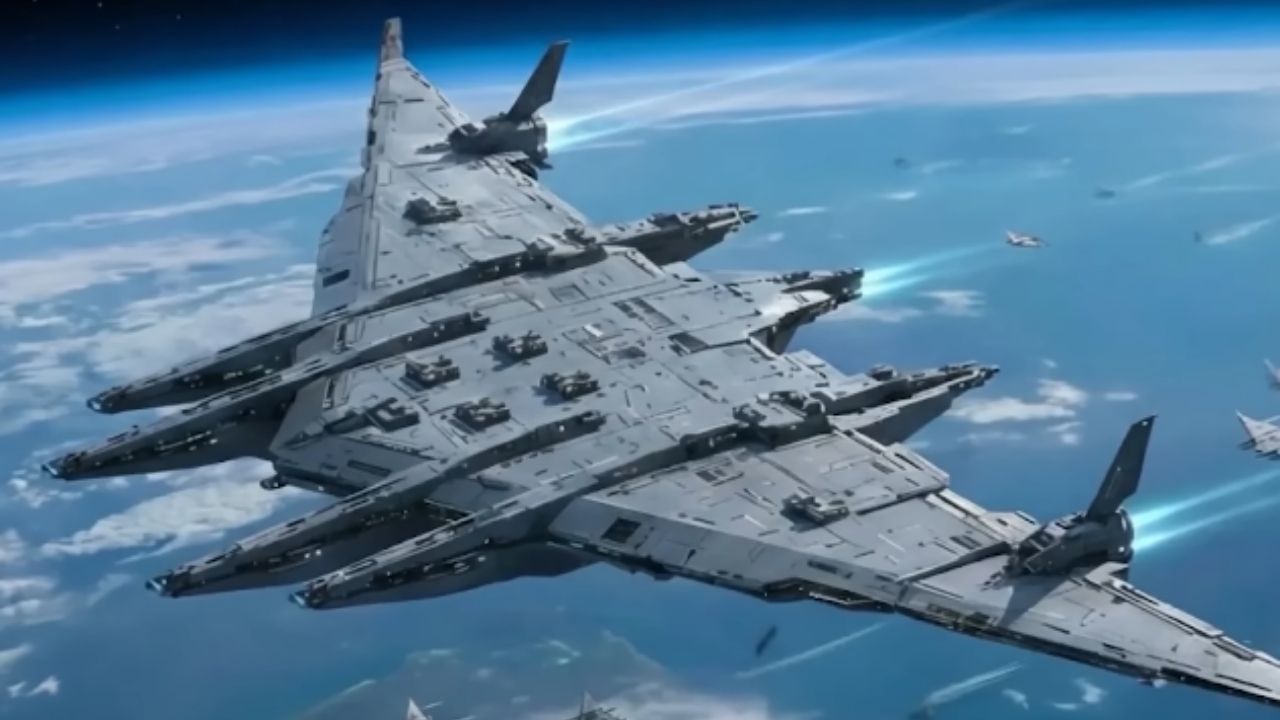
The Luanniao was presented as a kind of air and space aircraft carrier, capable of taking the concept of force projection to a layer above conventional air traffic. Instead of launching planes from the sea, the structure would be near the edge of the atmosphere.
-
Brazilian mechanic invents simple solar lamp using water and chlorine in a PET bottle, providing up to 60 watts of light during the day

-
Swiss glaciers melting fast enough to fill an Olympic pool every 6 seconds, France confirms 3,700 heatwave deaths, and WMO predicts strong El Niño intensifying extremes until 2027

-
Sudden Sea Recession in São Paulo Sparks Tsunami Alert and Online Debate on Giant Wave Risks in Brazil

-
China Launches World’s First 307-Meter Floating Wind Platform to Supply Oil Rigs, Aiming to Cut 35,000 Tons of CO2 Annually


The proposal draws attention precisely for mixing military ambition, futuristic image, and technical doubt. The project is not described as a ready aircraft, but as a long-term strategic vision, associated with the advancement of wars to environments above traditional air.
According to a report by the Global Times based on Xinhua, the Luanniao would be about 242 meters long, with an approximate wingspan of 684 meters and an estimated weight of 120 thousand tons. The comparison used to size the concept is the USS Gerald Ford, the largest aircraft carrier currently in operation.
The difference is that, in this case, the giant would not remain in the ocean. It would be imagined as a platform suspended at high altitude, where it could transport unmanned aircraft and weaponry designed for extremely rapid attacks.
Luanniao’s Numbers Create Impact but Also Raise Suspicion
The data attributed to the project are so large that they explain part of the skepticism. A 120,000-ton structure flying or sustained in the stratosphere would require propulsion, energy, cooling, and stability solutions that are not yet part of the known operational reality.
This is the point that separates concept from execution. One thing is to release images and numbers to show technological ambition; another is to build, launch, maintain, and control equipment of this size outside normal flight conditions.
The challenge becomes even more evident when comparing the Luanniao with real aircraft. The Antonov An-225, cited as one of the largest aircraft ever built, had a maximum takeoff weight of about 640 tons, far below the scale attributed to the Chinese project.
For this reason, experts and observers tend to see the space aircraft carrier more as a strategic announcement than as a machine ready to come off the drawing board. Even a modular construction would require a large number of launches and technologies not yet demonstrated.
Drones and Hypersonic Missiles Form the Core of the Proposal
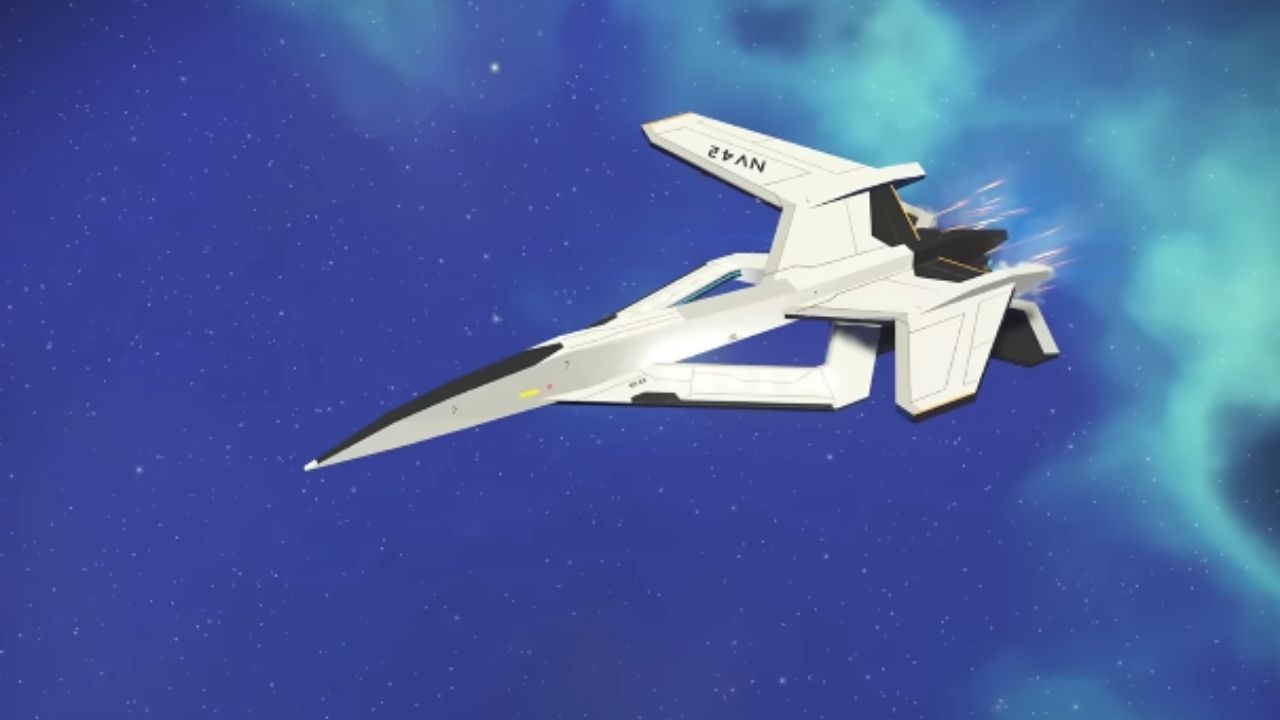
The interior of the Luanniao was described as capable of housing about 88 unmanned fighters, called Xuan. These drones would be designed for stealth, high maneuverability, and use in attack missions, functioning as the operational arm of the platform.
The proposal also includes hypersonic missiles capable of hitting targets within the atmosphere and even in low Earth orbit, according to the information attributed to the concept. In practice, the idea would be to create fast attacks, difficult to detect and even harder to intercept.
The design of the drones is presented with a delta wing, absence of tail, and air intakes positioned to reduce signature. There is also reference to the use of scramjet engines and heat-resistant materials, as solutions associated with very high speeds.
Even so, everything remains in the conceptual field. There is no confirmation that these drones, armaments, and systems are operational within such a platform. What exists is a proposal that broadens the debate on how China envisions the future of aerial and space warfare.
The biggest obstacle is the technology needed to keep everything airborne
To operate at about 30 kilometers altitude, the Luanniao would not simply be in orbit. It would need to sustain flight or remain in a region of thin air, requiring continuous propulsion and an energy system capable of powering the entire structure.
The problem is not just lifting weight, but keeping the set functioning for an extended period. This includes temperature control, structural resistance, protection against debris, stability at altitude, and the ability to launch or receive drones in extreme conditions.
Another challenge would be assembling something of this scale. Current rockets, even the most powerful and reusable ones, were not made to place a 120,000-ton structure into space simply. The modular alternative would also bring enormous complexity.
Therefore, the stratospheric aircraft carrier is seen by many as an image of the future rather than a real timeline. It serves to show technological direction but still depends on advances that could take decades or simply never materialize.
Intimidation may be a central part of the Chinese message
A possible interpretation is that the Luanniao was not presented just to showcase engineering but to provoke a psychological effect. Even without leaving the drawing board, a concept of this size can generate concern, debate, and pressure on rival countries.
In military competition, perception is also power. By disclosing a project of such an unusual scale, Beijing signals that it is thinking beyond the traditional limits of ships, planes, and satellites, placing the stratosphere at the center of strategic imagination.
This type of move is reminiscent of technological prestige disputes from other times, when grandiose projects served both for innovation and demonstration of strength. The message does not need to result in immediate construction to influence the calculation of adversaries.
In this context, the conceptual aircraft carrier can function as a tool of symbolic pressure. It suggests ambition, creates uncertainty, and positions China as a country interested in dominating discussions about the next military frontier.
Zone between airspace and outer space increases legal debate
The concept also raises a delicate question: where does sovereign airspace end and outer space begin? Operating at about 30 kilometers altitude places the platform in a range that challenges traditional interpretations of defense, sovereignty, and militarization.
The Outer Space Treaty of 1967 was created to limit the militarization of space, but it did not clearly anticipate scenarios involving space drones, hypersonic missiles, and armed platforms in the stratosphere. This void opens a legal gray area.
Projects like the Luanniao make this discussion more urgent because they mix elements of military aviation, space technology, and advanced weaponry. The difficulty lies in defining which rules would apply to equipment that is not a ship, not a common satellite, and not a conventional airplane.
Even if the concept is never built, it pressures governments and international organizations to think about new limits. The war of the future, should it advance to these layers, may require rules that today still seem incomplete.
Chinese space advancements make the discussion more serious


Skepticism about the Luanniao does not erase the fact that China has already demonstrated significant space capability in recent years. An example cited in the debate is the Chang’e 6 mission, which in 2024 brought samples from the far side of the Moon, an unprecedented feat until then.
This type of advancement shows mastery of complex technologies, such as landing in little-explored regions, communication with the lunar far side, and safe return of material to Earth. Therefore, even seemingly exaggerated projects cannot be dismissed merely as fantasy.
The difference is that a lunar mission, no matter how complex, does not mean immediate capability to create a 120,000-ton military platform in the stratosphere. They are different challenges, with distinct scales and requirements.
Even so, the disclosure of the conceptual aircraft carrier reinforces a message: space and the upper layers of the atmosphere are already part of the strategic planning of major powers. The dispute is no longer restricted to land, sea, and traditional air.
Between propaganda, concept, and military future, the Luanniao has already fulfilled a role
The Luanniao may never leave the drawing board, but it has already achieved an important effect: it placed the possibility of an aircraft carrier off the sea at the center of a global conversation about technology, defense, and science fiction. The image is powerful because it seems impossible, but it touches on real fears.
The project acts as a provocation about how far war can go. If today it seems absurd to imagine a mobile military base in the stratosphere, many current technologies also seemed distant before becoming part of reality.
Caution, however, is essential. There is no evidence of construction underway, no concrete timeline for operation, nor public demonstration of a technology capable of supporting a structure of this magnitude. What exists is a grand concept, with strategic impact and many unanswered questions.
And you, do you think this space aircraft carrier is just intimidation and military science fiction, or could it be the first sign of a new arms race beyond Earth? Leave your opinion in the comments and say whether this future seems inevitable or exaggerated.







It will happen, but when?, that we don’t know. China has the technology to pull it off. They have their own space station, if they could build a space station, they could build this massive structure also.