






 Portuguese
  Spanish
  3 min of reading
  3 comments


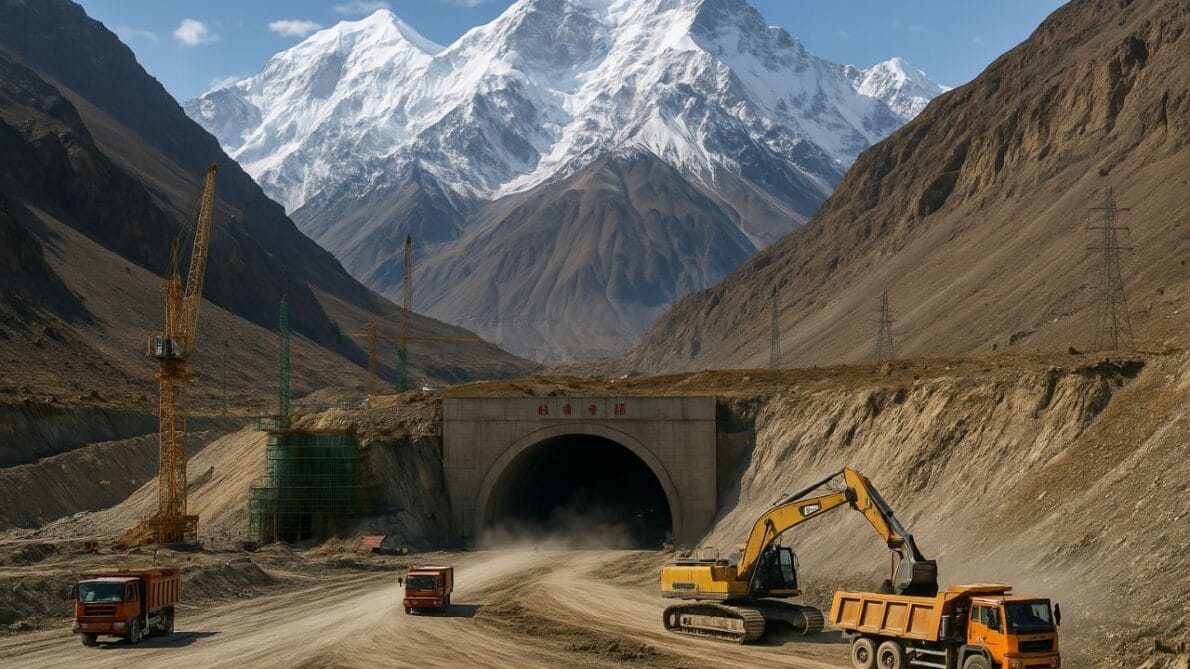


Historical Work Under The Highest Mountain In The World Marks Strategic Advance In Infrastructure Construction Between China And Pakistan
China has begun the construction of a £896 million tunnel beneath the Himalayan mountain range, in one of the most challenging regions on the planet, aiming to connect its territory to Pakistan and enhance economic and logistical integration in Asia.
In yet another chapter of the race for influence in Asia, China has initiated one of the boldest engineering projects of today: the construction of a highly complex tunnel under the Himalayan mountain range, as reported by Express.co.uk. The infrastructure is part of the strategic project known as the China-Pakistan Economic Corridor (CPEC), which aims to improve trade and logistical flows between the two countries, also strengthening the New Silk Road.
The construction traverses one of the highest and most inhospitable regions of the world, facing challenges such as unstable terrain, extreme weather, and seismic risk. Still, the project progresses with cutting-edge technologies to ensure safety, efficiency, and durability. The initiative has an estimated value of £896 million and represents not only an engineering feat but also a significant geopolitical move to expand China’s reach in the region.
-
Bolivian Female Construction Workers Form Association to Combat Discrimination and 38% Pay Gap in the Industry

-
Near Amsterdam, residents buy land and discover they must also build streets, manage drainage, handle waste, and grow food on half their plot.
-
Brazil’s WEG to Open New Factory in China by 2027, Expanding Production of Large Rotating Electric Machines and Low to Medium Voltage Motors in Rugao

-
Chinese Shipyard Secures $1 Billion in Orders for Low-Carbon Container Ships Amid Global Fleet Renewal Efforts


Construction and Strategy: Project Transcends Technical and Political Boundaries

The tunnel beneath the Himalayas is not just a physical construction: it is also a geopolitical bridge between two strategic allies. The CPEC, the main axis of the project, has already received billions in investments for roads, pipelines, railways, and energy. The new tunnel reinforces this commitment and promises to shorten trade routes, reduce logistical costs, and accelerate the transport of goods between China and Pakistan’s ports on the Arabian Sea.
Furthermore, the construction of the project strengthens China’s presence in an area close to the disputed Kashmir, expanding its zone of influence at a time of rising tensions with the West and neighboring India. The infrastructure, therefore, serves a dual purpose: promotes development and acts as a diplomatic tool.
Impact On Trade And Regional Development
According to experts cited by Express.co.uk, the tunnel could profoundly transform the connectivity landscape in Central Asia, especially for historically isolated regions. Bilateral trade is expected to become more agile and secure, allowing for a significant expansion of economic integration. The project could also benefit local communities through job creation, tourism stimulus, and access to essential services.
With a completion forecast within the next few years, the megaproject is expected to become one of the largest showcases of modern engineering and a symbol of China’s prowess in major infrastructure works.





Lá não tem deputado que ganha casa, auxílio paletó, auxílio moradia ganhando apartamento, auxílio viagem, auxílio disso auxílio daquilo, carro com motorista e uma infinidade de benefícios que eles votam pra eles mesmos terem tudo isso
Terras raras….o que tem dentro das montanhas …e ao mesmo tempo integrar.
Seria bom contratar eles, para fazer o túnel , Santos Guarujá ficava pronto do dia, para noite