Portuguese
  Spanish


In The Mountainous Heart Of China, A Megastructure Redefines The Limits Of Engineering And River Navigation By Uniting Clean Energy Generation, Technological Innovation, And An Impressive Ship Lift That Crosses One Of The Most Challenging Terrains In The Country.
A monumental hydroelectric power plant transforms the course of a mountainous river and revolutionizes cargo transportation and energy in the Southwest of China
In the mountainous regions of Southwest China, an engineering feat impresses the world by making possible something that once seemed unthinkable: navigating vessels over mountains.
The Goupitan Hydroelectric Power Plant, built on the Wu River, is one of the most sophisticated dams in China and a landmark of modern engineering.
-
Billionaire says the most valuable skill will help overcome job elimination caused by AI, following Bill Gates’ fears

-
A Dutchman created a ‘box’ that makes trees grow in the desert almost without water and without irrigation: the invention has already brought seedlings to dozens of countries and achieves up to 90% survival where common planting did not exceed 10%.

-
Abandoned warehouse hid a giant collection of rare computers, with over 2,000 artifacts from the 1930s to the 1980s.
-
She spent 73 years breathing inside an iron lung, survived the aftereffects of polio, and became the last woman in the United States dependent on the equipment before dying at 78 years old.





With an installed capacity of 3,000 megawatts, equivalent to the energy consumption of millions of households, the plant plays a vital role in electricity generation while also radically transforming the way vessels cross this rugged stretch of Chinese territory.
A River Among Mountains
The Wu River, a tributary of the Yangtze River, cuts through one of the most mountainous and remote areas of China, traversing deep gorges and steep valleys.
The geographical challenge of the region has always been an obstacle for river transportation, with rapids and elevation changes that hindered the constant traffic of large vessels.
The construction of the Goupitan Dam, initiated in 2005 and completed in 2011, was conceived not only as a traditional hydroelectric power plant but also as a strategic component of the national energy and logistics integration plan.
An Uncommon Ship Lift
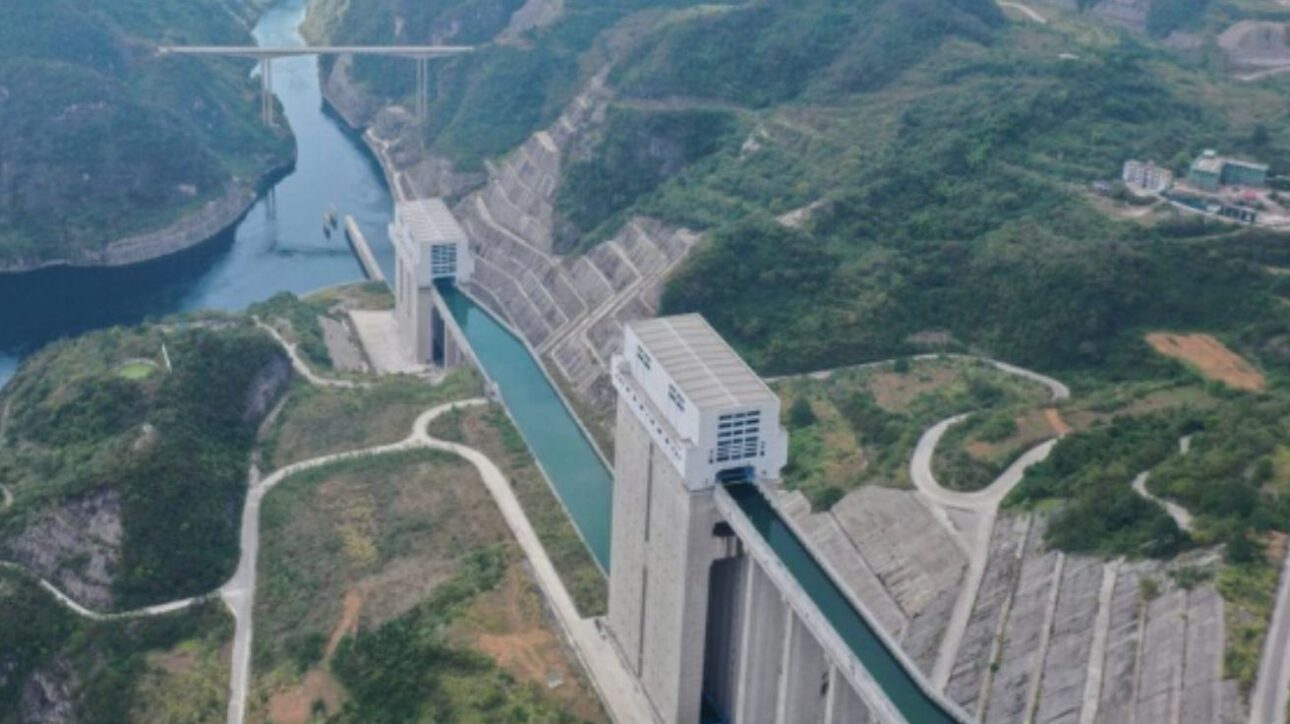
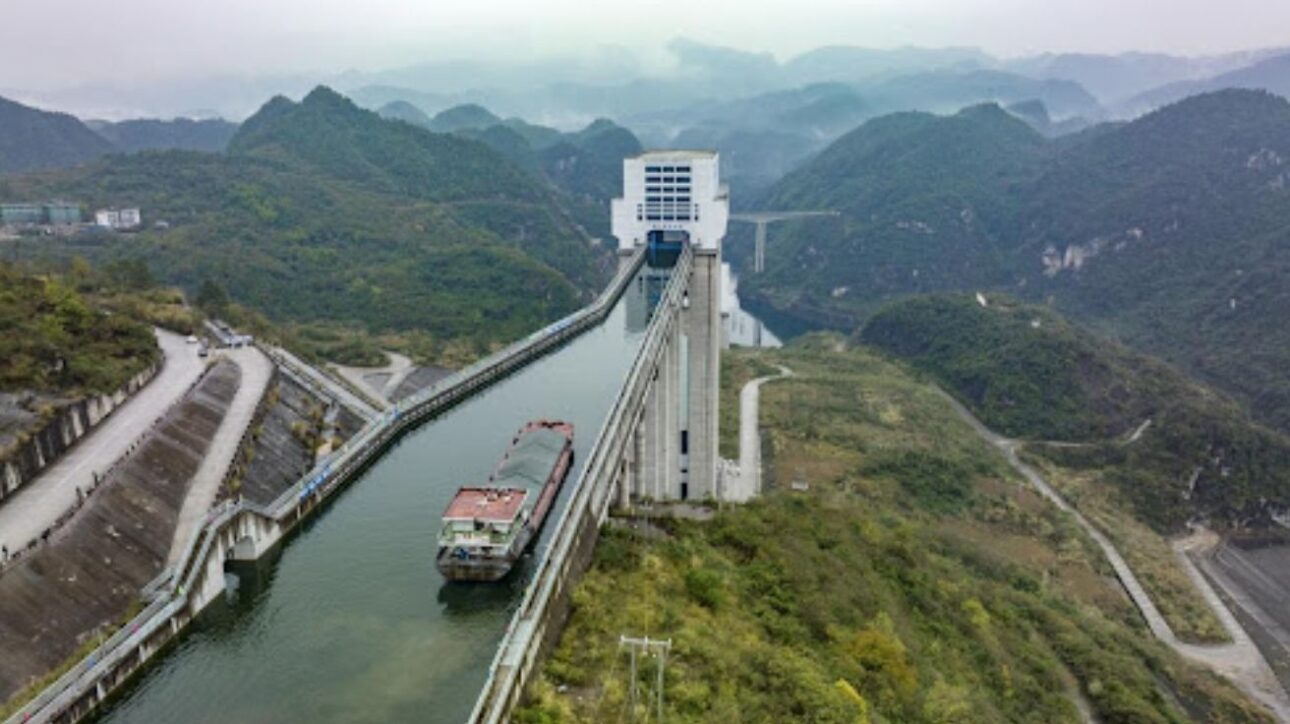
Among the most curious elements of the hydroelectric complex is the ship lift.
It is a gigantic structure with cutting-edge technology that allows vessels to be literally lifted more than 100 meters in height, overcoming the elevation changes caused by the damming of the river.
This system, known as a “vertical ship lift,” is an alternative to traditional lock systems.
Unlike multiple gates that require time and water consumption to transport vessels between different levels, the Goupitan lift operates quickly and accurately.
With the capacity to move vessels of up to 500 tons, the lift ensures a continuous flow of river transport, even in mountainous areas.
The technology employed on site resembles that used in large industrial elevators, but applied on an unprecedented scale for the waterway sector.
Energy For The East
The Goupitan Hydroelectric Power Plant is one of the pillars of the “West to East Power Transmission Project.”
This government program’s main objective is to transport energy from less populated regions with abundant natural resources, such as Southwest China, to the large industrial and urban centers of the East, such as Shanghai, Guangzhou, and Shenzhen.
The energy generated by the plant travels thousands of kilometers through ultra-high voltage transmission lines, a technological feat that has transformed the country’s energy matrix.
In addition to expanding the supply of clean energy, the project reduces dependence on coal and other highly polluting sources.
Regional Impact And Integration
The presence of the dam has profoundly altered the dynamics of the region where it was installed.
Cities like Zunyi in Guizhou now have easier access to river transport, which has boosted local trade, facilitated the circulation of goods, and attracted infrastructure investments.
Before the dam’s construction, many of these communities were isolated or depended solely on winding and time-consuming roads.
With the elevation of the river level in certain stretches, navigation has become continuous for hundreds of kilometers, connecting previously disconnected areas.
At the same time, compensation measures and relocation of riverside populations were adopted to mitigate the project’s social impacts.
According to Chinese authorities, thousands of people were relocated with subsidies, new housing, and job retraining.
Engineering In Unstable Terrain
Building a structure of this magnitude in geologically complex terrain was one of the greatest challenges faced by engineers.
The upper reaches of the Wu River are characterized by unstable soils, high humidity, frequent torrential rains, and landslide risks.
To ensure the dam’s stability and navigation safety, a series of geotechnical studies were conducted over the years.
Reinforcement structures on the slopes, advanced drainage systems, and real-time seismic monitoring were integrated into the project.
Furthermore, the actual construction of the dam had to be adapted to the topography, utilizing roller compacted concrete (RCC) and modular construction techniques that reduce execution time without compromising structural strength.
Chinese Technology In The Spotlight
The Goupitan Hydroelectric Power Plant is also a symbol of China’s technological advancement in building large-scale works.
All design, planning, and execution of the dam were led by Chinese companies and research institutes, with no direct dependence on foreign technology.
The ship lift system, for example, was developed locally, with sensors, motors, and metal structures built by companies from the country’s naval and aerospace sectors.
For engineering specialists, the project is a demonstration of China’s ability to effectively integrate energy, logistical, and environmental solutions.
Impressive Facts
- The Goupitan reservoir covers an area of over 50 km² and stores billions of cubic meters of water.
- The ship lift has a height equivalent to a 30-story building and is one of the largest in the world.
- The construction involved over 20,000 direct workers over six years.
- Real-time sensors monitor water levels, structural vibrations, and earth movements 24 hours a day.
- During the project execution, more than 10,000 people were resettled, with support programs coordinated by the Chinese government.
- Since it began operations, the navigation system has allowed significant savings in transporting agricultural and industrial goods between inland provinces and major coastal centers.
With a mix of technical boldness, strategic planning, and respect for local environmental and geological conditions, specialists consider the Goupitan Hydroelectric Power Plant a symbol of what can be achieved with high-level engineering.