Portuguese
  Spanish


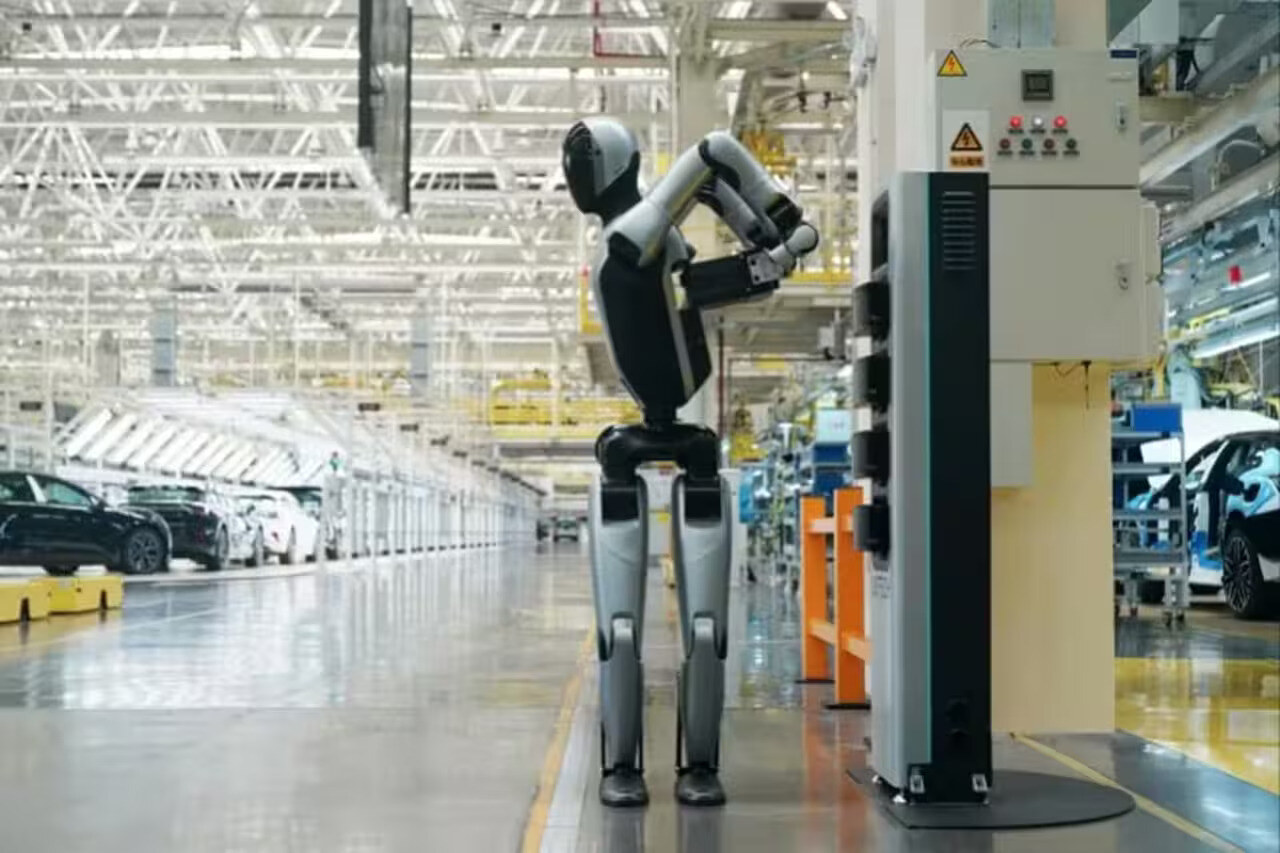

Walker S2, UBTech Robot, Operates Without Breaks While Changing Its Batteries by Itself and Making Decisions with Cloud-Based Artificial Intelligence
A humanoid robot developed by UBTech Robotics from China has caught attention for its impressive autonomy. Named Walker S2, it can change its own batteries without human assistance, allowing it to operate 24 hours a day.
The operation is simple and efficient: it walks to the charging station, removes the depleted battery from its back, and connects a new one. The process takes just three minutes.
The battery swap is done with a connector similar to that of USB drives. This facilitates replacement and handling. Additionally, the robot can switch between two internal batteries.
-
Entrepreneur Secures $15 Million to Transform Steel Mill Waste into Concrete Material, Builds Demo Plant in the U.S. with a Goal of 10,000 Tons Annually

-
World’s Most Powerful X-Ray Laser, 3.4 km Long and Emitting 27,000 Flashes Per Second, Unveils Atoms in Motion in Germany

-
Former SpaceX Rocket Engineer Develops Fast-Growing Grass Panels to Replace Wood in Construction, Secures $47.5 Million Funding
-
A Simple Finger Movement Gains Attention for Its Potential Role in Alzheimer’s Prevention



If one is weak, it selects the other that still has enough charge. This decision is made autonomously, based on the available energy and the task that will be performed next.
This autonomy is possible thanks to the “BrainNet” project used by UBTech. It is a cloud-based artificial intelligence system that allows the robot to make complex decisions.
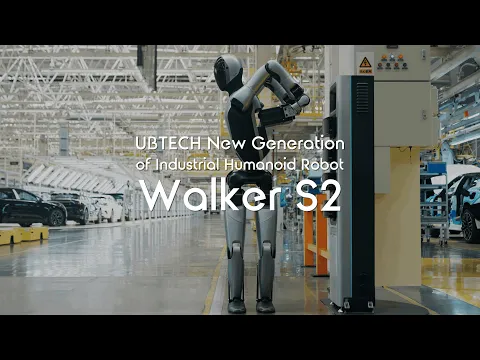

With this type of control, the Walker S2 can integrate into production lines and coordinate group tasks with other robots.
The BrainNet functions as a collective brain. Several connected robots share decisions and adapt to each other.
They are able to plan tasks, act together, and perform functions in industrial environments efficiently.
China has stood out globally in the field of robotics. According to Moody’s, an American company that assesses financial risks, the country has managed to combine cutting-edge artificial intelligence with large-scale, low-cost production. This model makes China a leader in the development of autonomous robots.
Meanwhile, Morgan Stanley, another giant in the financial sector, pointed out that about half of the companies developing humanoid robots in the world are located in China.
Just this year, six Chinese companies have announced plans to produce more than a thousand humanoid robots each.
China’s advancement in this sector places the country in a strategic position in the global technological landscape.
The combination of artificial intelligence, autonomy, and mass production capability has the potential to transform how machines interact with human labor.
The case of the Walker S2 shows that robots are not only taking on human-like forms but also gaining independent decision-making capabilities and operating without interruptions. A change that could impact entire industries.
With information from Galileu Magazine.