






 Portuguese
  Spanish
  4 min of reading
  59 comments


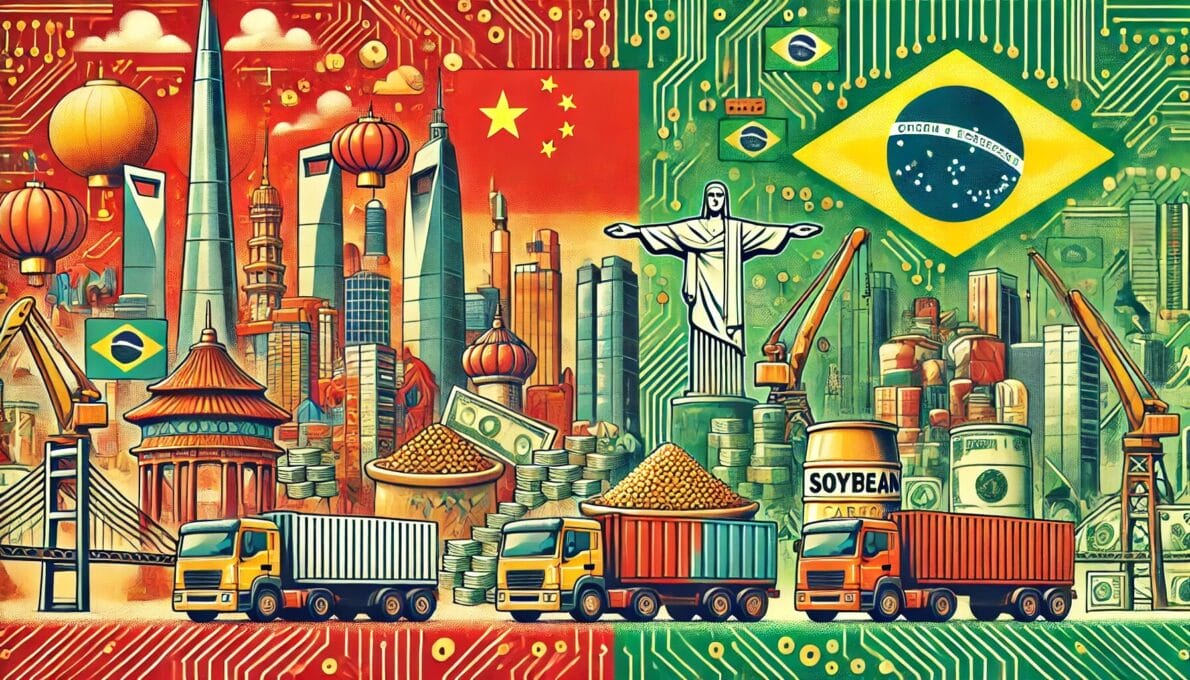

With a Groundbreaking Proposal, China Could Invest Almost 1 Trillion Yuan in Its Citizens’ Consumption. The Plan Advocated by Li Daokui Aims to Break the Low Demand Cycle, Drawing Inspiration from Brazilian Consumer Mindset.
A groundbreaking movement promises to shake up the global economy and make the world rethink its growth strategies:
China Could Be About to Inject 1 Trillion Yuan Directly into Consumers’ Pockets, something unprecedented.
The support for this proposal comes from respected economist Li Daokui, who believes that the country needs a radical approach to combat economic slowdown.
-
Ypê expands exchange and refund of products suspended by Anvisa, but consumers still need to check final batch 1, manufacturing date, and category before using laundry detergents, dishwashers, and disinfectants.

-
Son of a Chinese immigrant who sold tea in the countryside of São Paulo, Zhang Ye almost went bankrupt in 2021 and today, at 28 years old, claims to earn 1 million reais per day and has become the number 1 on TikTok Shop in Latin America.

-
Hidden in Shenzhen, a Chinese company claims to ship over 20,000 orders a day and promises to turn any dropshipping beginner into a respected brand for just 20 dollars.
-
Brazil has 8.4 million illiterates and more than half live in the Northeast, where 10.6% of people cannot read or write a simple note, compared to 2.3% in the Southeast, according to the Pnad Contínua Educação 2025 from IBGE.



But it doesn’t stop there: Brazil is at the center of this revolution and serves as an inspiration for the Chinese.
According to experts, this proposal — which seemed unthinkable — is already gaining traction in high power circles in China.
The idea, advocated by Daokui, suggests that the Chinese government subsidize part of consumer spending during Golden Week, the popular one-week holiday in October.
This period is crucial for Chinese commerce, and the financial impact of this measure could transcend borders and inspire other nations.
The Proposal by Li Daokui
Li’s proposal, according to China Daily and People’s Daily, is simple yet powerful. He suggests that the government would subsidize up to 20% of purchases made during Golden Week.
That is, for every 1,000 Yuan spent, 200 would be paid by the Chinese government.
With this, the intention is to stimulate direct consumption, breaking the low demand cycle that has dragged the economy to a slow growth pace.
“Reality is the best argument,”Li Daokui argues
For the economist, the current economic crisis requires a more consumption-focused approach, something that has always been less prioritized by China compared to supply.
“We always believed that the economy should be stimulated by supply, not by consumption,” he states.
However, with today’s critical situation, Li believes that consumption is the main impediment to growth, something that needs to change with the new approach.
Li also points to internal barriers that inhibit consumption, such as restrictions on motorcycle use in cities like Beijing.
These regulations, according to him, are outdated and stifle the domestic market. His vision is that removing such barriers could open new consumption opportunities.
The Brazilian Inspiration
Interestingly, Brazil emerges as a reference in this transformation proposed by the economist.
During a recent visit to the country, Li Daokui observed Brazilian consumer behavior, which, according to him, shows more confidence when spending, even in times of uncertainty.
“We really admire Brazilian consumers,” he praises, comparing this mindset to the caution of the Chinese, who prioritize saving for future security.
In addition to consumption behavior, Li mentions that Brazil’s high urbanization rate, above 80%, is a crucial factor for stimulating consumption.
In China, only about 50% of people working in urban areas live in those areas, which impacts local consumption.
He suggests that policies promoting urban migration could benefit the Chinese economy.
The Pressure of Protectionism
Despite the advances, China faces external challenges, such as trade restrictions imposed by the United States, Europe, and recently, Brazil itself.
Li Daokui believes that these measures, while problematic, do not decrease demand for Chinese products, especially in the North American market.
He emphasizes that, even with the expected slowdown in Western economies, internal consumption should be strengthened as a protective barrier.
For Brazil, he suggests that Beijing and Brasília negotiate ways to reduce bilateral protectionism.
The possibility of establishing Chinese factories in Brazil is a point of optimism, especially in the context of the Belt and Road Initiative, which Li sees as an opportunity for joint economic expansion.
“It’s a win-win agreement,” he emphasizes, highlighting the potential benefits of closer commercial integration between the countries.
Future of Domestic Consumption in China
As global protectionism rises and trade tensions escalate, China faces a crucial decision.
Li Daokui’s plan could be the key to redirecting the economy toward domestic consumption, reducing reliance on external markets.
The big question that remains is whether this measure will be sufficient to curb the economic slowdown that concerns both the government and citizens.
Now, the question remains: do you believe that Brazil should follow China’s example and implement a plan to directly help Brazilians pay for their consumption items?





Concordo com esta medida.
A proposta do li é boa ,no Brasil o maior problema são os juros abusivos sobre tudo oque os brasileiros consomem, se o governo cortar metade dos juros,todos os brasileiros teriam mais chances de comprar mais coisas pagando um preço razoável e ninguém teria que fechar as portas dos seus comércios por não aguentar pagar os altos impostos.
Está na cara que isso não é tao saudável, como parece ser. O Brasil só precisa andar nos trilhos para ser alto sustentável e pagar suas dívidas.