Portuguese
  Spanish


China Increases Pressure on the U.S. by Avoiding American Soybeans and Strengthening Purchases from Brazil, While Trade Dispute Merges with Technological Tensions and Leaves U.S. Farmers on Alert Amid Tariffs and Uncertainties.
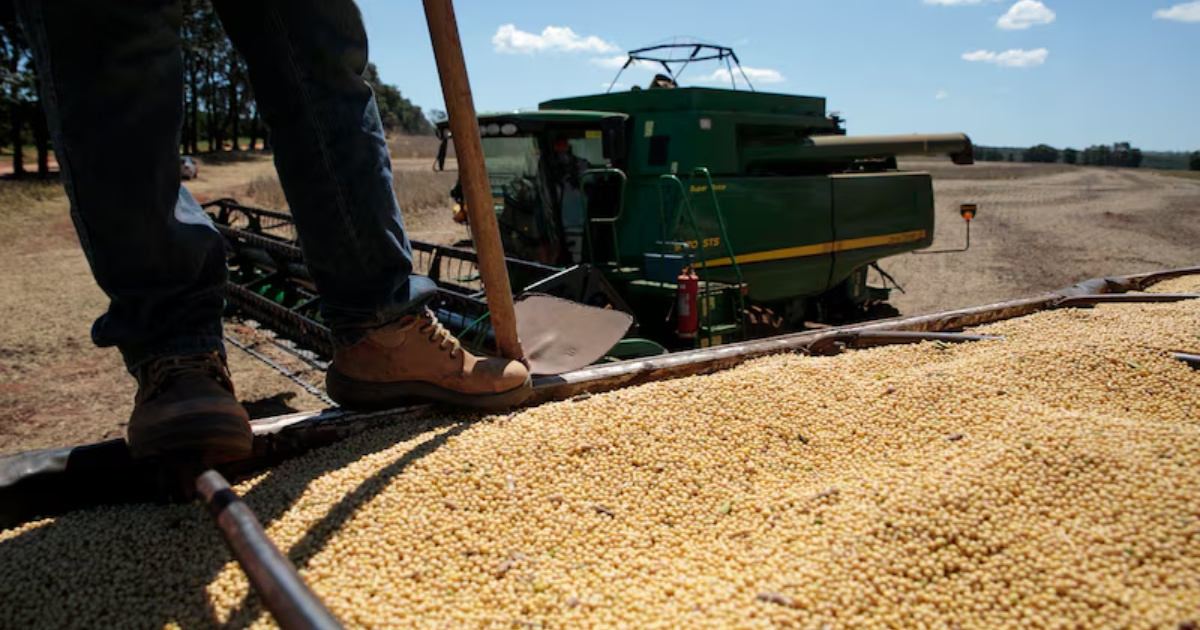
The China has begun a new export season without booking any cargo of soybeans from the United States, something unprecedented since at least the late 1990s.
The move, supported by comfortable domestic stocks and advance purchases in Brazil, puts agriculture back at the center of the trade dispute between Beijing and Washington, according to a report published by Bloomberg on Monday (22).
Soybeans Become Central and Brazil Takes Center Stage
Traditionally, Chinese traders turn to American grain between October and February, before the massive arrival of the South American harvest.
-
Chinese E-commerce Giant Predicts Robots Will Replace 700,000 Delivery Workers as Autonomous Vehicles Expand to 200 Cities, Offering Training for Workers to Maintain Their Machines

-
Trump warns Europe with 100% tariff threat on digital tax, potentially impacting wine and trade agreements

-
As Homeownership Becomes Unattainable in Brazil, Japanese Municipalities Offer Abandoned Houses for as Low as $3,000 to Revitalize Aging, Emptying Cities
-
Job Market in 2026 Welcomes High School Graduates: Logistics, Retail, and Construction Hire Without College Degrees; Quick Courses in Forklifting, Building Electricity, and Welding Boost Salary Prospects


This year, however, orders are focused on Brazil and other suppliers in the region, reducing the urgency to contract in the U.S.
Official U.S. data from mid-September showed no new sales to China at the start of the 2025/26 cycle, signaling that the window that usually favors American shipments has lost momentum.
In addition to Brazilian supply, Chinese importers have expanded their safety cushion.
Processors, pig farmers, and feed manufacturers have bolstered stocks throughout the year, while state reserves provide an additional buffer.
The result is supply predictability until the end of 2025, with less exposure to price fluctuations in the U.S. and tariff risks.
Trade Under Tension and Tariffs Remain on the Radar
The backdrop remains contentious.
The retaliatory tariffs applied to U.S. soybeans make the product less competitive for Chinese buyers.
Even with currency fluctuations and export premiums, the effective rate above 20% helps shift demand to the South America.
Although there are some sporadic exemptions, the level of uncertainty about whether these exceptions will be maintained supports the strategy of avoiding American contracts in the short term.
In the meantime, U.S. farmers are accumulating product with pressured prices.
Industry associations report a risk of “a commercial and financial cliff,” demand predictability, and request the removal of tariffs to reopen the Chinese market.
The importance of China is direct: last year, the Asian country absorbed about one-fifth of U.S. soybean imports by value, totaling over US$ 12 billion, and historically accounts for more than half of the export revenue from the U.S. soybean complex, according to Bloomberg‘s analysis.
Fragile Truce: Phone Call Between Leaders and New Fronts in Tech
Government talks have returned to the forefront.
On September 19, President Xi Jinping and President Donald Trump had a call to discuss trade, technology, and the impasse surrounding TikTok, amid negotiations that also involve semiconductors and critical supply chains.
Although the call was described as productive by both sides, there was no announcement of a comprehensive agreement, and developments were left for in-person meetings in the coming weeks.
On the regulatory front, Beijing ended an antitrust investigation into the dominance of Android by Google, a gesture interpreted by analysts as an attempt to reduce noise before new steps in trade negotiations.
In parallel, Chinese authorities opened a preliminary investigation into Nvidia on suspicions of violating antitrust law.
The Bloomberg newspaper also pointed out that the semiconductor issue remains closely tied to the agricultural agenda, reinforcing the notion that soybeans and chips are intertwined in the negotiation table.
Chinese Strategy: Calibrated Caution and Political Signal
For experts, the decline in purchases from American origins combines planning and messaging.
The consulting firm Even Pay, from Trivium China, assesses that the current behavior reflects lessons learned from the first trade war and the political environment:
“Buyers respond not only to the tariffs that remain but also to the extremely high level of uncertainty about the short term and the very clear signals that Beijing does not want purchases to happen without official approval,” she said in an interview with Bloomberg.
The market read is that, with comfortable stocks and contracts closed in Brazil, Beijing can afford to wait.
If tensions ease and there is tariff clarity, demand for American soybeans is likely to reappear.
“If an agreement is reached, there will surely be some level of demand for U.S. soybeans from the Chinese buyers,” said Even Pay.
“The issue is the trade war, not the total lack of demand.”
Impact on the U.S. and Sector Expectations
In producing states, the absence of business with China weighs on finances and morale.
Cooperatives and unions warn of squeezed margins and risks of further price drops for meal and soybean oil if supply becomes constrained.
In a year of abundant harvest, the loss of the world’s main customer resonates in local bases, freight, and premiums at Gulf and Pacific Northwest ports.
The assessment of former diplomat Andy Rothman, now at the forefront of Sinology, is that agriculture will remain a sensitive point in bilateral conversations, but without major breakthroughs over the phone.
According to him, “impossible” targets, such as the quadrupling of U.S. purchases by China, are likely to give way to more realistic commitments if an understanding emerges.
Nevertheless, representatives of the U.S. agricultural sector are pressing the White House for a solution that eases tariffs and restores predictability to the sales calendar.
Risks on the Horizon: Weather, Prices, and Excess Supply
The Chinese decision to prioritize South American origins is not without setbacks.
A crop failure in Brazil or Argentina could tighten supply and reopen space for American shipments.
On the other hand, if a political agreement unlocks purchases in the U.S. while Chinese domestic stocks are still high, processors fear an excess supply and falling internal prices for meal, affecting storage and hedging strategies built over the past months.
Among procurement managers in China, the watchword is caution.
Some crushers prefer to move month by month, adjusting volumes according to margins and logistical costs.
Others are eyeing arbitrage opportunities between origins, especially when premiums in Brazil fluctuate with the pace of shipments.
Without visibility on tariffs and without a clear political signal, the consensus is to avoid commitments that could be reversed by a sudden announcement.