






 Portuguese
  Spanish


China Declares Its Stealth Drones Fly Three Times Further and Consume 50% Less Energy Than US Models, Strengthening Its Position in the Military Technology Race
A new study indicates that China’s latest generation of stealth drones is more efficient than the models being developed in the United States. According to a recently published article, these aircraft use half the energy and have three times the durability compared to US prototypes.
The report from the South China Morning Post (SCMP) reveals that China is advanced in developing dual synthetic stealth jets.
These aircraft eliminate traditional control surfaces, such as flaps and tail fins, to reduce radar reflections and thermal signatures. Tests of these aircraft have already been conducted in real conditions. Meanwhile, the United States remains in the conceptual phase of the project.
-
Scientists Develop System to Turn Seawater into Drinking Water Using Only Sunlight, No Electricity Needed

-
Brazilians Spend Over 52 Years Online, Leading Global Internet Usage Rankings Ahead of Mexico and South Korea

-
German Printing Machine Manufacturer Dominates Over 40% of Global Offset Press Market

-
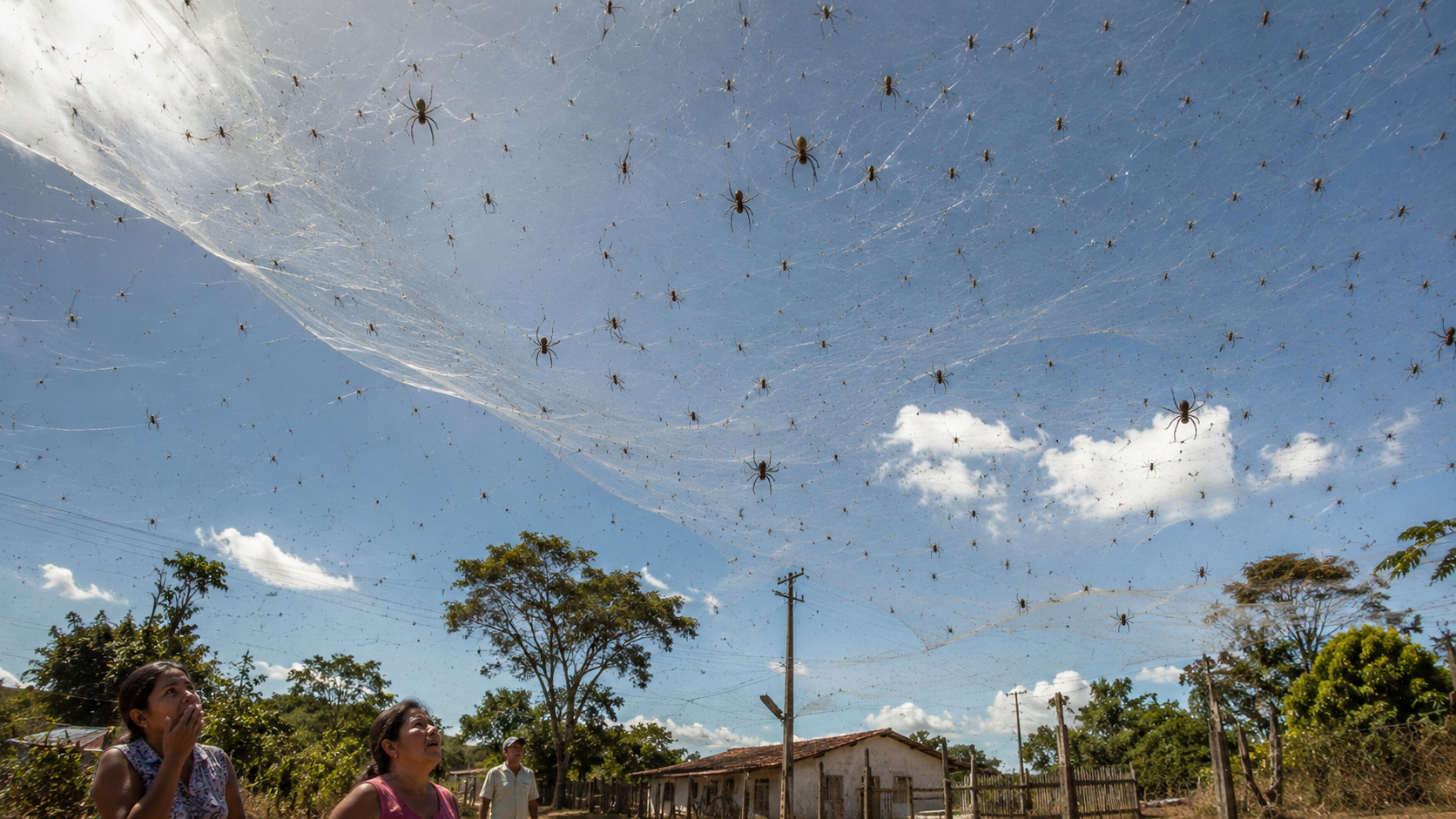
Rare Phenomenon in Brazil: Hundreds of Spiders Appear Suspended in the Sky, Astonishing Residents with Giant Webs


Fluidic Control Technology
China’s stealth drones replace conventional controls with fluidic systems. Instead of mechanical surfaces, they use precise air pulses to control flight direction. This approach increases discretion against radars and improves fuel efficiency.
The SCMP highlights that the Pentagon identified the need for this technology early on. However, DARPA (Defense Advanced Research Projects Agency) only officially approved its X-65 program to develop and validate these systems in 2023.
DARPA has a history of leading defense innovations, such as stealth jets and GPS. However, the study points out that China has progressed faster in the area of fluidic systems, also known as CRANE (Control of Revolutionary Aircraft with New Effectors).
Chinese Advancement in Research
The article by Professor Luo Zhenbing from the National University of Defense Technology of China (NUDT) claims that Chinese systems are years ahead of American stealth jet and drone projects.
According to the publication in the journal Acta Aeronautica et Astronautica Sinica, China had already tested a CRANE aircraft in 2021. Meanwhile, the US was still at the conceptual stage.
The study details that China’s systems use DSJ technology (dual synthetic jet), which generates air pulses through the vibration of ceramic plates in compartments in the wings.
The DSJ units operate with two chambers pulsating alternately. This method reduces component stress and prevents failures. In contrast, DARPA’s designs use single air chambers, which are more prone to structural failures.
Chinese Stealth Drones: Durability and Potential Submersible Usage
The dual-chamber design also protects the drones against pressure damage during abrupt maneuvers. According to NUDT, this system could allow for submersible use. With this technology, a drone could operate underwater and suddenly emerge to fly.
The article also highlights that the Chinese technology offers more applications than DARPA’s X-65. In addition to being more energy efficient, Chinese drones are expected to have a three times longer operational lifespan.
Comparison with American Projects
Research led by Luo indicates that Chinese DSJ drones consume only half the energy used by their American counterparts. However, DARPA’s technology is still in the early stages. This means current comparisons may not reflect the final models developed by the US.
The first Chinese DSJ stealth drones, fixed-wing models, conducted test flights in 2021. In 2023, NUDT engineers began testing flying wing versions. Meanwhile, DARPA’s X-65 program has not yet conducted publicly known flight tests.
In the US, the “Big Tail” drone was designed to validate fluidic controls and integrate the technology into the Air Force’s future NGAD (Next-Generation Air Dominance) fighter. The first flight of this drone is scheduled for this year.
With information from Interesting Engineering.


