Portuguese
  Spanish


Inspired by the natural glue used by oysters to form resistant reefs even in submerged environments, the new oyster cement developed at Purdue University achieved up to 10 times more adhesion, doubled compressive strength, and can accelerate the curing of commercial concrete
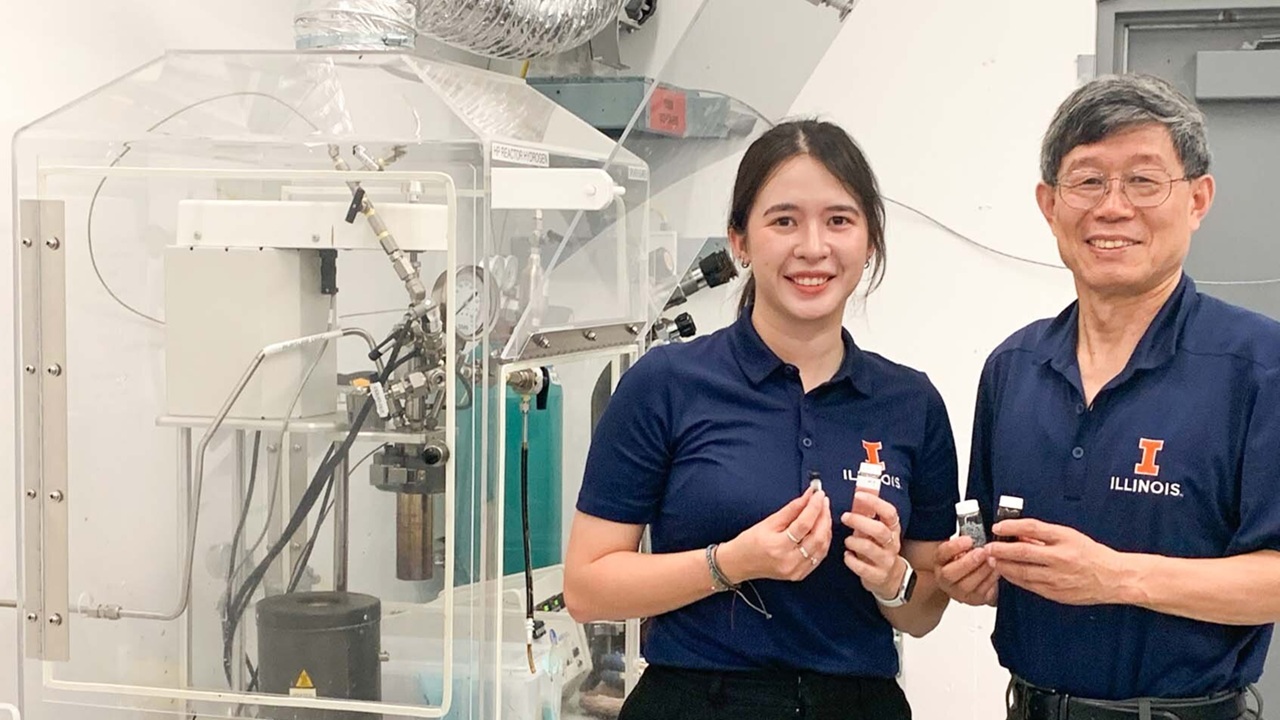
Oyster cement has become the basis for a new scientific endeavor at Purdue University in the search for more resistant, faster, and more efficient construction materials. The team led by Jonathan Wilker replicated in the laboratory the natural adhesive used by these mollusks and obtained up to 10 times more adhesion, double the compressive strength, and faster curing when applying the system to commercial concrete.
For millions of years, oysters have formed solid reefs in successive layers, capable of resisting currents, temperature variations, and long periods of environmental exposure. The strength of these structures is linked to a biological material that functions as a natural glue, even in humid or fully submerged environments.
The Purdue team’s investigation started precisely from this behavior. The objective was to understand how the oysters’ “biological cement” manages to maintain adhesion in conditions where many industrial materials lose performance, paving the way for more durable and less aggressive solutions for the planet.
-
Scientists Convert Food Waste into Aviation Fuel, Successfully Test 50% Blend with Conventional Kerosene to Cut Emissions and Promote Sustainable Flights

-
OnePlus N6 Smartphone to Launch in India with 8,000mAh Battery and 45W SuperVOOC Charging, Lasting Up to Three Days
-
Scientists Plan to Release Air Bubbles Underwater to Protect Antarctica’s “Doomsday Glacier” from Melting

-
Chinese R6000 Drone Combines Airplane and Helicopter Features, Carries Up to 12 People for Multiple Missions


Oyster cement combines mineral rigidity and organic glue
The difference in oyster cement is not in a rare ingredient, but in the combination of simple components. The material’s base is mainly formed by calcium carbonate, an abundant and inexpensive substance, similar to limestone or chalk.
The decisive element appears in a smaller fraction of the mixture. About 12% of the material is composed of organic elements, which function as an internal glue and allow a predominantly inorganic structure to act as a powerful adhesive.
This composition unites rigidity and flexibility in the same system. The close relationship between the mineral and organic parts generates strong adhesion even in the presence of water, good mechanical resistance, and adaptability without easy loss of stability.
Laboratory tests show superior adhesion
To evaluate whether the natural logic could work in practical conditions, the researchers reproduced the system in the laboratory. Common materials, such as calcium carbonate plates, were used, in addition to different formulations inspired by oyster adhesive.
The results indicated a performance above expectations. In many tests, the bonded material did not fail due to the adhesive; the piece itself broke first, showing that the biomimetic glue was stronger than the material it held together.
When the system was incorporated into commercial concrete, the improvements became more evident. The material showed up to 10 times greater adhesion, doubled compressive strength, and faster setting, three points with a direct impact on the performance of constructions and structures.
Faster curing is of special importance for civil construction. Less waiting time can reduce construction stages, lower operational costs, and cut energy consumption in processes related to material hardening.
Concrete has a global environmental impact
The search for improvements in cement gains relevance because concrete is the most used material on the planet after water. Its production is associated with approximately 8% of global CO₂ emissions, which makes any technical advance relevant on a broad scale.
Even small gains can generate significant impact when applied to such a large sector. A cement with better adhesion, more resistance, and more efficient curing can contribute to more durable structures and less intensive construction processes.
The research also fits into the advancement of biomimetics applied to engineering. This approach observes solutions present in nature and adapts them to solve technical challenges in areas such as coatings, antibacterial surfaces, and structural materials inspired by bones or wood.
In the case of oyster cement, the inspiration comes from a natural solution that has already demonstrated efficiency over time. The biological material of these mollusks offers a model of strong, stable, and functional adhesion in environments where the presence of water is normally a problem.
Industrial scale still depends on adjustments
Despite the promising results, the transition from laboratory to industry still requires advances. Challenges include adjusting production costs, ensuring stable long-term behavior, integrating the material into construction standards, and scaling up without loss of properties.
The organic component also needs to be optimized. Although it represents a small portion of the mixture, it must be stable, accessible, and sustainable so that the system can be viably applied on a large scale.
The path opened by the research indicates potential for more durable and efficient buildings, reduction of the construction carbon footprint, use of abundant and local materials, and adaptation of infrastructure to more extreme climatic conditions.
The proposal also aligns with strategies focused on lower-impact materials and the circular economy in civil construction. Oyster cement shows that innovation can arise from observing common natural structures, such as an oyster attached to a rock, and reach the heart of one of the most important sectors of the global economy.